100 signatures reached
To: Secretary of State for Environment, Food and Rural Affairs (DEFRA), in coordination with the Department of Health and Social Care and local authorities
Recognise Noise Pollution as a Serious Public Health Risk
The problem.
While air pollution is discussed daily, noise pollution - despite its serious impact on health - remains largely overlooked.
While air pollution is discussed daily, noise pollution - despite its serious impact on health - remains largely overlooked.
Noise pollution is a widespread but under-regulated public health hazard. Millions of people are exposed to excessive and persistent noise every day - often inside their own homes - through traffic, modified vehicles, amplified sound in public spaces, and poorly regulated urban activity. This exposure is continuous, unavoidable, and largely ignored by current regulation.
Clarification.
Clarification.
This petition is not about silencing cities or eliminating normal everyday sounds. It focuses on excessive and unnecessary noise - including modified cars and motorbikes far louder than standard vehicles, vehicles left idling with engines running, street racing, engine revving, and organised car or motorbike gatherings, amplified music in public spaces such as pedicabs, excessively loud equipment, as well as unruly parties and persistently noisy neighbours etc.
Reasonable, everyday sounds of life are not the target.
Reasonable, everyday sounds of life are not the target.
The impact.
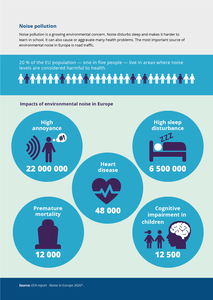
Independent public-health research shows that long-term exposure to environmental noise causes serious harm. One in five people live in areas where noise levels are harmful to health, contributing to sleep disturbance, heart disease, hearing damage, impaired concentration and learning in children, and increased stress, anxiety, and irritability. These effects accumulate over time. People do not “get used to” harmful noise - the body remains in a constant state of stress, increasing the risk of long-term illness.
Noise pollution also harms animals. It disrupts communication and navigation, alters predator–prey behaviour, damages hearing, and increases stress and mortality in wildlife. Pets exposed to chronic noise often suffer anxiety and long-term health problems.
Why this matters.
A peaceful environment is not a luxury - it is essential for health, learning, rest, and mental wellbeing. Constant intrusive noise removes people’s ability to sleep, recover, concentrate, and feel safe in their own homes. Children, older people, night-shift workers, those working from home, and individuals with sensory sensitivities are particularly affected.
The solution.
Noise pollution must be recognised and regulated as a public health and environmental issue, not dismissed as a minor nuisance. We call on the government and local authorities to:
- Strengthen noise limits based on health evidence;
- Improve enforcement and penalties for repeat and serious breaches;
- Regulate amplified sound in public spaces and vehicles more effectively;
- Protect residential areas, especially during night-time hours;
- Consider cumulative noise exposure in planning and licensing decisions.
Protecting people from excessive noise is a basic public health responsibility. A healthy society depends on environments where people can rest, recover, and live without constant physiological stress.
Why is this important?
Unlike many environmental harms, noise pollution is immediate and unavoidable. It penetrates walls, disrupts sleep, and keeps the body in a constant state of stress, preventing proper rest and recovery.
A peaceful environment is essential for health and wellbeing. Children need quiet to learn and develop; adults need it to concentrate, work, and recover; older people and those with health conditions are particularly vulnerable to chronic noise.
Communities should not be forced to choose between participation in public life and the right to peace in their own homes. Effective noise regulation protects not only health, but dignity, equality, and social cohesion.
Creating quieter environments benefits everyone - residents, businesses, and local economies - by reducing conflict and making neighbourhoods genuinely liveable.
Accepting preventable harm from excessive noise as “normal” is neither reasonable nor necessary.