Across the country, ordinary people are being forced to pay thousands of pounds a year for public parks, roads and communal spaces on top of their council tax.
This happens on so-called unadopted estates, where councils approve new developments but never take responsibility for maintaining the public spaces created. Instead, the costs are passed permanently to residents through uncapped service charges.
These parks and roads are:
- open to everyone
- promoted by councils as public amenities
- part of the everyday fabric of towns and cities
Yet the bill is quietly pushed onto a small group of households – families, key workers, pensioners and first-time buyers – many of whom are already struggling with the cost of living.
Although initially well-intentioned, Councils are complicit in arrangements that have pushed costs onto some of the poorest in society, with the risk of pushing their constituents into poverty.
Case study: Elephant Park, Southwark
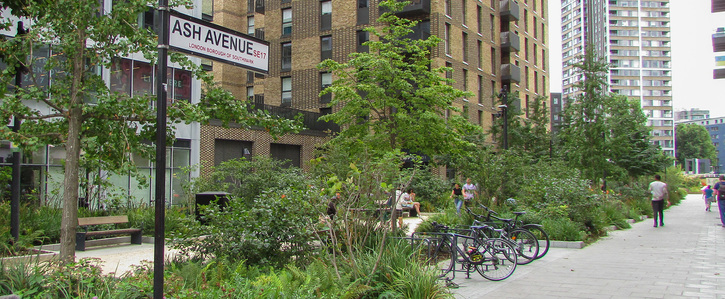
Elephant Park is a major regeneration development with a large central park that is open to everyone and promoted as a public space. But local residents are paying for it privately.
For a small one-bed flat in South Gardens, the typical 2025–26 service charge is £6,202. Around 15% of this goes towards public parkland and surrounding roads.
That means almost £1,000 a year paid by one resident towards public spaces, on top of their council tax.
This is double charging: ordinary people paying twice for parks and roads that are meant to be public.
This is a national problem, not a one-off
Residents across the country are affected from major regeneration schemes to new housing estates and garden communities.
Examples raised publicly include developments in:
- Elephant Park (London Borough of Southwark)
- St Edeyrn’s Village (Cardiff)
- Vickers Green (Crayford, London Borough of Bexley)
- Garden City (Kent)
- Church Meadows (Great Broughton, Cumbria)
- Carleton Meadows (Penrith, Cumbria)
- Elm Farm / Wymondham New Estates (Norfolk)
- Brookdale Estate (Aiskew, North Yorkshire)
- Queensgate Development (Stockton-on-Tees)
- Wynyard Park (County Durham / Teesside)
- Lodge Hill Development (Chattenden, Medway)
- Hoo Peninsula New Estates (Medway, Kent)
- West Myreton Estate (Menstrie, Clackmannanshire)
- Greenbelt Estates – Kirkcaldy (Fife)
- Greenbelt Estates – Kilmarnock (East Ayrshire)
- Fairfields Estate (Milton Keynes)
- Whitehouse Park (Milton Keynes)
- Kingsbrook (Aylesbury Vale, Buckinghamshire)
- Cranbrook New Community (East Devon)
- Great Kneighton (Cambridge)
- Trumpington Meadows (Cambridge)
- Northstowe (Cambridgeshire)
- Barking Riverside (London Borough of Barking & Dagenham)
- Chobham Manor (Queen Elizabeth Olympic Park, London)
- East Village (Stratford, London)
- Newhall (Harlow, Essex)
- Sherford New Community (Devon / Plymouth)
- Poundbury (Dorchester)
- Upton (Northampton)
- Cambourne (Cambridgeshire)
- Meridian Water (Enfield, London)
- Kidbrooke Village (Greenwich, London)
In every case, the pattern is the same: public infrastructure paid for by a small number of residents, with no cap to the their charges.
Parliament has heard the evidence
In a recent House of Commons debate and evidence sessions on property service charges, MPs heard directly from residents paying for unadopted roads, parks and communal land.
During that debate, Rebecca Paul MP made a clear recommendation:
Councils should be mandated to adopt unadopted parks and roads.
This would end the practice of residents paying twice and close the planning loophole that has allowed “fleecehold” estates to spread.
The evidence is clear.
The solution has been stated publicly in Parliament.
What’s missing is government action.
What we’re calling for
We call on the UK Government to:
- Mandate councils to adopt unadopted public parks, roads and communal spaces
- Reform planning and Section 106 rules so public infrastructure cannot be permanently funded by residents
- End double charging where people pay council tax and private service charges for the same services
- Protect residents from uncapped, unaffordable estate charges
Public spaces should be funded publicly, not hidden on household bills.
Ordinary people should not be used as a substitute tax base.