-
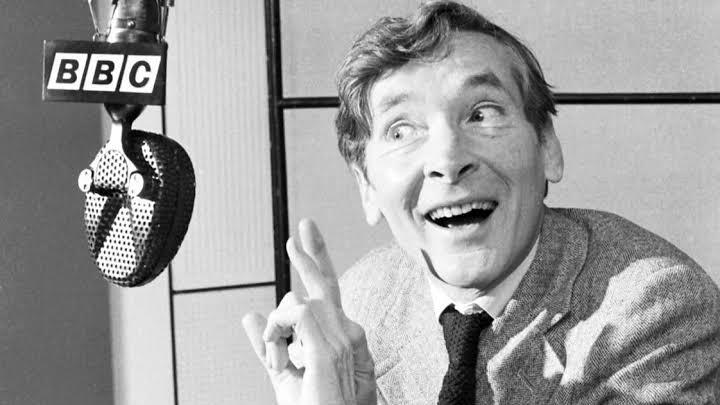 Save BBC Radio 4 Extra – A National Treasure for Just 12p a YearThe BBC plans to close Radio 4 Extra in spring 2027 as part of its latest round of budget cuts. The station costs the equivalent of just 12 pence per licence fee annually, yet provides entertainment and companionship to 1.55 million listeners every week. We believe this decision is short-sighted, culturally damaging and fundamentally at odds with the BBC’s public service mission. Radio 4 Extra is unlike anything else on British radio. It is a treasure trove of comedy, drama, storytelling and entertainment, bringing together some of the finest programmes ever produced by the BBC alongside more recent productions. From The Goon Show, Hancock’s Half Hour and Round the Horne to contemporary comedy, groundbreaking drama and adaptations of great literature, Radio 4 Extra preserves and celebrates a broadcasting heritage that belongs to all of us. It introduces new generations to performers, writers and programmes they might otherwise never encounter, while providing familiar voices and much-loved entertainment to millions of listeners. And it does all this at a remarkably modest cost. According to the BBC’s own figures, Radio 4 Extra has an annual content budget of approximately £4 million. That’s just 0.067% of the corporation’s roughly £6 billion annual budget, equivalent to around 12 pence of a £180 television licence fee. At just 0.6 pence per listener-hour, it is the BBC’s most economical national radio station. Even more remarkably, the £4 million represents the station’s entire annual content budget, not the amount the BBC will necessarily save by closing it. The BBC has yet to disclose the actual savings it expects to achieve. Since much of Radio 4 Extra’s programming will remain available through BBC Sounds, some costs will inevitably continue. So how much money will the BBC actually save by depriving 1.55 million weekly listeners of a service that costs each licence fee payer the equivalent of just 12 pence a year? We believe licence fee payers deserve an answer. Radio 4 Extra also reminds us of something increasingly overlooked in the relentless pursuit of savings: public service broadcasting is about more than audience figures and balance sheets. The station offers companionship to people living alone, comfort to those who are housebound, entertainment to those who cannot afford subscription services, and an accessible cultural resource for anyone with a radio. The BBC argues that programmes will remain available through BBC Sounds. But a streaming library is not a substitute for a carefully curated radio station. Listeners should not have to search for programmes they already know exist. One of Radio 4 Extra’s greatest pleasures is discovering something unexpected simply by switching on the radio. And not everyone wants, or is able, to navigate an app or website to enjoy the BBC’s output. Radio 4 Extra’s programmes represent decades of investment, creativity and talent, much of it already paid for by licence fee payers. Closing a dedicated channel that makes this extraordinary archive accessible seems a particularly perverse way to save money. We recognise that the BBC faces serious financial pressures. Difficult decisions are inevitable. But there is a difference between making economies and dismantling the very services that make the BBC distinctive. Once lost, a dedicated home for Britain’s radio comedy and drama heritage may never return. We therefore call on the BBC Board and Director-General to: 1. Reverse the decision to close Radio 4 Extra and preserve it as a dedicated broadcast radio station. 2. Publish the actual projected savings from its closure, distinguishing between costs that will disappear and those that will continue. 3. Explore alternative economies that would preserve this exceptionally cost-effective public service. 4. Recognise the importance of accessible, curated broadcasting to listeners who cannot, or simply do not wish to, rely on streaming services. Radio 4 Extra is more than another channel on the dial. It is a living archive of British broadcasting, a source of daily pleasure and companionship, and an important part of our shared cultural inheritance. For the equivalent of just 12 pence a year, surely we can afford to keep it. Please sign this petition and help ensure that Radio 4 Extra remains on the air for generations to come. I’ve been listening to Radio 4 Extra since it first launched as BBC 7 in 2002. Over more than two decades, it has given me the opportunity not only to revisit much-loved classics from the BBC’s extraordinary archives, but also to discover countless programmes, writers and performers I might never otherwise have encountered. And that, to me, is what makes the station so special. It isn’t simply a repository of old programmes. It’s a carefully curated service that continually introduces listeners to something new, even when that something was first broadcast decades ago. There’s a particular pleasure in switching on the radio and discovering a programme you didn’t know existed, rather than having to search through an online catalogue for something you already know you want to hear. BBC Sounds may preserve access to the programmes, but it cannot fully replicate the experience of Radio 4 Extra. An archive preserves the past. A radio station brings it to life.49 of 100 SignaturesCreated by Max Brockbank
 -
 Save BBC Radio 4 ExtraBBC Radio 4 Extra is one of the jewels in the crown of BBC Radio. Although it's an archive channel, the archive contains many magical programmes, often not repeated for many years. Some of my favourites are dramas from original material by Graham Greene, Ian Fleming (James Bond), George Orwell, Dylan Thomas, T.H. White, John le Carré and comedies by the likes of Morecambe & Wise, Dick Clement & Ian La Frenais, Ivor Cutler, Lenny Henry, The Goons with science fiction by Philip K Dick, Dr Who by various writers, Nigel Kneale, Charles Chilton and many 1950s sci-fi broadcasts. These are just a few of the fantastic programmes on Radio 4 Extra.14 of 100 SignaturesCreated by Neil Simpson
 -
 Save Radio 4 ExtraRadio 4 Extra is a fabulous showcase of the BBC's phenomenal archive of radio comedy and drama, fields in which the Corporation is an undoubted pioneer, with a reputation for quality rivals woud envy. At minimal cost to the licence-payer, Radio 4 Extra provides a marvellous showcase for the best of this nation's creative output. While all the programmes will be available on BBC Sounds, the closure of the linear broadcast station would be to deny listeners the joy of discovering something they didn't know they were going to love – something that can be only provided by human curation, not an algorithm. Radio 4 Extra showcases public service broadcasting at its finest. We do not want it to go.9,939 of 10,000 SignaturesCreated by Chortle Comedy
 -
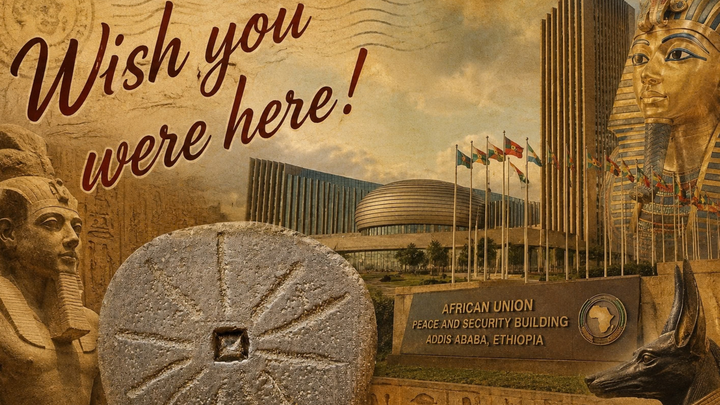 Return the Shabaka Stone to AfricaThe Shabaka Stone embodies Africa’s profound traditions of peace and mediation. Its return to Africa would give it a renewed and extraordinary purpose. There, the Stone would become far more than an artefact of the past: but a living symbol of Africa’s commitment to peace, a source of inspiration and a permanent witness alongside those entrusted with resolving the continent’s conflicts. Its return would thus be not merely an act of restitution, but an investment in Africa’s peaceful future. We therefore propose an act of restoration. The Shabaka Stone, presently held in London’s British Museum, should return to Africa: first to Egypt, and ultimately, through an act of gifting by Egypt, to the African Union’s Peace and Security Building in Addis Ababa. There it might cease to be only an artefact of the past and become an instrument for the future. A stone once created to preserve memory becomes a stone for imagining peace: dialogue over destruction, restoration over retribution, balance over victory. The history of the Shabaka Stone More than 2,700 years ago, the Nubian Pharaoh Shabaka encountered sacred texts that were disappearing with time. He ordered their wisdom carved into stone so that what mattered would not be forgotten. Among the ideas preserved in the Memphite Theology is the dispute between Horus and his uncle Seth over land, legitimacy and power. Rather than allowing the conflict to be decided through violence, the Ennead, the ruling council, comprising 9 creation energies, convened a court. They listened to evidence, judged and restored order. They ruled in favour of right, not might! Horus received the land, but Seth was not annihilated: justice required restoration rather than revenge, and peace required a place for both. We ask what wisdom Africa chooses to carve into stone today that will be remembered 2,700 years hence. At a moment when conflicts over sovereignty, land, identity and resources continue to invite violence and outside intervention, the Shabaka Stone offers an older political imagination: that sovereignty begins with the capacity to resolve our own disputes, and that justice without peace is hollow, while peace without justice and accommodation cannot endure. Sources: Scholars Archive: The Shabaka Stone: An Introduction Afford UK: Shabaka Stone – Centring African Peace7 of 100 SignaturesCreated by AFFORD UK
%20(1).png)
-
 Make Gambling Self-Exclusion a Right That Is Enforced, Not Just PromisedAs someone who has experienced gambling addiction myself and now supports a community of thousands of people affected by gambling harm, I have seen first-hand how devastating the consequences can be for individuals and their families. Self-exclusion is often one of the most important steps someone takes towards recovery. It is a voluntary decision to give up access to gambling because they recognise they need protection. Yet the system does not always provide the protection they have asked for. Imagine someone who has found the courage to admit they have a problem and exclude themselves from gambling. They have taken responsibility and asked for help. But they can still walk into another gambling venue, find gaps in existing schemes, or continue to access gambling services when safeguards fail. Meanwhile, banks can see the financial consequences of gambling, sometimes long before anyone else, but cannot verify whether a customer has self-excluded through GAMSTOP, even with their consent. We have built a system that places the responsibility for stopping gambling on the individual, without ensuring that the protections they voluntarily put in place are consistently enforced. The consequences go far beyond gambling losses. I have seen how gambling addiction can lead to overwhelming debt, family breakdown, deteriorating mental health and, tragically, suicide. Self-exclusion should not be a box-ticking exercise for gambling operators. It should be a reliable safeguard that follows someone wherever they might gamble, with meaningful consequences when operators fail to uphold it. This petition is not about taking away people's freedom to gamble. It is about respecting and enforcing the decision of those who have voluntarily chosen to stop. When someone asks to be protected from gambling, the system should honour that decision.4 of 100 SignaturesCreated by Jean-Paul Efang Mbome
 -
 Save The BBE StoreShare Your Testimony on Social Media For fans, supporters and the many artists and djs we have worked with, we would really appreciate if you could share your testimonials, experiences with BBE with the hashtag #savethebbestore13,566 of 15,000 SignaturesCreated by Peter Adarkwah
 -
 Save BBC Radio 4’s You and YoursFor more than 50 years, BBC Radio 4’s You and Yours has been a voice for ordinary consumers, exposing injustice, challenging powerful organisations and helping listeners navigate often complex issues. Now, its future is under threat. At a time when millions of people are struggling with the cost of living, rising bills, scams, poor customer service and unfair treatment, we need You and Yours more than ever. The programme does something that few others can. It gives ordinary people a national platform, investigates the problems they face and demands answers from businesses, regulators and politicians. Whether it is exposing unfairness in the energy system, investigating consumer scams, challenging companies over poor treatment or explaining people’s rights, You and Yours provides a vital public service. At a time when consumer advice and enforcement services are already stretched, its role in helping people understand their rights and exposing problems that need wider action is more important than ever. For many listeners, particularly older people, disabled people and those facing financial hardship, trusted and accessible consumer journalism can make a real difference. Moving consumer journalism towards digital-only platforms (as the BBC suggests) risks excluding some of the very people who need it most. Its investigations have helped recover millions of pounds for victims of crime and driven reforms to banking security, gambling regulations and insurance practices. Its impact reaches far beyond the radio, delivering real change for consumers across the country. You and Yours also provides an invaluable platform to bring evidence of unfair practices and systemic problems to national attention. Without it, charities and campaigners would lose a vital route to help hold powerful organisations and decision-makers to account. It is a show that simply could not be replicated in the private sector where sponsorship and advertising can influence the agenda and the BBC must protect independent, accessible consumer journalism.12,777 of 15,000 SignaturesCreated by Simon Francis, End Fuel Poverty Coalition
-
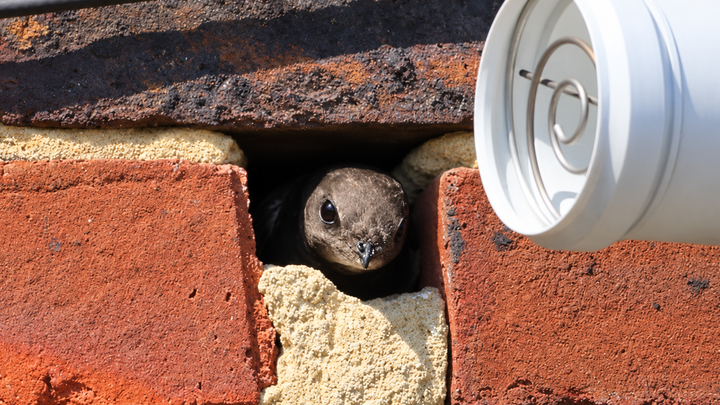 Save swift nests before building work blocks or obstructs themSwifts are in trouble. Their UK breeding population fell by 70% between 1995 and 2024, and they are now on the UK Red List of birds of conservation concern. When a swift's nest entrance is blocked, every hour can matter. Swifts spend almost their entire lives in flight, returning to the same nesting places year after year. If adults cannot reach their eggs or chicks, the consequences can be devastating. The law already protects active nests, but protection is of little use if nobody intervenes until the work is finished and the evidence has disappeared. I am a volunteer swift conservationist who has witnessed what can happen when building work threatens nesting swifts and nobody takes responsibility for intervening in time. Every year, throughout the swift nesting season, reports emerge from across the country of building work threatening occupied nests, obstructing access and putting these remarkable birds at risk. At Regent House in Dorking, a long-established swift colony was threatened during demolition. At another site in Banstead, scaffolding and building work obstructed access to an active swift nest. I reported our concerns, but encountered uncertainty about who should act, what evidence was needed and who was responsible for protecting the birds. We need a clear, coordinated emergency response that protects occupied swift nests before it is too late. Please sign to help make existing wildlife protection work when it matters most.36,257 of 40,000 SignaturesCreated by Anne-Marie Griffin
 -
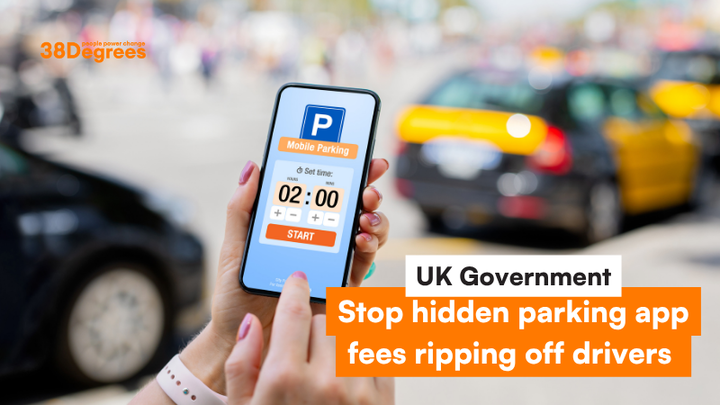.png) Stop hidden parking app fees ripping off driversIt’s unfair that drivers can end up paying significantly more than the advertised parking price when they use an app. These extra charges can quickly add up for people who rely on their cars for work, family life or everyday errands. The total charge should be clearly and fairly shown, with no extra fees hidden away or added at the last minute. Stopping unfair parking app fees would be a simple, tangible change that could make a real difference to people’s lives, especially when household budgets are tighter than ever. The UK Government should act to make parking charges fair and transparent, and ensure councils put those protections into practice.30,214 of 35,000 Signatures
Stop hidden parking app fees ripping off driversIt’s unfair that drivers can end up paying significantly more than the advertised parking price when they use an app. These extra charges can quickly add up for people who rely on their cars for work, family life or everyday errands. The total charge should be clearly and fairly shown, with no extra fees hidden away or added at the last minute. Stopping unfair parking app fees would be a simple, tangible change that could make a real difference to people’s lives, especially when household budgets are tighter than ever. The UK Government should act to make parking charges fair and transparent, and ensure councils put those protections into practice.30,214 of 35,000 Signatures -
Support affordable childcare in Saffron WaldenSaffron Walden families need affordable childcare - not just a change to the £100,000 earnings cap. Dear Mrs Badenoch, As parents, carers and residents of Saffron Walden, we are writing to ask you to champion better childcare provision for local families. You recently announced a Conservative policy to remove the £100,000 income ceiling on funded childcare, at an estimated national cost of £700 million a year. We recognise that the existing cliff edge, introduced in 2017, is unfair. It can leave parents substantially worse off when their earnings increase, discouraging work and career progression, particularly for women. It needs reform. But lifting the earnings cap alone does not solve the bigger problem. We estimate your proposal could benefit as few as 40 Saffron Walden families. Yet our town has around 930 children under five, whose families also need accessible nurseries, affordable wraparound care and breakfast clubs that help parents work and children thrive. Our town currently lacks the early-years infrastructure available in some other communities. The Government is investing in new school-based nurseries and rolling out free breakfast clubs to every state-funded primary school. We want Saffron Walden to benefit fully from these programmes. We recognise your responsibilities as Leader of the Opposition in Parliament, but Saffron Walden also needs a strong constituency voice from our MP to champion the needs of all local families. We therefore ask you to: 1. Explain how your proposed £700 million childcare commitment would benefit the wider population of families, rather than simply extending benefits to those excluded by the £100,000 threshold. 2. Champion new school-based nursery places in Saffron Walden, working with Essex County Council, local schools and the Department for Education. 3. Secure a clear timetable for free breakfast clubs at every local state-funded primary school, and support affordable before- and after-school care. 4. Press for a proper assessment of local childcare needs, including nursery places, waiting lists, costs and the impact of new housing developments, alongside better-integrated early-years and family services. We would welcome your public response, including the practical steps you are prepared to take on behalf of families in your constituency. Yours sincerely, Parents, carers and residents of Saffron Walden Supported by the undersigned. Notes on the figures The estimate of 40 families potentially benefiting from the Conservative proposal is based on local population and household estimates, with an allowance for the proportion of families earning over £100,000. The figure of approximately 930 children under five is based on the latest population estimates for Saffron Walden. These are indicative estimates in the absence of official counts of childcare eligibility.54 of 100 SignaturesCreated by Cherry Parker
-
Cheaper bus travel for studentsIt will help those in our local area be able to get to school without paying extortionate prices, and be able to support families who struggle getting their children on the bus. For the price they pay - often being over £900 - the bus system is unreliable.29 of 100 SignaturesCreated by Caitlin Kelly
-
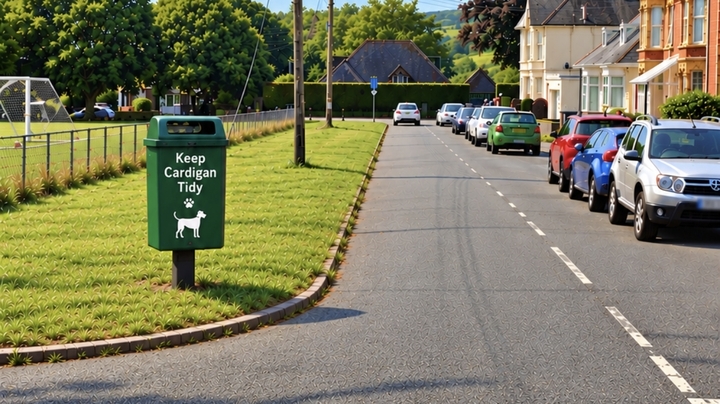 Make Cardigan Cleaner: More Dog-Waste Bins and Regular Grass CuttingShouldn't our public spaces be clean, safe and enjoyable for everyone? Why should something as preventable as dog fouling be allowed to make our grass verges and streets unpleasant and potentially hazardous? These are problems that could be addressed through more accessible dog-waste bins and regular grass cutting. It's incredibly frustrating going out and accidentally stepping in dog poo or trying to prevent your dog from eating things in the grass. I'm asking for more dedicated dog-waste bins across Cardigan and regular grass cutting to make dog fouling visible and easier to avoid. Our town deserves cleaner, safer public spaces for everyone and their dogs. It's disgusting that there are people are leaving their dogs' mess behind for everyone else to deal with. It's unhygienic, unpleasant and completely unnecessary. This affects everyone, other dog walkers, local residents, families with children and anyone who wants to enjoy our public spaces without encountering dog mess.2 of 100 SignaturesCreated by Scott Barbour
Hello! We use cookies to improve your experience by providing insights into how the site is being used. Find out more.