-
Reform Funding on Military Costs for UK Overseas TerritoryI want the UK Government to stop putting foreign and world burdens only on the shoulders of UK tax payers. UK Government should create a deal to source fair funding of defence of these locations from the residents there or cease providing protection and arrange a hand over of local defence to them. UK Tax Payers are currently being squeezed for every penny whilst every UK government promises extra Military Funding. UK currently has deals in place to be the key protectorate of all it's Overseas Territory (EG: Gibraltar, Falklands & more) without charging tax at these locations to fund it. The burden of costs purely comes from the UK MOD funded by UK tax payers. It is unfair on the British Tax payer to continue funding billions in defence of colonial remnants in 2026 under such conditions.3 of 100 SignaturesCreated by Frank EVANS
-
Improve the house purchasing processWe have moved several times and felt the process was archaic and stressful. It can and should be a streamlined process that protects the buyers and ensures purchasing a house can occur over a shorter period - not take months and months, when potentially the buyers can lose thousands of pounds and have to start all over again. The vendor should prepare via a solicitor and Estate Agent a house sale pack, which the buyers solicitors would review to ensure all is inorder, then the sale would be agreed - simple. It works in Scotland. Please sign this petition to start a review into the current process that is inadequate, does not protect potential buyers and results in a lengthy, stressful procedure to purchase a house.6 of 100 SignaturesCreated by Tracey Fell
-
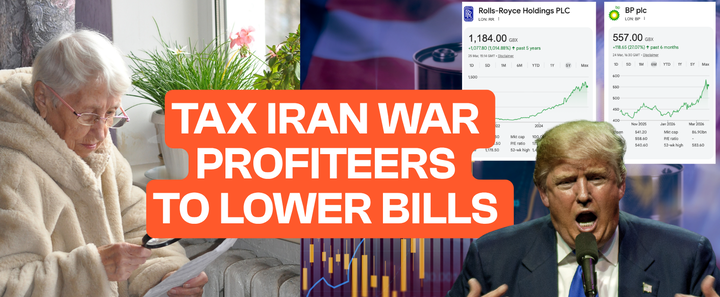 Raise taxes on companies profiteering from Iran warMillions across the UK are already struggling just to get by. Bills are rising, wages aren’t keeping up, and families are being pushed to the brink. As the impacts of the Iran war ripple through the global economy, things are set to get even worse. This illegal war has caused chaos, devastation and instability, and now it’s driving up the cost of fuel, food and everyday essentials here at home. Households are already feeling the pressure from rising fuel prices and further disruption is on the way. But while ordinary people are being squeezed, some corporations are set to cash in. Oil and gas giants, big banks, industrial agriculture companies and defence companies are likely to make RECORD profits from the crisis, profits made possible by soaring prices and global instability. No company should be allowed to profiteer from a crisis leaving millions struggling to afford the basics. That’s why the Government must introduce bigger taxes on companies making eye-watering profits off the back of the Iran war, and use the money raised to provide direct cost of living support and head-off the next crisis by investing in renewable energy. This is a chance to stand up for fairness, support people through a national crisis, and build a more secure future. Signed, The British Public104,060 of 200,000 SignaturesCreated by Benjamin Lacey
 -
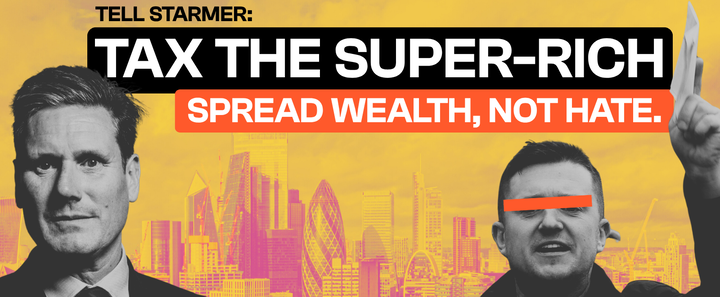.png) Tax the super-rich: Spread wealth, not hate.Everyone should be able to afford to hope. But across the UK, millions are barely staying afloat. Energy bills are bursting family budgets, childcare costs are washing away wages, and home ownership has become a pipe-dream for most. Meanwhile, the super‑rich keep getting richer and richer, faster and faster. We all built this country together, yet only a tiny handful are reaping the rewards. And they know it can’t last. That’s why they’re trying to distract us: funding the far right, scapegoating migrants and refugees, and pushing us to fear the people beside us. They want us to hate our neighbours instead of questioning the tiny handful, picking our pockets, and hoarding the wealth we all create. A 2% tax on extreme wealth on fortunes over £10 million would raise £24 billion every year and make sure those making millions from stocks and shares in fossil fuels would help insulate homes and cut heating bills for the rest of us; that those who’ve inherited private art galleries and classic car collections keep public art alive and trains and buses running for the next generation; and that those living in mansions, bought from the profits from our rents on their massive property portfolios, chip in to make affordable homes an aspiration not a fantasy. We can’t afford to hate. But if we tax wealth properly, we can afford to hope again.17,097 of 20,000 SignaturesCreated by Benjamin Lacey
Tax the super-rich: Spread wealth, not hate.Everyone should be able to afford to hope. But across the UK, millions are barely staying afloat. Energy bills are bursting family budgets, childcare costs are washing away wages, and home ownership has become a pipe-dream for most. Meanwhile, the super‑rich keep getting richer and richer, faster and faster. We all built this country together, yet only a tiny handful are reaping the rewards. And they know it can’t last. That’s why they’re trying to distract us: funding the far right, scapegoating migrants and refugees, and pushing us to fear the people beside us. They want us to hate our neighbours instead of questioning the tiny handful, picking our pockets, and hoarding the wealth we all create. A 2% tax on extreme wealth on fortunes over £10 million would raise £24 billion every year and make sure those making millions from stocks and shares in fossil fuels would help insulate homes and cut heating bills for the rest of us; that those who’ve inherited private art galleries and classic car collections keep public art alive and trains and buses running for the next generation; and that those living in mansions, bought from the profits from our rents on their massive property portfolios, chip in to make affordable homes an aspiration not a fantasy. We can’t afford to hate. But if we tax wealth properly, we can afford to hope again.17,097 of 20,000 SignaturesCreated by Benjamin Lacey -
Stop Rip off Equity ReleasesFor instance the interest rates they charge are always above the bank rate, why? When the person who took out the equity release passes the company takes the property, sells it and pockets the money which more than compensates for their original outlay. It’s immoral, unfair and something needs to be done. Equity Release is initially a good way of getting much needed funding but once you have the funds you are virtually worthless. There must be a better way a more fairer way so that people who have invested their whole lives into a property hoping to leave something behind for their children and grandchildren. Please support this petition by signing and sending it to as many people as you can. Thankyou Perhaps you know someone. A parent or a friends parent who have taken equity release to help in getting much needed funding and end up with nothing to show for their lifetime working. Please support this campaign3 of 100 SignaturesCreated by ROBERTA KHAN
-
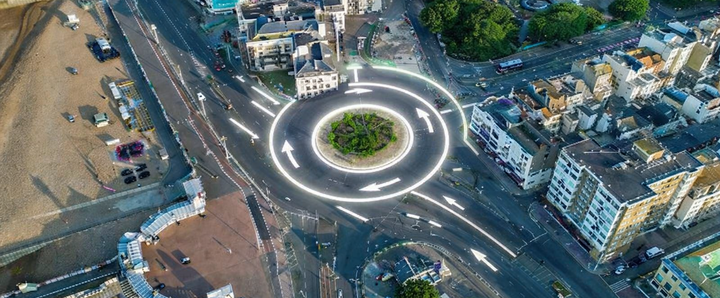 Reinstate Brighton and Hove's Aquarium RoundaboutThe Aquarium roundabout is one of the oldest roundabouts in Britain and has been faithfully serving this major tourist resort with minimal accidents and incidents for 101 years. Brighton and Hove City Council have now removed this roundabout against the wishes of the vast majority of residents without public mandate, having moved to a cabinet system of governance and rewritten the city constitution, also without public mandate. Many local businesses and residents have complained that the removal of this roundabout will create permenant gridlock and discourage visitors from our seaside resort. They have been ignored by a council whose public remit is to serve us. This unreasonable and city-damaging decision will lengthen a great many vehicle journeys, thereby increasing emissions, and needs to be reversed immediately. Removing the Aquarium roundabout will create permanent city gridlock, discouraging visitors from visting a once-prime tourist resort. We have a patchy coach service and an unreliable train service so for most visitors the only viable option is to visit Brighton and Hove by car. There has been no economic risk impact assessment undertaken and the council have ignored all protests from local businesses and residents. They don't even seem to care about public transport and emergency vehicles being obstructed. Or that many contractors are now refusing to work in the city as it is too difficult to drive their vans full of tools. No one can afford to pay emissions charges either as a result of artificially created gridlock. There is no logic or majority public benefit in removing this roundabout.299 of 300 SignaturesCreated by Laura King
 -
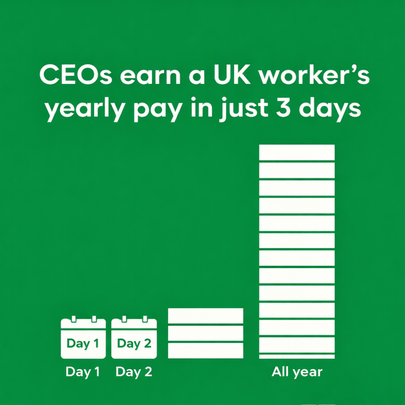.png) ‘Fat Cat Tax’: Make companies pay for extreme inequalitiesThis year, the average FTSE100 CEO took less than three days to earn what the typical UK worker will in all of 2026. In the case of Melrose, where the CEO earned 1509 times the median UK salary, it will take him just under 3 hours to do so. These disparities come in a context of long-term wage stagnation, falling living standards and a significant decline in worker trust in their employers. It is clear that increased transparency has failed to keep extreme executive pay in check, with pay at the top of the corporate ladder having reached a record level for the third year in a row. To prevent such rampant inequalities developing further, companies should face a greater tax burden if they wish to pay their executives such exorbitant fees. The ‘Fat Cat Tax’ This is why we are proposing a new ‘Fat Cat Tax’, whereby firms would pay a corporation tax surcharge on their yearly profits if single-figure remuneration for an executive director exceeds a specified multiple of the median UK worker’s salary. This would be a progressive system, starting with a small tax on those pay packages that exceed 10:1, before increasing in size at thresholds of 50:1, 100:1, 200:1 and 500:1. Not only would this incentivise firms to scale back the levels of corporate wealth flowing to a small handful of individuals, but also raise funds to be invested in education and early years provision, helping to tackle inequality at source. While companies would not be prevented from continuing to pay sizeable fees to their leaders, increased tax receipts would help ensure that there is a shared societal benefit to such a model if it persists. Why is this important? The UK has some of the worst levels of income inequality in Europe. Not only do vast pay gaps have detrimental effects on the economy, but also societally through damaging health consequences, reduced workplace satisfaction and increased support for populist politics. Polling by the High Pay Centre and Survation demonstrates that 63% of people believe CEOs should not earn more than 10 times their low- and mid-level employees, reflecting the widespread support for an approach that seeks to reduce such gaps. The tax could incentivise wage growth at the bottom, rein in excessive compensation at the top and help rebuild a model of fairness in how corporate wealth is distributed. Next Steps This petition will show strong public demand for reform. We will share it with government officials, MPs, business leaders, and campaign allies to help build pressure for meaningful change. The petition aims to keep pay inequality high on the political agenda and help generate momentum for stronger action.6,911 of 7,000 SignaturesCreated by Andrew Speke
‘Fat Cat Tax’: Make companies pay for extreme inequalitiesThis year, the average FTSE100 CEO took less than three days to earn what the typical UK worker will in all of 2026. In the case of Melrose, where the CEO earned 1509 times the median UK salary, it will take him just under 3 hours to do so. These disparities come in a context of long-term wage stagnation, falling living standards and a significant decline in worker trust in their employers. It is clear that increased transparency has failed to keep extreme executive pay in check, with pay at the top of the corporate ladder having reached a record level for the third year in a row. To prevent such rampant inequalities developing further, companies should face a greater tax burden if they wish to pay their executives such exorbitant fees. The ‘Fat Cat Tax’ This is why we are proposing a new ‘Fat Cat Tax’, whereby firms would pay a corporation tax surcharge on their yearly profits if single-figure remuneration for an executive director exceeds a specified multiple of the median UK worker’s salary. This would be a progressive system, starting with a small tax on those pay packages that exceed 10:1, before increasing in size at thresholds of 50:1, 100:1, 200:1 and 500:1. Not only would this incentivise firms to scale back the levels of corporate wealth flowing to a small handful of individuals, but also raise funds to be invested in education and early years provision, helping to tackle inequality at source. While companies would not be prevented from continuing to pay sizeable fees to their leaders, increased tax receipts would help ensure that there is a shared societal benefit to such a model if it persists. Why is this important? The UK has some of the worst levels of income inequality in Europe. Not only do vast pay gaps have detrimental effects on the economy, but also societally through damaging health consequences, reduced workplace satisfaction and increased support for populist politics. Polling by the High Pay Centre and Survation demonstrates that 63% of people believe CEOs should not earn more than 10 times their low- and mid-level employees, reflecting the widespread support for an approach that seeks to reduce such gaps. The tax could incentivise wage growth at the bottom, rein in excessive compensation at the top and help rebuild a model of fairness in how corporate wealth is distributed. Next Steps This petition will show strong public demand for reform. We will share it with government officials, MPs, business leaders, and campaign allies to help build pressure for meaningful change. The petition aims to keep pay inequality high on the political agenda and help generate momentum for stronger action.6,911 of 7,000 SignaturesCreated by Andrew Speke -
Make Gambling Pay Its ShareI’m starting this because too many families are being hurt while a small number of online operators make huge profits. Gambling is causing sleepless nights, maxed cards, and the shame of chasing losses on slot games designed to keep you playing. That is not a fair fight. The scale is big. Industry takings are around £15.6bn a year, with online casino £4.4bn of that and £3.6bn from slots alone. These are exactly the products most linked with harm. At the same time, NHS referrals to gambling clinics have more than doubled in the past year, showing rising demand for help. Public health officials estimate gambling harms cost England £1.05–£1.77bn a year when you add direct costs and the wider health impact. Children and young people are still heavily exposed to gambling advertising online, even as rules tighten. Raising duties on the highest-harm, highest-profit online products and ringfencing the money for treatment, prevention and research is a fair, targeted step. A new statutory levy exists, but ministers control tax and can go further where the harm is greatest. This petition asks them to do exactly that.26 of 100 SignaturesCreated by Jacob Derbyshire
-
.png) Unite and STOP Making Tax Digital For Income Tax before April 2026MTD ITSA will impose unfair costs and stress on sole traders, landlords and small businesses. Many will give up trading, reducing services, jobs and tax revenues. Instead of supporting small businesses during a cost-of-living crisis, the Government is adding more red tape. Parliament must debate this policy and scrap it before it destroys livelihoods. I work with hundreds of sole traders who are terrified about MTD. They already face soaring bills and high taxes, and now they’ll be forced into quarterly submissions and new penalties. Many say they’ll give up their trade rather than deal with the extra burden. These are hardworking people who keep our economy going — they need support, not punishment. Here are some of the reactions we are getting from business owners: "I'm finishing up at end of this year definitely" "That’s me packing it in then" "Will close my business" " I am retiring because of the changes in the next few months." "Looks like I'll close my UTR number an stop sole trading" Why this is important • I’m an accountant: I work directly with hundreds of sole traders, landlords and small business owners. Every week I hear their worries about MTD. Many already say they will quit rather than face the stress and cost. • It will force unnecessary costs: Sole traders will have to buy software (often £300+ a year) that they don’t need, just to comply. • It means more red tape: Instead of one annual return, they’ll be forced into five submissions every year, massively increasing admin. • It creates new penalties: More deadlines means more opportunities to miss them, leading to fines and stress — not more fairness. • It risks mistakes: Rushed quarterly reporting will mean more errors, leading to audits and penalties. • It hurts the economy: Skilled sole traders — plumbers, electricians, shopkeepers, freelancers — are already saying they’ll give up. That means fewer jobs, less tax revenue, and weaker communities. • It punishes the wrong people: While multinationals pay little tax and use loopholes, sole traders — who already pay their fair share — are being treated like cash cows. • It comes at the worst time: During a cost-of-living crisis, with high bills and weak growth, the Government is adding more red tape instead of support.2,829 of 3,000 SignaturesCreated by Ben Sztejka
Unite and STOP Making Tax Digital For Income Tax before April 2026MTD ITSA will impose unfair costs and stress on sole traders, landlords and small businesses. Many will give up trading, reducing services, jobs and tax revenues. Instead of supporting small businesses during a cost-of-living crisis, the Government is adding more red tape. Parliament must debate this policy and scrap it before it destroys livelihoods. I work with hundreds of sole traders who are terrified about MTD. They already face soaring bills and high taxes, and now they’ll be forced into quarterly submissions and new penalties. Many say they’ll give up their trade rather than deal with the extra burden. These are hardworking people who keep our economy going — they need support, not punishment. Here are some of the reactions we are getting from business owners: "I'm finishing up at end of this year definitely" "That’s me packing it in then" "Will close my business" " I am retiring because of the changes in the next few months." "Looks like I'll close my UTR number an stop sole trading" Why this is important • I’m an accountant: I work directly with hundreds of sole traders, landlords and small business owners. Every week I hear their worries about MTD. Many already say they will quit rather than face the stress and cost. • It will force unnecessary costs: Sole traders will have to buy software (often £300+ a year) that they don’t need, just to comply. • It means more red tape: Instead of one annual return, they’ll be forced into five submissions every year, massively increasing admin. • It creates new penalties: More deadlines means more opportunities to miss them, leading to fines and stress — not more fairness. • It risks mistakes: Rushed quarterly reporting will mean more errors, leading to audits and penalties. • It hurts the economy: Skilled sole traders — plumbers, electricians, shopkeepers, freelancers — are already saying they’ll give up. That means fewer jobs, less tax revenue, and weaker communities. • It punishes the wrong people: While multinationals pay little tax and use loopholes, sole traders — who already pay their fair share — are being treated like cash cows. • It comes at the worst time: During a cost-of-living crisis, with high bills and weak growth, the Government is adding more red tape instead of support.2,829 of 3,000 SignaturesCreated by Ben Sztejka.png)
-
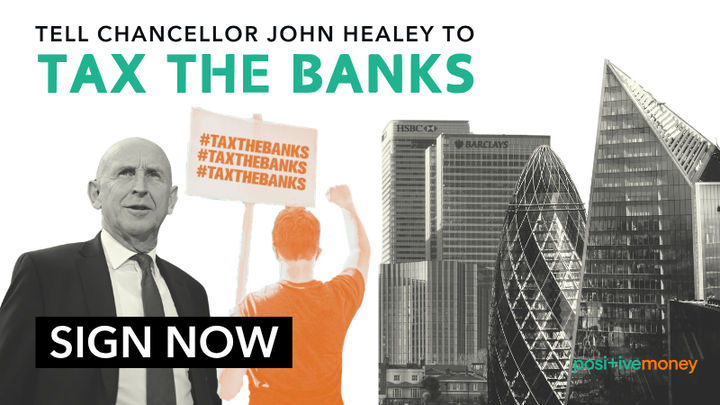 #TaxTheBanksYears of higher interest rates have sent our rent, mortgage, and debt payments soaring, while banks have raked in huge profits for doing absolutely nothing. The big four UK banks (Barclays, HSBC, Lloyds, and NatWest) made a record pre-tax profit of £45.9 billion in 2024, £45.7bn in 2025, and - after announcing £29.2bn in profits for the first six months of 2026 - look set to break records again this year. [1] Introducing a 38% levy, in line with the Energy Profits Levy on oil and gas companies who also profited from the cost of living crisis, could bring in over £19 billion. [2] Banks are (unsurprisingly) against this; the CEOs of Lloyds, Barclays, and HSBC publicly begged previous Chancellor Rachel Reeves not to - and were rewarded with huge bonuses for successfully lobbying against a windfall tax in last year's Autumn Budget. [3] Introducing a windfall tax on banks would clearly signal the kind of change Andy Burnham's new government have promised to deliver and that millions of us desperately want to see, to prove whose side they're really on and that Labour are no longer in the pocket of big donors or beholden to corporate lobbyists from the City. As the cost of living crisis rages on, a tax on banks is one of the best places to start rather than raiding the accounts of ordinary savers and small businesses. Add your name now to tell John Healey to #TaxTheBanks. Notes: [1] Positive Money: While “CEOs party” outside Parliament, it’s time to #TaxTheBanks Positive Money: Windfall tax on colossal bank profits could raise £19bn in 2026 [2] The Guardian: Calls for UK bank tax to fund cost of living help as HSBC profits hit £7.5bn Mirror: HSBC's £14.5billion profit bonanza sparks demands for windfall tax raid on big banks [3] Financial Times: Lloyds Bank chief warns Rachel Reeves against higher taxes on City of London Independent: Barclays joins rival in cautioning against hiking bank taxes The Guardian: Bank bosses get huge pay rises in sign top City salaries back to pre-crash highs74,205 of 75,000 SignaturesCreated by campaigns@ positivemoney
-
 Protect Cash ISAsRumours started swirling that Rachel Reeves might slash the tax-free cap on Cash ISAs from £20,000 to £4,000 after meeting with a group of bank executives back in February. [1] Now it looks like those plans could be revived at next month's Autumn Budget. [2] Cash ISAs (individual savings accounts) are the most popular kind of savings account in the UK. Tax-free and low-risk, they help 18 million of us to save billions for a rainy day. But the Chancellor is being lobbied by big city firms to cut the allowance so that savers are pushed into moving their money. Reducing the Cash ISA limit - while keeping the stocks and shares ISA allowance the same - would unfairly push people into making riskier investments. No one should be forced to gamble their savings to help rake in *even more* profit for City bankers. After U-turning on bankers bonuses, we can’t let Labour bend to the will of big banks again. The government should not restrict Cash ISAs. Tell Rachel Reeves to #ProtectCashISAs - add your name to the petition now. [1] The Guardian: Savings providers vow to fight any attempt to cut cash Isa limit to £4,000 [2] The Independent: Martin Lewis warns Rachel Reeves’ cash ISA cut plan will upset millions45,200 of 50,000 SignaturesCreated by Positive Money
-
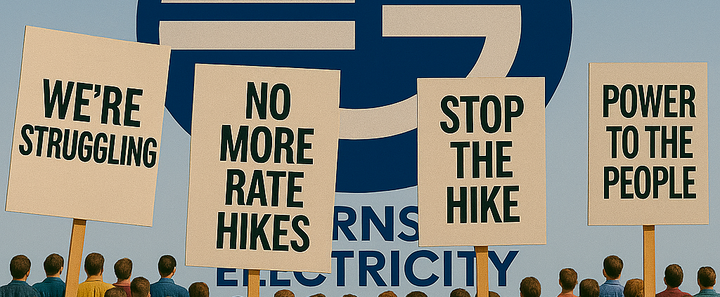 No More Shocking Prices – Stand Up to Guernsey Electricity!Unit rates rose by 9% in 2022, 13% in 2023, 5.5% in 2024, and now there’s another 8% proposed for 2025—a total increase of over 39% in just four years, more than double the UK’s 18% rise. Standing charges have jumped from £49.50 to £86.75 since 2023—a 75% increase. Yet Guernsey’s cost of living only went up 4.2% this year. We used to be a place full of hope and community spirit, where people looked out for each other and generations could live, work, and build a future. Now it feels like the island is turning into a playground for the rich. The cost of living is rising so fast that it’s becoming impossible to keep up. Greed is slowly but surely pushing everyday people out, and many full-time workers are already on the brink of homelessness—if they’re not there already. We’re asking for transparency and fairness for the island community—the working people who make this island run but can no longer afford to live here. I’ve been overwhelmed with stories of poverty and how this increase will ruin lives. I urge you to reconsider. Sources: BBC News Guernsey: Cost of electricity rises as fixed-price deals end Guernsey Press: Electricity prices are set to rise by 8% from July1,410 of 2,000 SignaturesCreated by Myles Duquemin
Hello! We use cookies to improve your experience by providing insights into how the site is being used. Find out more.