500 signatures reached
To: Stockport Metropolitan Borough Council
Protect Stockport’s Health and Wildlife: Phase Out Glyphosate Now
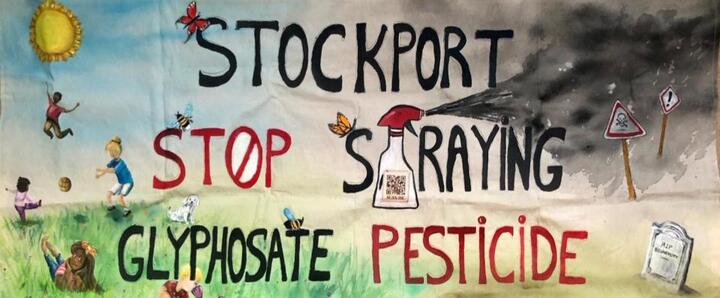
Stockport Council should follow the example of other councils that have already phased out pesticide use and adopt a more sustainable approach, they should stop using cost as a barrier to protecting the health and wellbeing of people and biodiversity.
Why is this important?
As a local GP, I am increasingly concerned by rising cancer diagnoses, especially in younger people. While no single cause explains this, we should reduce avoidable exposure to chemicals in the everyday places where people live, walk, and grow up.
Glyphosate (Roundup) is one of the most widely used herbicides in the world, used in streets, parks, pavements, and playgrounds. It has been classified by the World Health Organization’s International Agency for Research on Cancer as a probable carcinogen, linked to numerous cancers particularly non-Hodgkin lymphoma, and other serious neurological illnesses including Parkinson’s Disease and infertility.
This concern is reinforced by major US litigation, where Monsanto (now owned by Bayer) has faced over 100,000 legal claims relating to glyphosate exposure and cancer, particularly non-Hodgkin lymphoma, with billions of dollars paid or set aside to settle cases.
At the same time, we are facing a serious biodiversity crisis. The UK is one of the most nature depleted countries in the world, with around 1 in 6 species at risk of extinction. A major study published in Nature identifies pesticides as a key driver of biodiversity loss. Glyphosate removes far more than weeds, it destroys wildflowers that support bees, harms aquatic life, and disrupts the soil ecosystems that healthy environments depend on. Evidence also suggests it may persist in the environment longer than previously claimed, lasting months in soils and up to a year in some pond sediments. In 2025, the UK’s first glyphosate-resistant weed was identified, raising concerns about long-term reliance on chemical weed control and diminishing effectiveness over time.
We have raised this issue with Stockport Council on numerous occasions, asking for glyphosate use to be stopped. The response has repeatedly referenced cost as a barrier. We do not believe this is an acceptable reason to continue widespread chemical use in public spaces, particularly given the potential risks to health and the environment, and the availability of safer, proven alternatives already being used by other councils.
Many councils across the UK and Europe, including several London boroughs, have already stopped using glyphosate. Public spaces can be managed effectively without chemical herbicides using safer, practical approaches.
We are asking Stockport Council to:
1. Phase out glyphosate use within 3 years
Publish a clear plan to fully end its use on council land, with immediate removal from playgrounds, schools, and children’s areas within 6-12 months.
2. Change how public spaces are managed
Replace chemical spraying with mechanical removal, heat treatment, mulching, and planting schemes. In suitable areas, allow low-growing plants and wildflowers to remain instead of being removed, where safe. This supports wildlife, reduces cost, and improves urban nature without affecting safety.
3. Protect health and inform residents
Reduce exposure to herbicides in shared spaces and clearly explain changes so residents understand that natural plant growth is intentional, safe, and beneficial.
4. Support biodiversity
Protect pollinators, soil life, and urban wildlife by reducing chemical use and restoring natural green spaces.
We ask Stockport Council to act now and commit to a glyphosate-free future within three years.
References:
https://www.pan-uk.org/pesticide-free/
https://www.iarc.who.int/featured-news/media-centre-iarc-news-glyphosate/
https://www.thelancet.com/journals/lanplh/article/PIIS2542-5196(23)00255-3/fulltext
https://www.thelancet.com/journals/lanplh/article/PIIS2542-5196(23)00255-3/fulltext
https://www.theguardian.com/environment/article/2024/may/17/glyphosate-weedkiller-sperm?CMP=Share_iOSApp_Other
https://www.sciencedirect.com/science/article/abs/pii/S0048969721004654 2021
https://www.nature.com/articles/s41467-025-56732-x
https://www.penguin.co.uk/books/443405/silent-earth-by-goulson-dave/9781529114423
https://www.sciencedirect.com/science/article/abs/pii/S0048969721004654 2021
https://www.nature.com/articles/s41467-025-56732-x
https://www.penguin.co.uk/books/443405/silent-earth-by-goulson-dave/9781529114423