To: Chancellor of the Exchequer
Allow pensioners to deduct essential care costs from taxable income
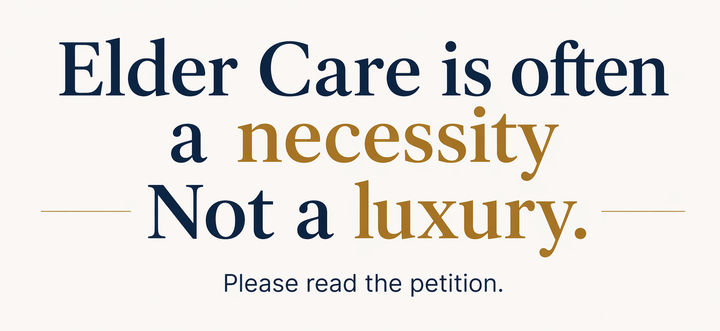
We want the Government to allow pensioners to deduct the cost of essential care from their taxable income.
Why is this important?
Many older people in the UK are required to fund their own care due to limited provision from the NHS and local authorities. This includes residential care and 24-hour home support, which are often necessary for basic dignity, safety, and quality of life.
At present, these costs must be paid from income and savings that have already been taxed. In addition, pensioners may still be required to pay income tax on remaining income, creating a significant financial burden.
Unlike discretionary spending, care costs are unavoidable for those with serious health conditions or reduced mobility. Without adequate care, individuals may deteriorate and require more intensive and costly state support, such as hospitalisation.
We believe essential care costs should be treated similarly to necessary expenses in other contexts. For example, businesses are permitted to deduct legitimate operating costs before tax. A comparable principle should apply where individuals face unavoidable care expenses.
We propose that pensioners be allowed to deduct essential care costs from their taxable income, either fully or up to a capped amount, with appropriate safeguards such as clear eligibility criteria and means-testing.
This would help ensure a fairer tax system and reduce the financial strain on those who have contributed throughout their working lives.
A care home can easily cost over £6,000 per month, approximately £72,000 per year—far beyond what most people earn, and a significant drain on most pensioner's resources.
24-hour support in home can cost upwards of £1,107 per week, with additional expenses—such as night-time support—adding further to that total (for example, an extra £350 last month alone).
These are not choices. They are necessities—basic requirements for safety, dignity, and day-to-day living.
Yet all of this is paid from income and savings that have already been taxed. In addition, any pensioner with any additional pension other than the state pension, will to pay tax on their remaining income, even though it is effectively used entirely to fund the care.
I believe this is fundamentally unfair.
That said, this is not about my family who will not benefit from any policy change that might result from this campaign.
But this issue has concerned me for some time. It affects thousands of families across the UK, and many more will face the same situation in the years ahead.
This is why I believe it is important to raise the issue now—not for personal gain, but in the interest of fairness.