-
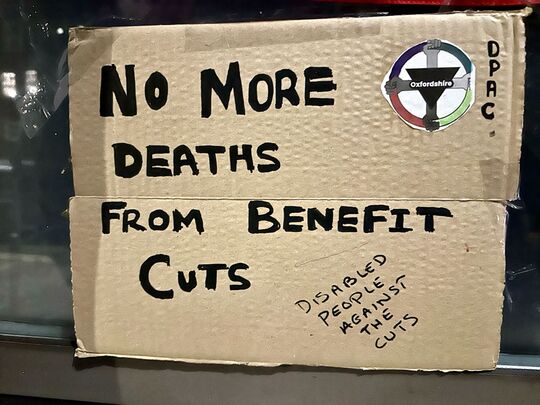 No Cuts to Social Care for Disabled PeopleDisabled people have already borne the brunt of austerity cuts over the past 16 years including huge cuts to the health element of Universal Credit that began in April this year. We demand that the council scraps these callous cuts that will further impoverish and isolate disabled people. These cuts will further impoverish and isolate disabled people.201 of 300 SignaturesCreated by Pat Carmody
 -
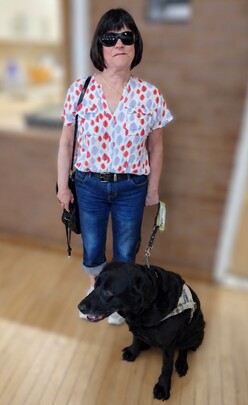 Make Snow Hill Accessible for EveryoneThis is creating real difficulties for vulnerable customers, including: • Disabled people • Elderly shoppers • Parents with young children • People with visual impairments One example is Joyce, who is registered blind. Her guide dog, Star, struggles to safely help her locate her taxi when drivers are unable to wait nearby. No customer should be placed at risk simply because their taxi cannot safely collect them. We Are Asking For: • A clearly designated pick-up and waiting area for licensed taxis • Fair and reasonable enforcement for drivers collecting passengers • Better accessibility for disabled and vulnerable visitors • A review of current UKPC parking policies at Snow Hill Retail Park Please Support This Campaign By signing this petition, you can help make Snow Hill Retail Park safer, fairer, and more accessible for everyone. Sign today and help us bring about change.67 of 100 SignaturesCreated by Nic Stansby
 -
Don’t price disabled people out of independenceDon’t price disabled people out of independenceStop the Motability VAT and insurance tax changes From 1 July 2026, the Government plans to change tax reliefs on Motability and other disabled vehicle leasing schemes. This could mean extra VAT on advance payments and Insurance Premium Tax on new leases. For many disabled people, a suitable vehicle is not a luxury. It is the difference between independence and isolation. Disabled people use Motability vehicles to get to medical appointments, work, shops, family, care, community life and everyday essentials. Many of us cannot rely on public transport because it is inaccessible, unreliable, painful, exhausting, unsafe, or simply not available where we live. The Government says protections will remain for vehicles designed or substantially adapted for wheelchair or stretcher users. But disability is wider than that. Many disabled people need a particular vehicle because of arthritis, chronic pain, fatigue, autism, PTSD, neurological conditions, falls risk, carers, medical equipment, seating position, vehicle height, boot space, automatic transmission, or inability to use public transport. This change risks creating a two-tier system: people with the most visibly adapted vehicles may still be protected, while other disabled people with serious mobility needs face higher costs. If the Government’s concern is luxury vehicles, then it should target luxury vehicles. It should not increase the cost of ordinary disabled transport for people who need a suitable car to live independently. This is also an equality issue. Before making changes that affect disabled people’s access to transport, the Government should publish the full Equality Act assessment, the modelling of how many disabled people may be affected, and the reasons why a targeted luxury-vehicle policy was not chosen instead. Disabled people are already facing rising care costs, energy costs, housing adaptation problems, inaccessible transport, and pressure on disability support. Adding extra costs to disabled vehicles risks pushing more people into isolation, dependency and crisis. We are asking the Chancellor and HM Treasury to: 1. Pause the Motability VAT and Insurance Premium Tax changes. 2. Publish the full Equality Act / Public Sector Equality Duty assessment. 3. Publish modelling showing how many disabled people may pay more, trade down to unsuitable vehicles, delay replacement, or leave the scheme. 4. Protect disabled people who need suitable vehicles for disability reasons, not only wheelchair or stretcher users. 5. Use targeted luxury-vehicle rules if that is the concern, rather than broad tax changes that risk harming disabled people. 6. Review the policy with disabled people, disability organisations and Motability users before it takes effect. Disabled people should not be priced out of independence. Please sign and share this petition.4 of 100 SignaturesCreated by Christopher Swain
-
The removal of “Drive Smart” and other black boxes for those on motabilityThis petition calls for the removal of the Drive Smart monitoring device from vehicles provided under the Motability Scheme. While intended to promote safe driving, many users feel the device is unfair, intrusive, and not suitable for all drivers—especially those with disabilities. Motability customers rely on their vehicles for independence, work, medical appointments, and daily life. The Drive Smart device: • Tracks driving behaviour (speed, braking, acceleration, time of travel) • Can lead to warnings or removal from the scheme • Adds pressure and anxiety for users who already face challenges For many disabled drivers, conditions can affect reaction time, movement, or driving patterns—meaning the system may misinterpret safe driving as risky behaviour. Why This Matters 1. Unfair Assessment The system uses rigid criteria that don’t account for: • Physical disabilities • Neurological conditions • Medication side effects This creates a one-size-fits-all judgement that doesn’t reflect real-world driving for disabled people. 2. Increased Stress & Anxiety Users report feeling constantly monitored, leading to: • Loss of confidence while driving • Fear of losing their vehicle • Avoiding necessary journeys 3. Impact on Independence Losing access to a Motability vehicle can mean: • Missing medical appointments • Losing employment • Increased isolation For many, this isn’t just a car—it’s lifeline-level support. 4. Lack of Transparency • Limited clarity on how scores are calculated • No fair appeal system for disputed data • Little flexibility for individual circumstances What This Petition Asks For We call on Motability to: • Remove the mandatory Drive Smart device OR • Make it optional rather than compulsory • Introduce fair, disability-aware assessment methods • Provide a clear and accessible appeals process How to Support? • Sign the petition • Share it with friends, carers, and support groups • Raise awareness within disability communities Motability users deserve trust, dignity, and fairness—not constant surveillance that risks taking away their independence. This petition is about making the scheme work with disabled people, not against them. I have had the DriveSmart wedge due to a named driver being under 30. I am 33 and held my license for 15 years, with no claims made in that time, and also been with motability for 6 years. I have been taken off the insurance due to 2 red weeks. The red weeks happened the first 2 weeks I have the wedge. I had a call from Direct line where the call handler told me that he was taking me off the insurance there and then and wouldn’t be able to drive my car. I was not given any warning, no letter, no email, nothing. This needs to change! I’ve lost my lifeline, my mental heath has deteriorated, and I am at a complete loss over something that isn’t reliable.36 of 100 SignaturesCreated by Chantelle Adderley
-
 Allow pensioners to deduct essential care costs from taxable incomeMany older people in the UK are required to fund their own care due to limited provision from the NHS and local authorities. This includes residential care and 24-hour home support, which are often necessary for basic dignity, safety, and quality of life. At present, these costs must be paid from income and savings that have already been taxed. In addition, pensioners may still be required to pay income tax on remaining income, creating a significant financial burden. Unlike discretionary spending, care costs are unavoidable for those with serious health conditions or reduced mobility. Without adequate care, individuals may deteriorate and require more intensive and costly state support, such as hospitalisation. We believe essential care costs should be treated similarly to necessary expenses in other contexts. For example, businesses are permitted to deduct legitimate operating costs before tax. A comparable principle should apply where individuals face unavoidable care expenses. We propose that pensioners be allowed to deduct essential care costs from their taxable income, either fully or up to a capped amount, with appropriate safeguards such as clear eligibility criteria and means-testing. This would help ensure a fairer tax system and reduce the financial strain on those who have contributed throughout their working lives. A care home can easily cost over £6,000 per month, approximately £72,000 per year—far beyond what most people earn, and a significant drain on most pensioner's resources. 24-hour support in home can cost upwards of £1,107 per week, with additional expenses—such as night-time support—adding further to that total (for example, an extra £350 last month alone). These are not choices. They are necessities—basic requirements for safety, dignity, and day-to-day living. Yet all of this is paid from income and savings that have already been taxed. In addition, any pensioner with any additional pension other than the state pension, will to pay tax on their remaining income, even though it is effectively used entirely to fund the care. I believe this is fundamentally unfair. That said, this is not about my family who will not benefit from any policy change that might result from this campaign. But this issue has concerned me for some time. It affects thousands of families across the UK, and many more will face the same situation in the years ahead. This is why I believe it is important to raise the issue now—not for personal gain, but in the interest of fairness.6 of 100 SignaturesCreated by James Gripper
 -
Blue Badge for all Disabilities not for some.I suffer with peripheral neuropathy (neuropathic pain)and osteoarthritis, amongst other things, that cause me pain to walk. I can barely walk without getting breathless, as the pain is quite severe. I applied for a renew Blue Badge, having had one for over 10 years, but I have been refused one. I’ve sent my neurologist letter to them, and a GP summary of my conditions but they have still refused me. I use crutches or a walking pole to keep my balance. I have pain every minute every day, and it is a progressive disorder, and dibilitating. I have numbness in my hands,feet, and legs, this comes with tingling and burning sensations, worse when mobile, and at night times when going to bed. I have now had to stop going out because of fear I can’t park near to my destination, so I’m feeling isolated from society which has affected my mental health and physical well-being. I’ve spoken to Norfolk County Council,I have filled their forms in, sent all the necessary documents, and I have still been refused a blue badge. Making this petition is a last resort to get enough signatures from all those disabled people out there who have been refused a BLUE BADGE When they have tried to renew, or can’t get one, when their circumstances warrant one. Hopefully if you sign, could you share with your friends and family, and ask them to share with theirs.60 of 100 SignaturesCreated by Gilly Clayton-Johns
-
End the NHS Care Gap for People With Functional Neurological DisorderFunctional Neurological Disorder affects movement, speech, vision, pain, bladder control, seizures, and daily function. Symptoms are real and disabling, comparable to conditions such as stroke, epilepsy, and multiple sclerosis. People with FND often wait years for a diagnosis. Many are told their symptoms are psychological, dismissed, or passed between services without a plan. After diagnosis, support often stops. No clear pathway. No follow-up. No specialist care. Care depends on postcode. Some areas offer specialist teams. Many offer nothing. People manage seizures, paralysis, chronic pain, and loss of independence alone. Families often step in without training or support. The science exists. Clinical guidance exists. Multidisciplinary treatment improves outcomes, yet access remains inconsistent. Across the UK, people report gaps between diagnosis and access to meaningful support. This highlights the need for properly delivered, consistent care rather than guidance that exists only on paper. This gap causes harm. People lose jobs. Relationships break down. Mental health declines. Trust in healthcare erodes. A national NHS care pathway would change this. Earlier diagnosis. Joined-up care. Clear responsibility. Equal access. Dignity. People with FND deserve the same seriousness, care, and respect as anyone with a neurological condition.4,919 of 5,000 SignaturesCreated by Jamie Attwood
-
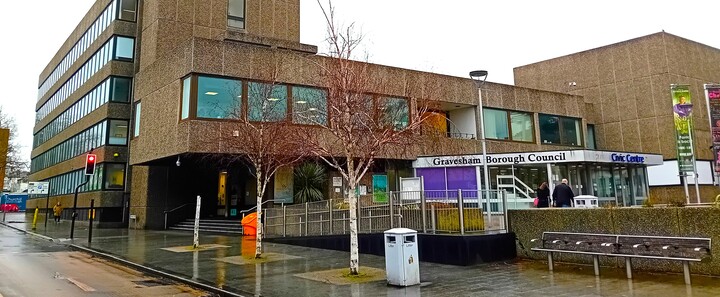 Protect Disabled Residents from Unfair Council Tax in GraveshamGravesham Borough Council is taking disability-related benefits and premiums into account when calculating council tax, even though this money exists specifically to cover the extra costs of living with a disability. Disabled residents — including those who cannot work — are being forced to pay more council tax than they can afford. This policy is particularly harmful during the transition from older benefits (Income Support or Family Tax Credit) to Universal Credit, when many disabled residents only notice the change once they are already financially disadvantaged. Some have seen their council tax jump from £29 to £156 per month without warning. It affects both visible and hidden disabilities, including wheelchair users, mobility impairments, cerebral palsy, muscular dystrophy, multiple sclerosis, chronic pain, blindness, deafness, autism, ADHD, mental health conditions, chronic illnesses, rare diseases, and other overlooked conditions. This treatment is discriminatory, uncaring, and unnecessary. Other councils protect disability-related income, proving that Gravesham’s policy is a conscious choice to target the most vulnerable residents. We demand that Gravesham Borough Council: 1. Stop counting disability-related benefits as income in council tax calculations, including during Universal Credit transitions. 2. Reassess all current council tax liabilities for disabled residents affected by this policy. 3. Ensure future schemes comply with the Equality Act 2010, treating disabled residents fairly and respectfully. Disabled residents are not disposable. We will not accept being punished for circumstances beyond our control. Sign this petition and share it to demand justice and accountability. --- Call-to-Action / Social Share Line: “Gravesham Council is punishing disabled residents, visible and hidden, by taking our disability money for council tax. Sign and share to demand they stop!”73 of 100 SignaturesCreated by Sharon Taylor
 -
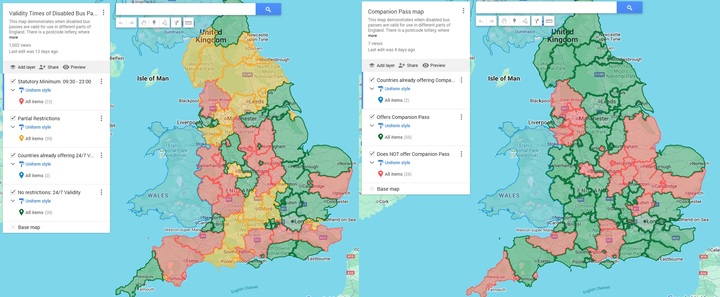 End the postcode lottery restricting disabled bus travelTime Restrictions 🕤 Over half a million disabled people in England live in areas with restrictions on disabled bus passes. Under the statutory minimum, disabled people can only use their bus pass between 09:30 and 23:00. The peak time restriction makes it harder and more costly for disabled people to get to work, education and healthcare appointments. Removing time restrictions on disabled bus passes would remove many barriers and help more people into work, training and education. It would also allow disabled people to be more independent and participate actively in their communities. You do not start and stop being disabled at particular times of day, so we believe that disabled people should be able to travel by bus at all times of day. “Hans Gording, an employment support worker for a disability charity, suffers from Stiff Person Syndrome, a rare neurological disorder which restricts his mobility and vision. Hans said: "Disabled people are issued a bus pass for a reason but cannot use it in North Yorkshire before 9am. This discriminates against those like me who cannot drive but need to commute to work or attend regular morning hospital appointments.” ” Companion Passes 👥 Some disabled people cannot travel alone by bus and require a companion or carer to support them on bus journeys. However, they have to pay a full fare for their companion. This is a cost that can quickly add up and is a deeply unfair barrier for many disabled people, who are already economically disadvantaged. “Patricia Clements, a former staff nurse, lost her sight in 2022. When Hampshire County Council scrapped their Companion Pass in April 2025, it made it harder for her to visit the eye hospital, do voluntary work for charities and stay well by going swimming. “People who help us get on and off buses are volunteering their time and it seems wrong to make them pay to do so,” she said.” How to end the postcode lottery: The system is broken in England. Local authorities can voluntarily offer ‘enhancements’ that extend validity hours or offer free travel for companions. But there is a postcode lottery, with some areas providing a range of enhancements, and others just the statutory minimum. Local and national political leaders then blame each other for the restrictions. Providing 24/7 disabled bus pass validity and a companion pass for those who need one would cost as little as £10.3 million per year for all 870,000 disabled bus pass holders in England. This affordable reform would also boost the economy by helping more disabled people into work. It is an astonishingly low price to pay for enhancing disabled people’s wellbeing and independence! Scotland and Wales already provide 24/7 disabled bus passes and companion passes. It’s only England that has a postcode lottery. It’s time to fix this broken system. We call on the government to guarantee throughout England 24/7 validity for disabled bus pass holders and free travel for a companion if they cannot travel alone.692 of 800 SignaturesCreated by Waterside Changemakers
 -
Stop the dangerous cuts to benefitsThese proposed cuts to benefits must be stopped at all costs as they will only cause pain, misery and despair. They will also push people into poverty or worse to an untimely end.6 of 100 SignaturesCreated by Rebecca Whalley
-
Let disabled people who CAN work get a job!Because disabled people who CAN work can't get a job due to blatant discrimination.4 of 100 SignaturesCreated by Rich Allen
-
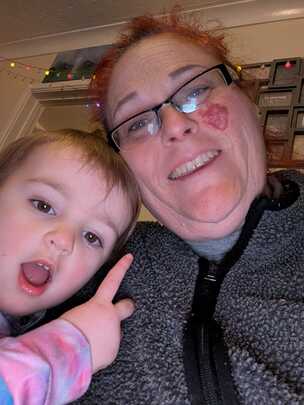 🧒 Save The Aviary Nursery – Don’t Shut Down Eastleigh’s Only SEND Hub!Started by Clare Norcott – Parent, Advocate, and Member of The Disability Union My granddaughter Lily is autistic and non-verbal, and I know how hard it is to find support that truly understands our children. That’s why I’m devastated that Hampshire County Council is planning to shut down The Aviary Nursery in Eastleigh – the only nursery in our area with a dedicated SEND (Special Educational Needs and Disabilities) hub. The Aviary is more than a nursery. It’s a place where children with complex needs are not just accepted – they are celebrated. It’s where skilled staff provide tailored care, where parents feel seen and supported, and where children like mine have the chance to thrive. If the closure goes ahead, families will be forced to travel as far as Winchester to access equivalent services. That’s miles away – completely unmanageable for many families, especially those already stretched emotionally and financially. We’ve come too far to lose a place like this. Every child deserves access to the right care, close to home. Don’t let our children become casualties of cuts and convenience. Please sign and share this petition. Together, we can save The Aviary.1,150 of 2,000 SignaturesCreated by George Baker
Hello! We use cookies to improve your experience by providing insights into how the site is being used. Find out more.