
1,000 signatures reached
To: Stevenage Borough Council and Hertfordshire County Council
Protect and Restore Outdoor Dining on Stevenage Old Town High Street
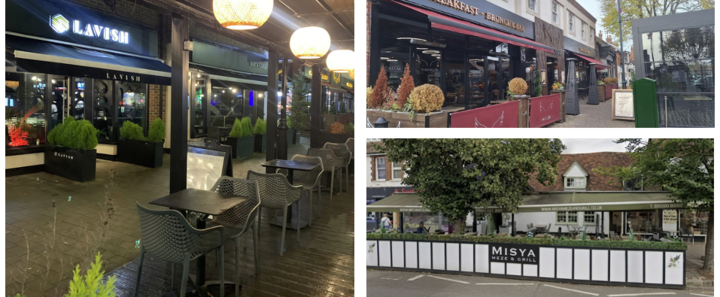
We, the undersigned residents, business owners, and visitors of Stevenage, call upon Stevenage Borough Council and Hertfordshire County Council to protect existing outdoor dining spaces and immediately restore those that have been removed.
Why is this important?
We urge the councils to respect the six-year history of these spaces, the considerable investments made by local businesses in good faith, and the true consensus of the public consultation.
Why This Matters
1. Total Council Involvement and Six Years of Good Faith
Why This Matters
1. Total Council Involvement and Six Years of Good Faith
These outdoor dining spaces were not built secretly or unlawfully. During the pandemic, Stevenage Borough Council actively removed parking bays, installed barriers, and allocated the space to restaurants.
- Legitimate Expectation: Businesses were formally instructed by the Council to apply and pay for pavement licences.
- Undermining Investment: Relying entirely on the Council’s ongoing encouragement, licensing, and enforcement, independent businesses acted in good faith. They invested massive sums up to £130,000 per structure to build high-quality facilities. To force the removal of these structures now, at an additional cost of up to £25,000 to the business owners, is a devastating U-turn based on a bureaucratic dispute between the Council and Hertfordshire Highways.
2. A Flawed Consultation Overriding a Proven Safety Record
Throughout six years of continuous, highly visible operation, not a single pedestrian has been harmed by these outdoor seating arrangements.
Despite this perfect safety record, and despite the Council’s own consultation data showing 76% of the public explicitly support outdoor seating, policies are being changed.
Issues with the councils survey design
Issues with the councils survey design
- Survey not designed to support outdoor dining: The consultation did not include outdoor dining as an option in the “favourite things about the High Street” question, despite its relevance.
- Mismatch with actual High Street use: Eating and drinking were recorded as the second‑highest main use of the High Street, yet this was not reflected in the survey’s priority options.
- Desired improvements ignored outdoor seating: Respondents expressed interest in keeping or expanding outdoor seating, but this was not represented in the survey’s improvement categories.
- Activity categories excluded outdoor dining: When asking about desired types of activities, the survey again omitted outdoor dining, despite its proven popularity.
- Survey wording aligned with political aims, not consumer needs: By excluding outdoor dining from key questions, the survey appears structured to support a predetermined policy direction rather than reflect genuine user preferences.
A recent Facebook post demonstrates that 33 out of 59 comments all in favour of the dining seating returning. Noting that 8 of the comments, were sub comments not an actual request for it to return.
The consultation gave no warning that these vital spaces would be stripped away, or the question actually being asked. The current compromise is driven by anecdotal, non-factual feedback rather than the clear public mandate.
3. The Real Parking Issue: Inefficient Management, Not Seating Capacity
The argument that outdoor dining must be dismantled to claw back a few parking bays fundamentally misunderstands how the High Street operates. The issue is not a lack of spaces; it is the mismanagement of existing parking rules:
- Dwell Time Realities: The Old Town is powered by service and hospitality businesses, including pubs, restaurants, hairdressers, beauticians, and solicitors. A typical visit to these establishments requires a dwell time of 90 to 120 minutes, yet the Council allows up to three hours.
- The Parking Flaw: The current free parking allowance on the High Street is poorly optimised. Because the free duration is too long, it encourages drivers to "block" prime on-street bays for extended periods, preventing the rapid turnover of vehicles that short-stay retail needs.
- The Delivery Culture: Additionally, deliveries and fast-food collections result in cars parking in the road whilst they drop off or pick up.
Reclaiming outdoor dining spaces to create a handful of extra bays will not fix this; it will simply allow a few more vehicles to sit idle for hours, whilst actively destroying the vibrant spaces that attract visitors to the Old Town in the first place.
4. Direct Impact on Local Jobs
The hospitality sector operates on incredibly tight margins. Outdoor capacity directly translates to staff rotas. Removing these spaces forces a direct reduction in operating capacity, leading inevitably to fewer working hours for local front-of-house, kitchen, and management staff, and threatening the very survival of independent businesses.
What We Are Asking For:
- The Reversal of Space Removals: That the Council immediately reinstates the outdoor dining allocations that have been scaled back or removed.
- Honouring Public Consensus: That the Council stands by its own consultation data (showing 76% support) and stops compromising public spaces based on non-factual, anecdotal complaints.
- Honouring Public and Financial Good Faith: Recognise that businesses invested heavily based on formal council guidance, and suspend all enforcement action whilst a fair solution is negotiated.
- A Smarter Parking Review: That the Council addresses parking availability by reforming the free-parking time limits to encourage vehicle turnover, rather than dismantling the alfresco economy.
5. Massive Housing Growth Demands More Community Spaces
Stevenage is undergoing a significant residential expansion, with thousands of new homes being built across major developments like the SG1 town centre regeneration, the massive expansion at housing sectors to the north and west, and surrounding local plans.
- The Numbers: With the borough and surrounding areas accommodating an influx of thousands of new residents, the infrastructure of the town must expand to support them.
- The Need for Dining: A growing population does not just need houses; it needs social infrastructure. New residents naturally look to the historic charm of the Old Town High Street for leisure, dining, and community connection.
Restricting or removing outdoor dining capacity at a time when consumer demand is dramatically increasing is completely counterproductive. The High Street needs more dining space to accommodate this growth, not less.
We already see a burden on Infrastructure with examples like 9 Yards, it was and never will be feasible to accommodate the demand with the limited parking available. 7,300 new homes (houses + flats) by 2028 and most of these areas and restaurants are going to be inundated.
We already see a burden on Infrastructure with examples like 9 Yards, it was and never will be feasible to accommodate the demand with the limited parking available. 7,300 new homes (houses + flats) by 2028 and most of these areas and restaurants are going to be inundated.
How it will be delivered
By Email once all the results are available