2026-09-19 17:33:49 +0100
To: Cumberland Council, Sec. of State Miatta Fahnbulleh, National Grid CEO
Stand with Blackford, the Borders and Britain: Reject Option A
With respect to Cumberland Council, the residents of North Carlisle wants its Council to Stand with Blackford and North Cumbria by acting now to engage in the National Grid Cross Border Connection in its role as statutory consultee at the formative stage of this Nationally Significant Infrastructure Project.
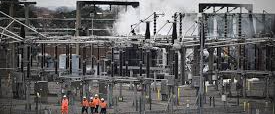
Cumberland Council are asked to confirm its role as a 'Place & People' leader - offering proactive and timely support to communities to assess and address concerns regarding the inclusion of an Option A site in North Carlisle relating to a Mega Substation (the largest in the UK at 74 acres) and the impacts of over 17 miles of 400kv Pylons, the largest of their kind in the UK across our unique landscape - what is it doing now to resource this project with immediate effect, engage with the communities affected, capture their concerns, quantify the impacts and commence gathering the pertinent evidence to engage in the NSIP DCO in a manner that adequately represents its residents and taxpayers?
Cumberland Council are asked to confirm its role as a 'Place & People' leader - offering proactive and timely support to communities to assess and address concerns regarding the inclusion of an Option A site in North Carlisle relating to a Mega Substation (the largest in the UK at 74 acres) and the impacts of over 17 miles of 400kv Pylons, the largest of their kind in the UK across our unique landscape - what is it doing now to resource this project with immediate effect, engage with the communities affected, capture their concerns, quantify the impacts and commence gathering the pertinent evidence to engage in the NSIP DCO in a manner that adequately represents its residents and taxpayers?
Why is this important?
National Grid cannot be allowed to destroy our communities in the name of progress.
Through the proposed Cross Border Connection and future mooted reinforcement projects set out in the NESO Beyond 2030 report, Blackford and the rural communities north of Carlisle are being asked to carry the burden of a major national energy infrastructure scheme. This is not a modest upgrade. It is a large-scale transmission project involving new overhead lines, pylons, connection infrastructure and a major substation development that would permanently industrialise open countryside. Under Option A, if progressed, the greatest harm would fall directly on Blackford and surrounding villages.
This is not empty land. This is not a blank space on a National Grid map. This is a living, working rural landscape with deep roots in Britain’s story. The recent discovery of three Bronze Age torcs in the area understood to be affected by Option A shows that this landscape has been valued, used and shaped by people for thousands of years. Published archaeological material shows how rare and significant Bronze Age gold torcs are in Britain, with studies referring to around 52 British gold bar torcs and fewer than 20 ribbon torcs known from England in certain categories. These are not ordinary finds; they are evidence of a place whose significance reaches back across millennia.
Saving this landscape is therefore not just about protecting fields, views or individual villages. It is about saving part of British rural identity — an identity that transcends generations, centuries and millennia. It is about recognising that places like Blackford carry the memory of rural Britain: its farming, its settlement, its archaeology, its communities, its traditions and its relationship with the land.
No one disputes the need for clean energy, stronger grid capacity or national progress. But progress cannot mean trampling over rural people, rural businesses, family farms, heritage, landscape and village life. A green transition that destroys the communities and histories in its path is not a just transition. It is simply a different kind of harm.
National Grid may be delivering infrastructure within the national energy policy framework set by Government, DESNZ, Ofgem and the wider system planning process, but that does not give it permission to treat rural communities as collateral damage. Infrastructure of national importance still has to be delivered with fairness, restraint, accountability and respect for place.
Option A is the wrong site and the wrong approach. It would impose disproportionate harm on Blackford, Harker, Scaleby, Westlinton and the wider rural area. It would industrialise countryside, fragment land, damage rural amenity, disrupt local businesses and permanently alter the character of a landscape that has shaped communities since prehistoric times.
This is not opposition to progress. It is opposition to reckless progress.
Cumberland Council cannot sit this out. The Council has a clear role in influencing the Planning Inspectorate, challenging the adequacy of consultation, submitting robust technical evidence, exposing the local impacts through a formal Local Impact Report, and demanding that Option A is subjected to the fullest possible public scrutiny. If National Grid will not listen, Cumberland Council must help make sure the matter is tested openly, transparently and publicly.
Local people need leadership, not silence. They need advocacy, not observation. They need their Council to stand with them and make clear that Option A represents the site of greatest harm to rural people, place, businesses, heritage and way of life.
Mayoral candidates must also pick this up as a defining issue for North Cumbria. Any candidate seeking to speak for Cumberland, Cumbria or the wider borderlands must show they understand rural communities and are prepared to defend them. This campaign is a test of political leadership. It is a test of whether candidates believe rural communities should be partners in the green transition — or simply places where infrastructure is imposed because resistance is expected to be quieter.
The threat to Blackford and North Cumbria is part of a much wider pattern. Across the Borders, communities are facing similar pressure from large-scale transmission projects, driven by the same national push to move energy across the country. These projects are linked by policy, by infrastructure need and by impact. The same story is being repeated: rural places asked to carry national burdens without enough respect, protection or genuine choice.
From Blackford to the Borders, and across Britain, this is a watershed moment. It will decide whether the green transition is done with rural communities or done to them. It will decide whether local voices matter when national infrastructure arrives. It will decide whether the countryside is valued as a living, working historic place — or treated as empty space on a map.
Blackford must not become the test bed for how to force major infrastructure through rural communities with the least resistance. It should become the place where communities, councils and political leaders draw the line.
National Grid cannot destroy our communities, our heritage or our rural identity in the name of progress.
Stand with Blackford and North Cumbria.
Reject Option A.
How it will be delivered
Electronically