
500 signatures reached
To: UK Government
They're cancelling Corgis - what next? Stop the academics erasing our healthy, beloved breeds!!!
Stop the Innate Health Assessment from Becoming Law Without Ethical Breeders, Dog Owners, and People Who Actually Understand the Issue .
We call on the UK Government and devolved administrations to pause the adoption of the Innate Health Assessment (IHA) as a statutory requirement for dog breeding licences, and to ensure that any future canine health framework is evidence-led, proportionate, and developed with genuine expert and breeder involvement.
We call on the UK Government and devolved administrations to pause the adoption of the Innate Health Assessment (IHA) as a statutory requirement for dog breeding licences, and to ensure that any future canine health framework is evidence-led, proportionate, and developed with genuine expert and breeder involvement.
Why is this important?
The proposed IHA risks misidentifying healthy dogs as welfare concerns based on appearance alone, rather than addressing the real causes of inherited disease and poor breeding practice.
Why this matters
The IHA uses broad, non-breed-specific criteria to assess dogs at a single point in time. This approach:
Focuses on physical appearance rather than underlying health
Fails to recognise genetic diversity within breeds
Does not distinguish between responsible, health-tested breeders and irresponsible practices
Ignores modern genetic testing and long-term health data
Risks penalising healthy dogs solely for breed-typical traits
Many serious inherited conditions — including heart disease, epilepsy, autoimmune disorders, and cancers — cannot be detected by visual or movement-based assessment, yet these are among the most significant causes of suffering in dogs.
Unintended consequences
If introduced in its current form, the IHA could lead to:
Healthy, well-cared-for dogs being unfairly restricted
Ethical small-scale breeders being forced out
Reduced genetic diversity, increasing long-term health risks
Families losing access to trusted, responsible breeders
This would not improve welfare — it would drive good breeding underground while failing to tackle genuinely harmful practices.
Lessons from past legislation
The UK’s experience with appearance-based and breed-focused enforcement, including inconsistent local authority interpretation of existing laws, shows that such approaches do not prevent poor welfare outcomes. Instead, they divert resources away from real neglect and abuse.
A better way forward
Effective canine welfare policy must:
Be rooted in veterinary and genetic science
Use DNA testing and population-level data
Support long-term health monitoring
Be developed with ethical breeders, breed experts, and veterinary specialists
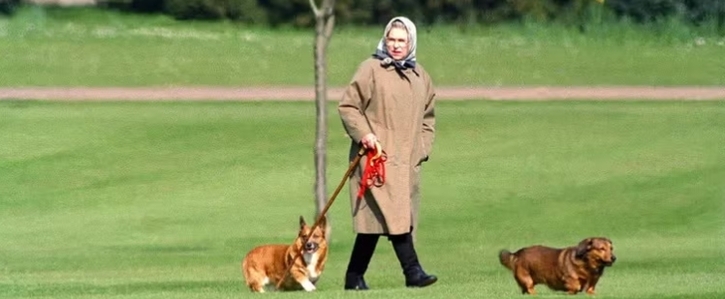
Her Late Majesty Queen Elizabeth II was a lifelong advocate for dogs, responsible breeding, and the preservation of Britain’s historic breeds. Safeguarding canine welfare means protecting healthy dogs, responsible breeders, and evidence-based policy — not relying on blunt tools that risk lasting harm.
Our call to action
We urge policymakers to pause, review, and reform the IHA before it becomes embedded in law, and to work with those who have dedicated their lives to breeding healthy dogs.
Please sign and share this petition to protect dogs, fairness, and evidence-led animal welfare in the UK
The INNATE Health Assessment for dogs is often described as “unfit for purpose” because it does not do what a health assessment is supposed to do: reliably identify, prevent, or reduce inherited disease and welfare problems.
1 - It focuses on appearance, not health
Why this matters
The IHA uses broad, non-breed-specific criteria to assess dogs at a single point in time. This approach:
Focuses on physical appearance rather than underlying health
Fails to recognise genetic diversity within breeds
Does not distinguish between responsible, health-tested breeders and irresponsible practices
Ignores modern genetic testing and long-term health data
Risks penalising healthy dogs solely for breed-typical traits
Many serious inherited conditions — including heart disease, epilepsy, autoimmune disorders, and cancers — cannot be detected by visual or movement-based assessment, yet these are among the most significant causes of suffering in dogs.
Unintended consequences
If introduced in its current form, the IHA could lead to:
Healthy, well-cared-for dogs being unfairly restricted
Ethical small-scale breeders being forced out
Reduced genetic diversity, increasing long-term health risks
Families losing access to trusted, responsible breeders
This would not improve welfare — it would drive good breeding underground while failing to tackle genuinely harmful practices.
Lessons from past legislation
The UK’s experience with appearance-based and breed-focused enforcement, including inconsistent local authority interpretation of existing laws, shows that such approaches do not prevent poor welfare outcomes. Instead, they divert resources away from real neglect and abuse.
A better way forward
Effective canine welfare policy must:
Be rooted in veterinary and genetic science
Use DNA testing and population-level data
Support long-term health monitoring
Be developed with ethical breeders, breed experts, and veterinary specialists
Her Late Majesty Queen Elizabeth II was a lifelong advocate for dogs, responsible breeding, and the preservation of Britain’s historic breeds. Safeguarding canine welfare means protecting healthy dogs, responsible breeders, and evidence-based policy — not relying on blunt tools that risk lasting harm.
Our call to action
We urge policymakers to pause, review, and reform the IHA before it becomes embedded in law, and to work with those who have dedicated their lives to breeding healthy dogs.
Please sign and share this petition to protect dogs, fairness, and evidence-led animal welfare in the UK
The INNATE Health Assessment for dogs is often described as “unfit for purpose” because it does not do what a health assessment is supposed to do: reliably identify, prevent, or reduce inherited disease and welfare problems.
1 - It focuses on appearance, not health
INNATE largely assesses physical conformation and movement at a single point in time.
That’s a problem because:
- Many serious inherited diseases (heart disease, epilepsy, autoimmune disorders, cancers) cannot be seen externally
-Dogs can “pass” despite carrying or developing severe genetic conditions later
- Many serious inherited diseases (heart disease, epilepsy, autoimmune disorders, cancers) cannot be seen externally
-Dogs can “pass” despite carrying or developing severe genetic conditions later
A dog can look fine and still be genetically unhealthy.
2. It ignores modern genetic science
INNATE does not require DNA testing or use population-level genetic data.
As a result:
-Known inherited diseases with available DNA tests may be missed
-Carrier dogs are not identified
-Breeding decisions are made without understanding genetic risk
-Known inherited diseases with available DNA tests may be missed
-Carrier dogs are not identified
-Breeding decisions are made without understanding genetic risk
➡️ This is outdated compared to current best practice in canine health management.
3. One-off assessments give false reassurance
The assessment is typically:
-Single-time
-Short
-Non-longitudinal
-Single-time
-Short
-Non-longitudinal
But many conditions:
-Develop with age
-Are episodic
-Worsen over time
-Develop with age
-Are episodic
-Worsen over time
➡️ Passing once can give breeders and buyers false confidence.
4. It does not meaningfully improve welfare outcomes
There is no strong evidence that INNATE:
-Reduces prevalence of inherited disease
-Improves breed health long-term
-Changes harmful breeding practices
-Reduces prevalence of inherited disease
-Improves breed health long-term
-Changes harmful breeding practices
Health schemes should show measurable welfare benefits. INNATE hasn’t demonstrated that.
5. It can be used as a marketing tool
Because it’s branded as a “health assessment,” it may:
-Be used to promote dogs or breeding programs
-Mislead puppy buyers into thinking a dog is “health tested”
-Be used to promote dogs or breeding programs
-Mislead puppy buyers into thinking a dog is “health tested”
➡️ This risks undermining transparency, not improving it.
6. It sidesteps the real causes of poor canine health
Major drivers of dog health problems include:
-Closed gene pools
-Inbreeding
-Extreme conformations
-Selection for appearance over function
-Closed gene pools
-Inbreeding
-Extreme conformations
-Selection for appearance over function
INNATE does not directly address these structural issues.
What would be fit for purpose?
A meaningful canine health scheme should include:
-DNA testing for known inherited diseases
-Population genetics and diversity monitoring-
- Long-term health data collection
-Evidence-based breeding recommendations
-Independent veterinary and genetic oversight
-DNA testing for known inherited diseases
-Population genetics and diversity monitoring-
- Long-term health data collection
-Evidence-based breeding recommendations
-Independent veterinary and genetic oversight
Bottom line
INNATE is considered unfit for purpose because it looks like a health assessment without actually protecting health. It evaluates what’s easy to see, not what truly matters for canine welfare.
How it will be delivered
Social Media