
-
 Fund the completion of the new Royal Liverpool HospitalWhen construction company Carillion went bust earlier this year, work on our new hospital stopped. Right now people in Liverpool are without the world-class healthcare they were promised. Now we need the government to step in and finish the job. We need some joined up working on this, not political posturing. We currently have a half completed state of the art hospital standing empty while patients are being treated and cared for in the old hospital. Witnessing how our existing facilities continue to be patched up to provide as decent a service as possible, it becomes more apparent that the make do and mend approach is no longer workable. A new 'almost complete' facility is only several hundred meters away. A conversation I had with members of staff this week highlights how frustrated they are at the lack of progress and how difficult it is to explain temporary change to many patients, particularly the elderly. All we want is what was promised, a clean, safe hospital fit for the 21st century. The Government have announced they will fund the completion of the failed Carillion build hospital in the Midlands, they should do the same for the people of Liverpool too. A coordinated approach to funding and completing the building needs to be a priority for the Government.15,694 of 20,000 SignaturesCreated by Alastair Bain, Dianne Beck, Vicky Gray & Lisa Ryan
 -
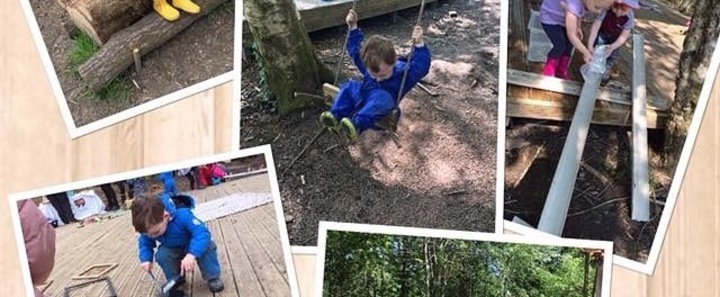 Save our play spaceA lease agreement for our 4 acre woodland (named Ladybird woods by our toddler children) is vital for Ignite Unlocking Potential as a social enterprise to support schools, community & families with educational services including Wales's only Nature Kindergarten, Ladybirds Parent & Toddler group, Adventure camps and activity days for children with physical disabilities & additional learning needs. During the 4 years as a business tenant paying against a draft agreement of 21 years, we have transformed 4 acres of unused land into a centre for excellence in Nature based Pedagogy. To date, this learning & play space has enabled us to make a real difference to the lives of over 8000 children and provides leading edge education and training services to education & health professionals across Wales and the UK. Please read some of our reviews from parents & teachers that we have recently supported. Your signature will provide our children with the hope that we can continue to enrich their lives and provide a place that nurtures and unlocks their potential. "My little one went to the summer camp up the country park he has ADHD and struggles sometimes with friends and groups, to say he had an amazing time is a understatement he loved it the staff where amazing with him , come bk a very different child and much more confident, he can't wait to go again thank u all !!!!" Leanne Evans (Parent). "You don't know what a massive part your team has played this summer for my kids x so thank you all x" Caly Cross (Parent). "Had a wonderful time volunteering with the Ladybirds Parent and Toddler group today- very wet and soggy but a beautiful atmosphere, Thank you" Catrin Doyle (Volunteer). "This week I started my Forest School Leader training with you guys and I've loved every second. So many amazing ideas, people and open-ended resources! Just what I needed to get my mind back on track, can't wait for the next sessions!" Jordan Baxter (Teacher). “The community has nothing but wonderful things to say about the organisation and we’ve been waiting years to be able to attend!” “Ignite embody all of the goals and principals of the Well-being for future generations ACT. The adults love it.The Children love it.The community Need it.They promote health and wellbeing - both physical and mental, through a connection with the outdoors.They need the space!” Eve Harris (Parent).955 of 1,000 SignaturesCreated by Darren Lewis
 -
 Huge price rise to park at work or forced park and ride!!I think there isn’t a person in this country that feels the latest pay deal we received was in anyway adequate and this was following a pay freeze for several years. Now to add insult to this our trust has decided to massively increase the cost for staff to park onsite using the cloak of “being green” as a reason. The alternative to parking onsite is a park and ride based in Fontwell - for many of us if we used this system would actually be travelling further every day - how green is that?? Also this would add a significant amount of time to an already long and arduous day.1,449 of 2,000 SignaturesCreated by Sally Laatz
 -
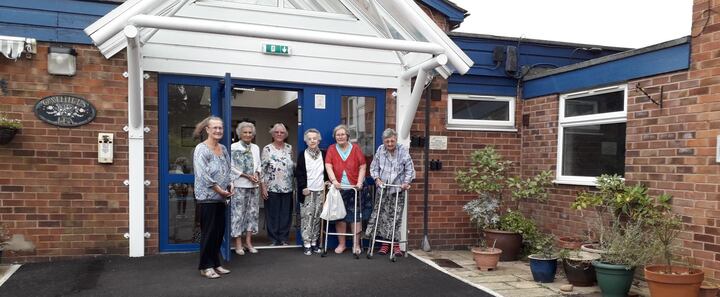 Save Oathills Lea, TarporleyDo you want to save Tarporley's precious, affordable retirement flats, Oathills Lea? Where will our elderly population go, if this complex is closed or sold off by Weaver Vale Housing Trust? Oathills Lea is currently under review and its residents are worried sick, as you can imagine. Built in 1970, Oathills Lea has 23 retirement flats for residents aged 50 and over. It is the perfect location, especially for the less mobile residents and those who no longer drive. The bus stop is just 100 yards; the Co-op 250 yards; post office 250 yards; village centre 100 yards; doctors 0.5 mile(s). All of this helping our older villagers maintain their independence. Oathills Lea is the only accommodation of it's sort in the village. Not only is it made up of individual flats, but there is a communal area where the residents congregate in the afternoons to socialise with each other. Many of it's former and current residents have always lived in Tarporley and others have sold their homes and moved here to be closer to their families. None of us want to be evicted from our homes and it is putting the more vulnerable villagers under immense pressure and stress. What will Oathills Lea be replaced with ? Weaver Vale Housing Trust, recently you were promoting the flats as a "Home for Life". Why have you gone back on your word ? Why aren't you filling the empty flats, when given the ageing and increasing population of Tarporley and the surrounding villages there is probably a demand for them ? If anything more retirement flats are likely to be needed over the years. PLEASE sign our petition and share it with your friends and family181 of 200 SignaturesCreated by Deborah Wood
 -
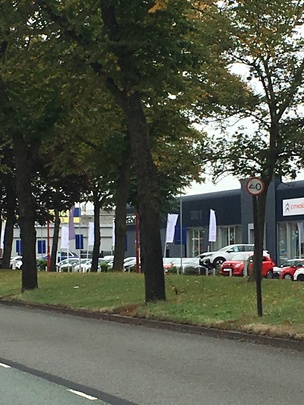 Reduce the speed limit and install average speed cameras on the Tyburn RoadThe road is extremely busy many drivers exceed this limit , even driving at 40 mph doesn’t allow residents to enter and exit their properties in a timely and safely manner . There is a high incidents of accidents on the road . The traffic cause vibration through residents properties . Many other main busy roads in and out of Birmingham city centre have been reduced to 30 mph It is about time this road was changed .177 of 200 SignaturesCreated by Stella Duncan
 -
 Get Refills in Body ShopIn 2002 The Body Shop discontinued the refill facility offered in some stores owing to a lack of demand. Previously it had been possible to refill shampoos and shower gel bottles with a view to avoiding unnecessary waste. They stopped it fifteen years ago, but in that time the impact of plastic on the environment has become increasingly apparent and people are keen to find ways to reduce their waste. The Body Shop have said that they are introducing recycled plastic into their supply chain, but recycling uses energy and they would still be using virgin plastics. The best way to 'do our bit' is to reuse. Tell The Body Shop that you would use refill facilities if they were made available again.271 of 300 SignaturesCreated by Polly Bowman
 -
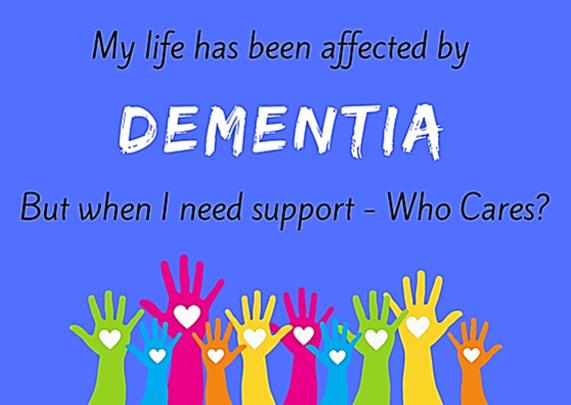 Dementia Carers Need More Support!Approximately 700,000 people in the UK provide UNPAID care for a loved one with Dementia, saving the Government £11.6 BILLION each year. ... Without these unpaid carers, the UK care system would collapse, leaving millions in crisis. Yet when these carers find THEMSELVES in crisis, they are routinely told that somebody will respond to them in 5 - 10 days or that respite care is unavailable due to a lack of funding. Alzheimer's Society reported these facts as far back as 2014 and yet the situation continues to deteriorate. ... And with the number of people living with Dementia expected to exceed 1 million by 2021, things are set to deteriorate further still. (https://www.alzheimers.org.uk/about-us/policy-and-influencing/dementia-uk-report) We are therefore echoing the Alzheimer's Society's plea for "appropriately resourced national Dementia strategies", and in particular the BADLY needed measures laid out in their statement on carer support. (https://www.alzheimers.org.uk/about-us/policy-and-influencing/what-we-think/carer-support) Because, as things stand today, the vast majority of unpaid Dementia Carers feel ignored, unsupported and alone - day in and day out. We need change! And we need it NOW! --------------------------------------------------------------------- Please also see our website at https://www.startcaring.co.uk for details of our 'Who Cares?' Postcard Campaign. Start Caring! - Because change happens faster when we all work together.846 of 1,000 SignaturesCreated by Hilary Sweeney
-
 Keep Kearsley Children’s Centre From Closure!There is lack of children's early learning services in Kearsley. This Childrens Centre has been revamped and is in a perfect location for many people from farnworth , kearsley , Clifton & so on. As a disabled parent this Centre is a perfect location, not only that having that comfort from going to the centre for a while & then changing to another location and closing this one down makes it much more awkward.KEARSLEY also needs a nursery school. At present it's at Lord Street and as stated previously parents cannot be at two locations at the same time. Lord Street and St Stephens/Spindle Point. The other Kearsley nursery is Kearsley West, but they don't accept early ages. So my question? Why does Kearsley not have a council nursery for pre school children? Also if the council are to revamp the centre in Farnworth why? Why can't people travel to Kearsley to a purposed built centre which had already been revamped? Why waste even more money on a building when you already have a perfectly revamped and neutral positioned Childrens Centre to then close it? Birch Road Centre was to be built and opened for a short time and then closed. Let’s Keep Kearsley Childrens Centre Open, Sign This Petition & Make A Difference.196 of 200 SignaturesCreated by Michelle Massey
 -
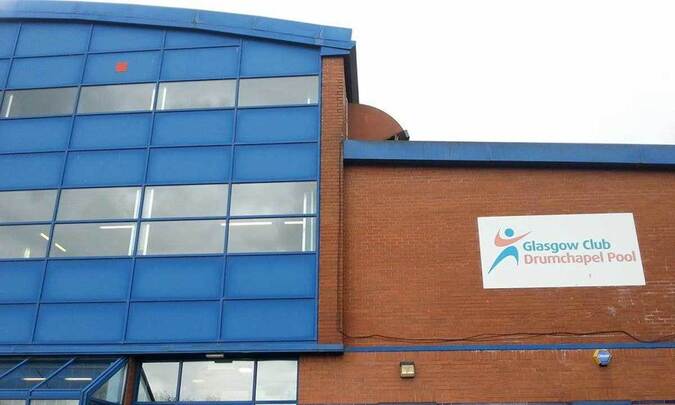 Stop potential closure of Drumchapel Swimming PoolThe swimming pool is part of Drumchapel history and community children, parents and grand parents go there regularly. It is unacceptable and therefore closure will not be accepted. Swimming is a life skill; we must ensure that our children are given a chance to learn to swim. What is important is that it is not only a sport but can save someone from drowning which is the most common of accidental deaths in children. Swimming is also important for the elderly or infirm to be able exercise without straining joints. Swimming is important for rehabilitation and physiotherapy. Glasgow life have also started charging nursery school children and OAPs which could have been avoided. Drumchapel is one of the most deprived areas in Europe; the swimming pool is the only publicly funded facility which the entire family can enjoy together.3,234 of 4,000 SignaturesCreated by Magdalene Robertson
-
 Food Waste Recycling in SwindonWhen food waste is put into landfill it decomposes anaerobically and therefore produces methane gas. Methane is a green house gas which is contributing to climate change. As of 2017 44% of councils have started collecting food waste and Swindon needs to catch up.104 of 200 SignaturesCreated by Gisele Spencer
 -
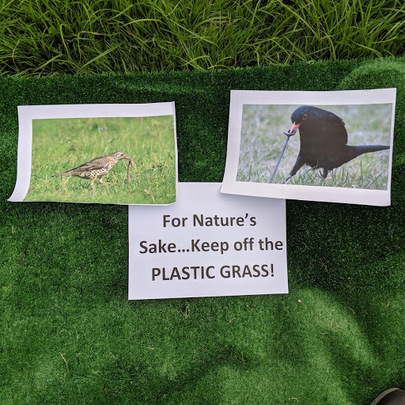 For Nature's Sake...Keep off the PLASTIC GRASS!As more and more of our country side is converted to pesticide covered mono crops, our Welsh wildlife is becoming more reliant on our gardens for food and shelter. But there has been a massive increase in people choosing to cover their gardens in artificial/plastic grass and thus turning our gardens into wildlife deserts offering no food. Watching a Blackbird or Song thrush searching for worms and invertebrates on artificial grass must be one of the saddest sights in nature! No insects can live there and no seeds or flowers are produced and so you remove the food source for birds, hedghogs, shrews, slowworms, frogs, bats, moles, butterflies, bees and many, many more species. Add to this the fact that artificial grass does not soak up carbon dioxide and will eventually end up as yet more plastic rubbish taking thousands of years to biodegrade. The "State of Nature" report clearly warned us that we need to change the way we run our lives if we are going to reverse the dramatic drop in our wildlife numbers. Be careful of the manufacturers arguments as currently they are making big profits and its easy to pay PR experts to promote environmentally damaging products. They will argue that with artificial grass you do not need to water or use chemical fertilisers but in Wales you should rarely need to water and there are organic fertilisers which can be used. Finally, please support our petition and I have no doubt that once people are given the full facts about the damage artificial grass does to our Welsh wildlife they would choose to support nature and garden sustainably.391 of 400 SignaturesCreated by Robert Curtis
-
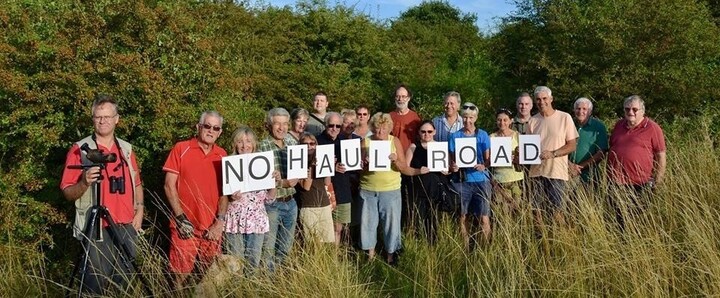 No gravel extraction haul road through Fairlop Waters Country ParkThis is an important area for the biodiversity of the Country Park and if it goes ahead will disrupt a long eared owl roost, an area for amphibians (Including great crested newt) and reptiles, and not so common birds on passage such as spotted flycatchers, wheatears, redstarts, winchat etc. We have just found recent evidence of badgers in the area with one definite sett further up the haul road route and one potential sett on the disputed section of land in the country park. This is an important species to find on Fairlop Plain as up till now was thought to have been totally lost to the area. There is also quite a bit of bat activity along the strip though species are currently unknown as only seen on remote trail cams for badger monitoring. As well as being disruptive to users of the country parks bridleways and footpaths especially the crossing point from Aldborough Hall Equestrian Centre, we expect dust generated from the road surface to also be a health issue. Lorries will potentially be travelling along the road in both directions at up to 3.5 minute intervals. We believe that this haul road is divisive to the community and cannot be accepted by those that care about the natural environment of Redbridge and the protected species whose habitat would be destroyed forever.2,452 of 3,000 SignaturesCreated by Chris Gannaway
Hello! We use cookies to improve your experience by providing insights into how the site is being used. Find out more.