-
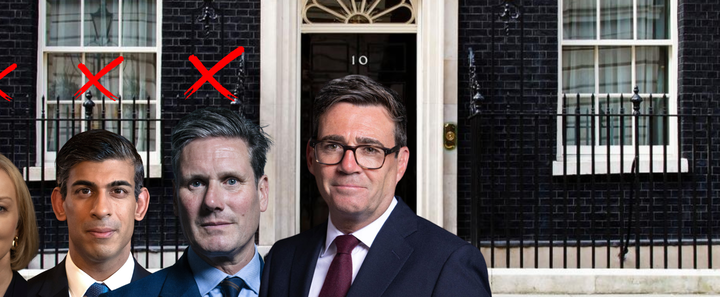 It's time to tax the super-richAt a time when so many people are struggling with the cost of living, it is only fair that those with the greatest wealth contribute more. A tax on the super-rich would help fund the public services and investment our communities need while reducing extreme inequality. Everyone should pay their fair share, and those with the broadest shoulders are best placed to contribute the most.84,705 of 100,000 SignaturesCreated by Benjamin Lacey
 -
 Demand a wealth tax on the vastly unequally rich..I feel this issue is the root of most other problems.7 of 100 SignaturesCreated by Alfie Farley
 -
 Equal Views for Everyone: Create a Section for Shorter Concertgoers!Too often, fans who are under a certain height are left straining to see the stage, as they’re blocked by taller people in front of them. Despite paying for tickets that cost upwards of £60, shorter individuals (like myself!) are left feeling excluded from the full experience. This is not only frustrating, but it limits our ability to enjoy the music, the performance, and the overall atmosphere of the event. We believe that concert-goers who are 5'4" or shorter should be given the option to sit or stand in a designated section where their view is unobstructed, ensuring that we can all have an equal opportunity to enjoy the show. As someone who’s on the shorter side, I’ve lost count of how many times I’ve gone to concerts and found myself standing behind a 6-foot-plus person, straining to catch a glimpse of the stage. It’s incredibly frustrating to pay top dollar for a ticket, only to be left squinting at the back of someone’s head for the entire show. It’s not just about the view—concerts are about experiencing the music and the energy of the crowd. But when you can’t see past someone’s shoulders, it completely kills the vibe. I’m not asking for special treatment, but why not create a space where shorter people can actually enjoy the show too? I know I'm not the only one who’s felt this way. If you’re shorter and have had the same issue, share your story and let’s work together to make sure concerts are a better experience for everyone—no one should have to sacrifice their view just because they’re not tall enough.4 of 100 SignaturesCreated by Mkh 129
 -
Making Care Experienced a protected characteristic in the UKThose who are care experienced have often had multiple adverse childhood experiences (known as ACE’s). Typically, the higher the number of ACEs, the greater the incident of negative outcomes which can include: poor outcomes in education, early involvement with the criminal justice system and homelessness as well as many others. Shocking studies have shown that children in care are much more at risk of interacting with crime by the age of 24 than their peers. National figures indicate that over half (52%) of care experienced children had been convicted of a criminal offence by the time they had turned 24 compared with only 13% of those who had not been in care. Only 15% of pupils who had been looked after for 12 months or more in 2019 had progressed to higher education by age of 19. However the progression rate for all other pupils is more than three times higher at 47%. Additionally, the All-Party Parliamentary Group for ending homelessness reported that ‘one third of all care leavers became homeless in the first two years immediately after they left care and 25% of homeless people had been in care at some point in their lives. By making care experienced a protected characteristic under the Equality Act 2010, it would ensure care experienced children could not be discriminated against and help businesses, employers and public services to put in place better support systems.191 of 200 SignaturesCreated by Mercedes Burton
-
 Modern accessible multiplex cinema In Dumfries and Galloway ScotlandIt allows everyone to see different genres of films and enjoy a day/night out. Including people with additional needs.28 of 100 SignaturesCreated by Tiffany Johnstone
 -
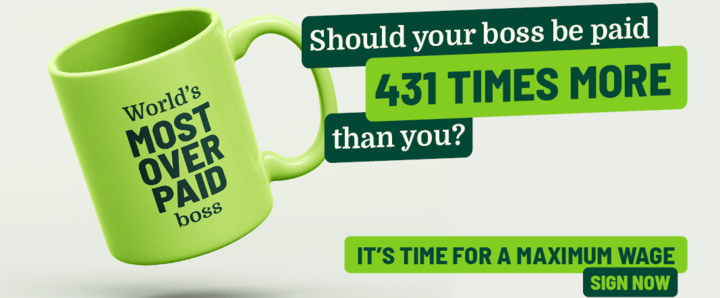.png) It's time for a maximum wageNew data from the High Pay Centre shows that the median FTSE 100 CEO now earns £4.58 million a year – 122 times more than the typical UK worker, with some, like Tesco’s CEO, paid 431 times more than their median employee. Pay at the top has reached record levels for the third year running, while most employees see little growth in their wages. This extreme pay gap is unfair, widely unpopular, and damaging to our economy and society. This proposal builds on our earlier pay ratios research and offers a simple, evidence-based step to tackle extreme inequality and promote a fairer economy. The pay gap between CEOs and their employees has spiralled out of control. In 2023/24, 18% of FTSE 350 companies reported a CEO-to-median employee pay ratio of over 100:1, while 5% reported ratios over 200:1. Incredibly, some CEOs earned more than 600 times their workers. But polling by the High Pay Centre and Survation shows that 63% of people believe CEOs should not earn more than 10 times their low- and mid-level employees. This reveals a stark gap between public expectations and reality. CEO-to-worker pay ratios are published, but this has not reduced the gaps. High Pay Centre analysis shows pay ratios have remained largely unchanged over five years. Research shows that the UK has some of the worst levels of income inequality in Europe, and that vast pay gaps damage morale, reduce trust, and lower workplace satisfaction. At a time when millions face rising costs and stagnant wages, this level of inequality is not just unfair — it’s socially and economically damaging. A 10:1 ratio would incentivise higher wages at the bottom, rein in excessive rewards at the top, and help rebuild a sense of fairness.3,939 of 4,000 SignaturesCreated by The High Pay Centre and Equality Trust
It's time for a maximum wageNew data from the High Pay Centre shows that the median FTSE 100 CEO now earns £4.58 million a year – 122 times more than the typical UK worker, with some, like Tesco’s CEO, paid 431 times more than their median employee. Pay at the top has reached record levels for the third year running, while most employees see little growth in their wages. This extreme pay gap is unfair, widely unpopular, and damaging to our economy and society. This proposal builds on our earlier pay ratios research and offers a simple, evidence-based step to tackle extreme inequality and promote a fairer economy. The pay gap between CEOs and their employees has spiralled out of control. In 2023/24, 18% of FTSE 350 companies reported a CEO-to-median employee pay ratio of over 100:1, while 5% reported ratios over 200:1. Incredibly, some CEOs earned more than 600 times their workers. But polling by the High Pay Centre and Survation shows that 63% of people believe CEOs should not earn more than 10 times their low- and mid-level employees. This reveals a stark gap between public expectations and reality. CEO-to-worker pay ratios are published, but this has not reduced the gaps. High Pay Centre analysis shows pay ratios have remained largely unchanged over five years. Research shows that the UK has some of the worst levels of income inequality in Europe, and that vast pay gaps damage morale, reduce trust, and lower workplace satisfaction. At a time when millions face rising costs and stagnant wages, this level of inequality is not just unfair — it’s socially and economically damaging. A 10:1 ratio would incentivise higher wages at the bottom, rein in excessive rewards at the top, and help rebuild a sense of fairness.3,939 of 4,000 SignaturesCreated by The High Pay Centre and Equality Trust -
 Keep Cash AliveMillions of us still use cash – and we should all have the right to. But more and more places are going card-only, leaving people locked out. Cash is a lifeline, especially for the most marginalised of us: older people, refugees, the homeless, and those escaping abuse. We didn’t choose to go cashless – big banks and card companies are pushing it. But our money system should work for people, not just for profit. The Government has already protected access to cash but now it’s time to protect our ability to use it. We need the Government to mandate cash acceptance right across the country so no matter what shop, supermarket, or pub you want to pay in, they have to accept the cash you give them. Add your name to #KeepCashAlive and share the petition today.5,318 of 6,000 SignaturesCreated by Hannah Dewhirst
 -
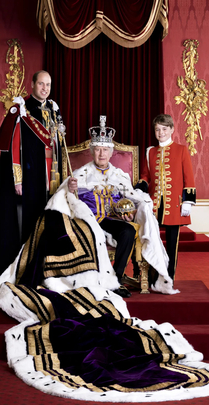 The Royal Family Should Pay Their Fair Share Of TaxUK public services need funding. The royal family don't pay tax like the rest of us. The situation is clearly unfair. The UK government should change the tax laws.5 of 100 SignaturesCreated by Trevor Cullinan
 -
More cake pleaseI'm starving10,003 of 15,000 SignaturesCreated by Robin Priestley

-
Change Same Sex Marriage Laws to allow a Two Way ConversionTo seek equality for all. To address an injustice created by a law seeking to allow for equality. To address the law which states one cannot discriminate between a civil union and marriage when the consequences are felt globally, not locally. Equality Campaigners, Human Rights, Democratic Processes, Injustices created when new laws made, lobby groups, individuals, companies,2 of 100 SignaturesCreated by ELIZABETH RENNIE
-
 Equal Pay for England Men's and Women's Football ManagersEqual pay at this top tier is an essential material and symbolic step towards gender equality. Lionesses manager Sarina Wiegman has won the Euros with England and will lead them into Sunday’s World Cup final against Spain. She guided the Netherlands to victory at the Euros in 2017 before taking them to the World Cup final in 2019. The men's England football manager Gareth Southgate led England to the 2018 World Cup semi-final in Russia, the quarter-finals of Qatar 2022 and the Euro 2020 final, but has yet to win a trophy with England. Southgate is reportedly paid £5m a year, a significant uplift on Wiegman’s supposed £400,000 salary. An FA representative stated “If we take money from one area it then has to come off another,” he said. “I can’t tell you the list of great ideas we get every week for things, some of which are in women’s football, some are in para football, some of which are men’s football, some of which could be building more pitches for kids." The FA should take this essential material and symbolic step towards gender equality, by taking the money to pay Wiegman equally from Southgate's salary. This would leave each manager with roughly £2.7m a year salary plus bonuses. Wiegman and the Lionesses represent the frontline of excellence in women's sport, and sport as a whole. Wiegman is the more successful manager. At least she deserves pay parity with the men's.10 of 100 SignaturesCreated by Skylar Sharples
 -
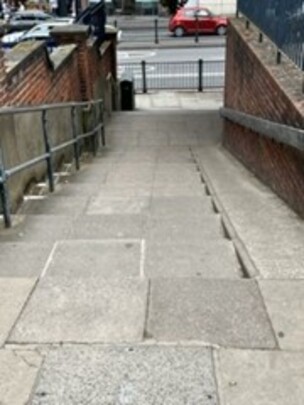 Forgotten of CamdenCamden Council has a public sector equality duty in relation to us which it ignores. Quite apart from the legal duty, it has a moral and social duty to us. The PSED means that it must take into account our particular needs and make reasonable adjustments to meet those needs so that we have the same chance as the able-bodied and younger residents to participate in public life, access public spaces and enjoy those public spaces. It is our belief that all residents, irrespective of their age or physical abilities, should have equal access to public facilities, services and the decision-making processes that shape our community. Inadequate consideration for the needs of the elderly and less able hinders their full and equal participation in society and does not reflect the principles of fairness, equality and respect upon which our community prides itself. Specific disenfranchising policies include: 1. The emphasis on digital access to information and parking which excludes those of us who are not IT literate and do not use computers or smart phones. 2. The emphasis on cycle lanes, particularly those on Haverstock Hill, which has removed all parking, does not take account of those of us who cannot get around without using cars. Many of us cannot cycle due to physical constraints, yet the topography of Belsize Park and Hampstead is such that even experienced cyclists fear to use their bikes in this area. The hills are steep enough to make both cycling and walking difficult if not impossible for older and less able residents - and this is an area with an elderly population. Yet, policies abound which put extra barriers in the way of our mobility and freedom to get around. There has to be a balance and that balance is significantly lacking. 3. The regulations introduced under the healthy school streets scheme ban the significant numbers of older and less able residents of those streets from: - receiving tradespeople and carers who may only be able to come at the restricted times - being collected and delivered to their front door by taxis who will not come into the area during the restricted times; and - receiving friends and family during the restricted times. This prevents those residents from leading normal lives, participating fully in life in the community, is discriminatory and against the PSED. 4. Those of us who live in Netherhall and Maresfield Gardens, Nutley Terrace and much of Belsize Park cannot access the high streets and shops of Finchley Road, Hampstead, Belsize Park or Belsize Village on foot because of the hills and distance. We are dependent on cars. Even to reach public transport, steep hills must be negotiated. In addition, there is no step free access at Belsize Park, Finchley Road, Hampstead or Swiss Cottage tube stations or Finchley Road and Frognal overground. Thus, without cars or taxis, we are effectively house bound. This is unfair and undemocratic. 5. There are not enough dropped curbs for those of us who need wheelchairs to get around. Therefore, we urge Camden Council to: 1. Engage with the Community: Involve us, the older and less able community members in the policy-making process. Our insights, lived experiences and inputs are invaluable in creating policies that effectively cater for our needs. 2. Work with us to review current policies: Work with us in a process to thoroughly reassess the current policies and their impacts on the older and less able residents of Camden. This should be done with an aim to understand the shortcomings of the current policies and identify the changes needed to make them more inclusive. This includes access to cars where possible. 3. Improve Accessibility: Ensure all public facilities and services are fully accessible to all residents, including those with physical disabilities. This includes, but is not limited to, public buildings, parks, transportation and communication services. 4. Increase Support Services: Implement increased and improved support services for older and less able individuals, to help them lead independent and fulfilling lives. These services might include home aid, transportation assistance, healthcare facilities, and more. 5. Awareness and Education: Conduct awareness and education programmes for the community, local businesses, and organisations about the needs and rights of the older and less able residents to foster understanding and respect within the community. We believe that these steps are essential to create an inclusive, supportive and fair community and to comply with Camden’s legal PSED duties. We look forward to your commitment and prompt action to address these issues and make Camden a better place for all its residents.82 of 100 SignaturesCreated by Jessica Learmond-Criqui
Hello! We use cookies to improve your experience by providing insights into how the site is being used. Find out more.