-
 Save Ruddington Teaching Assistant JobsJames Peacock School in Ruddington is proposing to make a significant number of its most experienced and highly-qualified teaching assistants redundant. The head teacher claims that cuts are needed to save money but there are other ways to solve the problem. Nevertheless, the School’s governors are being asked to approve damaging plans to target teaching assistants. Making teaching assistants redundant will cause long-lasting harm to children, to the school and to the Ruddington community. Those whose jobs are at risk have firm roots in the village and are well-known to children and parents having worked in the school for many years. Teaching assistants provide vital support, supporting teachers in managing class behaviour as well as ensuring children with special needs receive additional care and attention. Reducing the number of teaching assistants would deprive children of support and restrict teachers' ability to teach effectively. Not only are there other ways of balancing the School’s books, but it is likely that schools funding will increase over the next year. The government schools minister for England, Nick Gibb, has said that school funding will be a priority for the autumn spending review. Now is not the time to get rid of teaching assistants who are indispensable for the children and teachers of James Peacock.1,733 of 2,000 SignaturesCreated by Matt Mullany-Green
 -
 SAVE CLS FROM SHUTTING DOWNI study at the CLS college on Freeman st. Soon to be shut down in 3 months which is dramatically upsetting. So many pupils attend and they are very happy. Most people cannot attend a bigger setting. Unfortunately for some they cannot travel far or they can’t be in a bigger place. Helping in any way Would mean a lot for so many people and myself by fighting to keep it open. This place is a place that I actually can have my study as for many issues before hand. I can speak for many other students too. The college is so welcoming and very nice teachers and staff. There is plenty of students that everyone gets along with. We are a little community and would like as much help as we could possibly get. **In order to help, anyone that could contact this lady called Janet Goodwin. She can help fight, to keep it open. Her email is: [email protected] and her phone: Telephone: 07927494208.** No one should have too move to a different college because of the place shutting down. People are upset and would love it to stay open and to continue to work from there. Would be much appreciated if we can keep this place open and help give many students a place to learn and feel comfortable and get there qualifications they deserve. No one should have to loose there education because of something like this. Much help is appreciated. Students here are very keen to work and to build their futures. Moving to a different college will disturb to where they left off. This can lead them doing more time of college when it isn’t needed. Students have achieved so much and will continue doing so. Students feel safe and happy in the working environment, this is another reason why we are keen to keep this place open. We want to welcome more people and continue to keep this college open. Thank you very much for reading. Let’s keep this place open.1,065 of 2,000 SignaturesCreated by Laura Jasper
 -
 Schools Should Not Be Used As Polling StationsLewes District Council have yet again taken the decision to use Cradle Hill CP School as a polling station and therefore the school will be closed, not just on the 2nd May but also on the 23rd May, equating to 13 hours of missed education, in a term that already has two bank holidays. Our children’s education is extremely important. Something that East Sussex County Council like to remind us with their Get a Grip Campaign and the fines they impose on parents and carers for taking their children out of school. 13 hours of “forced” missed education in one year is not acceptable, the knock-on effect is huge, especially with SATs coming up, children with special needs loosing precious time, those who rely on school dinners each day as their only hot meal and the extra financial burden to parents and carers. There are plenty of community buildings in the ward that could be utilised for this purpose ie Seaford Community Church and Seaford Children’s Centre. Let’s get this decision over ruled.268 of 300 SignaturesCreated by Steph Georgalakis
 -
 Save Stoborough NurseryStoborough Nursery has served the community of Stoborough and the surrounding areas for over 30 years. However, recently there has been tension between the Nursery and School regarding the rent of the land and buildings. We understand the need to increase the Nursery’s rent, but the proposed amount of £1750 a term (a 400% increase), coming into effect this September, is not reasonable or fair. This sum does not accurately reflect the Nursery’s use of the building and land, or take into account the financial investment the Nursery has made in improving and maintaining the Nursery building and garden over the last 30 years. The Nursery is a not-for-profit charity and paying this unreasonable sum would not be sustainable. The Nursery would have no option other than to shut its doors to the numerous families currently using its services, unfairly disrupting these children’s education.1,410 of 2,000 SignaturesCreated by Brian Collins
 -
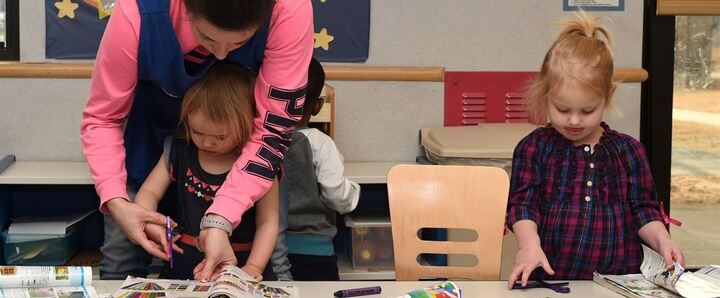 Stop unlawfully blocking support for children with additional needs and disabilitiesThis affects us all – if a child with additional needs or disabilities is unsupported in a classroom, it can put unreasonable demands on teachers' time, compromising the learning of all children. The numbers of children in Waltham Forest being REFUSED an assessment for an Education, Care and Health Plan (EHCP), which would provide them with ESSENTIAL EDUCATIONAL SUPPORT, has increased 3800%* in the period between 2015 and 2017. Waltham Forest reject more applications for Education Health and Care Plans than any other borough in London (except Southwark). This means hundreds of our children who have Special Educational Needs and Disabilities (SEND) are being left to struggle alone at school, often with DEVASTATING CONSEQUENCES for the child and their whole family. We believe this practice is being carried out covertly to save the borough money in a time of austerity. Even those children "lucky" enough to get an EHCP, less than half (47%) got that delivered in the time period required by law. This delay means our children are being left for extended periods without the support that is vital for them to thrive and succeed in school. This can often lead to school refusal, suspensions and have a detrimental impact on both the child’s education and their mental health. In a time of austerity and education budget cuts, children with additional needs are often the ones who suffer the most. Taking away support that allows them to access an education is denying them their basic legal and human rights. Families of children with additional educational needs and disabilities in Waltham Forest are also routinely ignored by services, such as officials at the Disability Enablement Service. We often find it excessively difficult to get appointments with professionals, such as speech therapists, occupational therapists and paediatricians. Local community child mental health services are still telling parents to come back when their child is self harming or suicidal. Our families are still experiencing practices that were exposed by BBC Panorama last year. Families are made even more fearful for their children’s future by the fact Waltham Forest has a forecasted shortfall of £3.8 million by 31 March 2020 in their high needs education pot. The Education Health and Care Plan processes in Waltham Forest are unclear and inconsistent. They include practices we believe are unlawful under the Children and Families Act 2014. This includes refusing to assess children when there is an indication of need, refusing to name schools on some EHCPs, and the still common belief that schools have to spend £6000 before they can apply for a Plan. It feels like Waltham Forest Council has gone to war with SEND families, making our children a scapegoat for tightening budgets. In Richmond-Upon-Thames, local councillors have launched a campaign to fight back against the cuts. They are working WITH parents, and indeed the whole community, to fight austerity. They have launched petitions, letter writing campaigns and pulled together a coalition of local MPs to raise questions in Parliament. Waltham Forest have remained silent. Our Council's solution to the cuts is to refuse to grant support to our most vulnerable children. Many of us are being forced through distressing court battles with the Council. Although between 80-95% of parents win these cases, it comes with huge emotional fallout for our families, and unnecessary cost to the taxpayer. Many more will not be able to face the stress of going to court, or simply do not have the resources to do so. These children are the ones who are lost to the system completely. Tell Waltham Forest Council to stop fighting us. Call on them to: 1. Hold a scrutiny committee on the policies regarding Education Health and Care Plans to ensure they are fair, equitable and lawful. 2. Significantly improve the numbers of Education Health and Care Plans which are issued within the 20 week deadline 3. Stop refusing vital support for children with a clear need and improve access to vital services 4. Launch a SEND Funding Crisis campaign, which will help the Council access the funds that are so desperately needed to support our children The SEND crisis effects everyone. If your child is in a classroom with an unsupported SEND child, their education is also compromised because the teacher's time is stretched too thinly. Even if you aren't a parent, but a taxpayer, your money is being wasted in costly and unnecessary court cases that the Council mostly loses. It doesn't have to be like this. Instead of blocking vital support and fighting with parents, Waltham Forest Council could join with us to highlight the catastrophic impacts of education cuts and find ways to tackle special educational needs budget deficits. They could emulate councillors in other boroughs who are showing what is possible. We must work together to ensure that the most vulnerable children in Waltham Forest get access to the support they need. * Figures are based on stats from the Department of Education between 2015 - 2017. At time of writing 2018 figures had not been released1,384 of 2,000 SignaturesCreated by Waltham Forest SEND Crisis Action
-
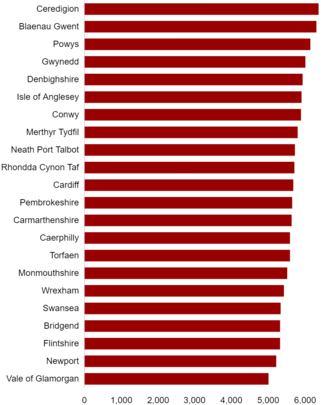 Fund schools fairly in Penarth and end the school funding crisis across WalesAs a mum with a child in a primary school in Penarth, I am horrified to learn about the desperate measures our schools are having to take given this funding crisis. In the Penarth Cluster of schools, head teachers are cleaning school facilities at weekends to earn rent; there are redundancies and teachers have to take on other paid work. At least one local school’s governing body is looking into the possibility of closing on Friday afternoons which would create difficulties for working parents and teachers. Next, we hear our children’s health and safety may be at risk. I am shocked at the unfair and outdated formula used for school funding which seems fundamentally against The Well-being of Future Generations (Wales) Act 2015, "A more equal Wales - where everyone has an equal chance whatever their background". School funding is in crisis across Wales, yet the Welsh Government is expecting the introduction of a new curriculum; a new additional learning needs bill and for schools to produce 1 million Welsh speakers. We already know that children in Wales achieve lower PISA scores than children anywhere else in the UK and have done for several years. But it's not just about academic achievement - our schools should be able to provide all-round education and support for all of our children to thrive.2,027 of 3,000 SignaturesCreated by Sali Button
 -
 Independent Complaints & Monitoring Body for Schools & Local AuthoritiesLegislation & DfE guidance state how schools & local authorities must comply with the law. If statutory guidance or duties are not followed, any enforcement is left to individual families using ineffective complaint procedures; or the LGO service, which won’t act in the face of ultra vires local policies that exceed the scope of LA powers. Those who break the law need to face financial consequences with compensation for victims. It should not be left to parents to use Judicial Review to bring law breakers to account. Complaints often relate to a lack of support & provision (for SEND, trauma, mental/physical illness or disability); delays in securing assessments & diagnoses; & a refusal to accept the existence of some school-related issues (e.g., bullying, anxiety, peer abuse, or sensory overload). Many of these complaints are effectively disability discrimination. Some comments made by parents: “To stand by and say nothing when there is an escalating problem would be negligent of me in my parental duties. Yet I found myself being accused of all sorts by the professionals with whom I simply wanted to find resolution & move forward for the sake of my children.” "The system is a shambles and allows neglect of disabled children’s rights to an education. Until the system penalises those who ignore legislation it will never change. Delays save money. Even the complaints system at the LA needs complaining about as they are always delayed and are never solved." "The LA seem to have their own rules about providing education for SEN and are not answerable to anyone" "The response to my complaint (about the Head) was written by the head herself!" BACKGROUND INFORMATION According to The Department for Education: Statutory guidance sets out what schools & local authorities must do to comply with the law. They should follow this guidance unless they have a good reason not to do so. Some guidance must be followed without exception. In addition, statutory policies contain regulations & guidance that underpin a governing body’s decision-making process & these must be adhered too as they are enshrined in law. THE LACK OF ACCOUNTABILITY The current lack of effective accountability in the system leads to significant psychological and/or physical harm for children and young people, severe difficulties for families, & damage to educational outcomes. There are specific areas of law which give rise to the majority of complaints: When children & young people (CYP) need individual SEND provision, schools, academies, & local authorities do not always comply with the SEND Code of Practice & other SEND-related policies, statutory guidance & laws. This denies CYP access to suitable educational provision. https://www.gov.uk/children-with-special-educational-needs When children & young people experience physical or mental health difficulties, schools & local authorities do not always comply with the guidance around supporting pupils with medical conditions at school. This denies CYP access to suitable educational provision. https://www.gov.uk/government/publications/supporting-pupils-at-school-with-medical-conditions--3 When children & young people are bullied schools & local authorities often do little to help or protect them from harm. By law, all maintained schools must have a behaviour policy in place that includes measures to prevent all forms of bullying among pupils. Schools must also follow anti-discrimination law, meaning staff must act to prevent discrimination, harassment & victimisation within the school. Not doing so denies CYP a suitable education within a safe environment. https://www.gov.uk/bullying-at-school In recent years there has been a rise in cases of sexual assault in schools. Relevant guidance has been created however, many schools are unaware of this & are failing to protect victims, denying them an education within a safe environment. https://consult.education.gov.uk/safeguarding-in-schools-team/keeping-children-safe-in-education/supporting_documents/Sexual%20Harassment%20and%20Sexual%20Violence%20%20Advice.pdf When any of these issues occur, children & young people struggle to maintain attendance at school. This can lead to school-attendance-related penalties & prosecutions for parents/carers, implemented because schools can use their own judgement to authorise or un-authorise absence under laws originally designed to combat truancy (not absence as a result of unmet needs, threats to personal safety, severe academic pressure, or physical/mental illness). THE LACK OF INDEPENDENCE & TRANSPARENCY To make a complaint, parents need to follow the policy/complaints procedure of the relevant school or academy. Initially this means bringing a complaint to the Headteacher & then, if necessary, the Board of Governors or Trustees. This effectively means that a parent or carer has to ask the people they are complaining about to investigate their complaint, which is not fair or transparent. If no resolution is found with a school there is the option to contact: - The Local Authority - Then, the Department for Education - Then, the Local Government Ombudsman (who can only investigate a limited range of issues or complaints). Or, If no resolution is found with an Academy, the next steps are to approach: - The Education Funding Agency - & then the Secretary of State for Education https://www.gov.uk/complain-about-school Parents report that these options are usually ineffective, time-consuming and stressful. THE LACK OF SUPPORT Any parent or carer currently has to manage this complaints process without any independent support or guidance. If complaints of non-compliance are not dealt with effectively, parents have no further recourse & are therefore powerless to help their children. They may also worry that they have made a complaint against the very organisation with whom they entrust their child on a daily basis.515 of 600 SignaturesCreated by Beth Bodycote
 -
 Stop Highland Council from cutting key educational support for kids with additional needsI have 4 children with autism, cutting pupil support assistants in schools affects not just the children that need it but the kids who do not have additional needs also. Teachers will face extra strain because they either do not have the experience to deal with children with additional needs, or they feel their time cannot be spent with other pupils due to the additional needs of those that need it. It is important that after school clubs such as SNAP are in existence, many kids with additional support needs do not have friends outside school and are not invited to birthday parties or included in communities because of these support needs. After school clubs are an essential lifeline for those children that really need to have some sort of social life outside their families. In many cases school and after school clubs are the only respite families have for both the children and the family.1,045 of 2,000 SignaturesCreated by David Tulloch
 -
 Keep Almondbury Community High School OpenIf the high school closes it will affect the whole community102 of 200 SignaturesCreated by Elena Ali
 -
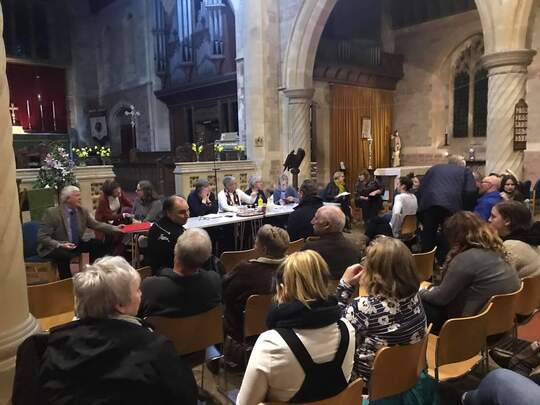 The parents, carers and grandparents of Ilfracombe Infants request an urgent general meetingWe, the Ilfracombe Learning Community, have been denied the opportunity (despite many requests) to have a general meeting with all interested parties to discuss issues arising from the recent defederation consultation at Ilfracombe Infants. We are only being offered limited, segregated, class based information meetings which we believe will be divisive and downplay the need for immediate action. We wish to have a full general meeting which will give all parents, carers and grandparents the opportunity to ask questions and listen to everybody's experiences. There are many concerns that people would like to express and we believe that we have the right to request that as wide an audience as possible can get an opportunity to hear the responses.177 of 200 SignaturesCreated by Terry Elliott
 -
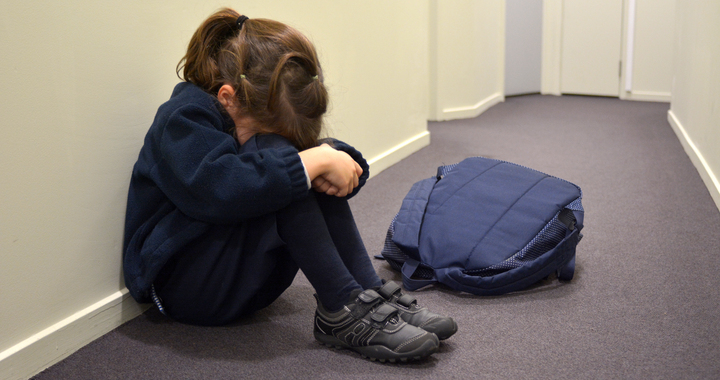 Stop using isolation booths until the rules are fixedChildren are being forced to sit alone for days on end in schools, away from their friends and lessons. Isolation booths are becoming a 'dumping ground' for children, in particular those with special educational needs. They should not be used to punish children for minor infractions such as forgetting a pen or other equipment and incorrect uniform.Children's mental health issues are rising dramatically, this form of unforgiving punishment will increase the number of children suffering with poor mental health. The government needs to stop schools using isolation booths until they’ve properly reviewed and improved existing guidelines - including measures to stop schools overusing them and ensuring an upper limit for the amount of time a child could be kept in isolation.1,892 of 2,000 SignaturesCreated by Dawn OSWIN
 -
 Stop treating school 'refusal' as truancySchool ‘refusal’ (sometimes known as school phobia or Emotionally Based School Avoidance) is usually characterised by clinically diagnosable anxiety. It can result from any number of underlying issues including bullying, an undiagnosed or unsupported Special Educational Need or Disability (SEND) or a mental health problem. Living in poverty, insecure housing, being a young carer, fleeing domestic violence, having a chronic illness, suffering a bereavement are just some of the reasons a child or young person will struggle to attend school. Whilst the underlying issue can present significant challenges in itself, the resulting attendance difficulties leaves families in crisis. A new 'mental ill health' code would start to measure the scale of this growing problem. We know there currently is not parity of esteem towards mental health challenges in children & young people who often find school does not believe them or their parents. By introducing a mental ill health code, the numbers struggling due to a social, emotional or mental health need (be it emerging or chronic) would be captured. Schools would have agency to authorise these absences equitably just as with any other illness or physical injury. It would serve as a pastoral flag for schools and would ensure a consistent approach across all settings, drawing in support for children until the mental health challenges can be addressed. Crucially it would alleviate families from the threat of prosecution for 'unauthorised' absence. The decision to authorise absence lies with individual schools who are governed by legal statutory duties, guidance from the Department for Education, attendance targets and OFSTED inspections, as well as duty of care for pupils' wellbeing. None of the current 23 attendance codes allow for the cause of school refusal to be explored and appropriate support provided. Without medical proof that a child is unfit for school, absence is therefore often unauthorised and classed as truancy, a prosecutable offence. Budget cuts, increased testing, delays in SEND assessments, higher thresholds for mental health support and difficulties securing and implementing Education, Health and Care Plans (EHCPs – which replaced the previous Statements of Educational Need), are all compounding the problem. Whilst there is no official data on school refusal at present, the rise in non-elective home education, prosecutions, suspensions and permanent exclusions are all indicators of a significant problem. A national Facebook group, Not Fine in School (NFIS) which launched in November 2017 now has over 62k members (Sept 2024) and is growing at a rate of 1000++ new members every month. The results of a NFIS survey which ran in March 2018 and was completed by 1,661 families showed that: • 92% of parents thought that their child’s school attendance difficulties were related to undiagnosed/unsupported SEND • Despite this, 20% had been told not to bother applying for an Education, Health and Care plan (EHCP) and a further 20% did not know what an EHCP was • 55% of parents were blamed for their child’s attendance issues • 25% parents were reported to Social Services because of their child’s poor attendance • 18.4% of parents had been accused of fabricating or influencing their child’s illness (also known as FII or Munchausen’s Syndrome By Proxy) • 67% had been put under pressure to force their child into school, yet 59% said this had made the situation worse We conducted another survey across 10 days in February (2022) for our submission to the DfE Attendance Consultation. 1,960 families took part. Only 10% of respondents felt schools' responses to their child's persistent absence improved attendance, with 94% of families stating school had adversely impacted their child's mental health and wellbeing. Latest research clearly links mental ill health and SEND with attendance difficulties, persistent absence and exclusion: https://www.thelancet.com/journals/lanpsy/article/PIIS2215-0366(21)00367-9/fulltext Proposals in the shelved Schools Bill 2022 focussed on punitive measures for families with more at risk of being successfully prosecuted and fined. "The Bill strengthens the potential outcomes of a successful prosecution and extends the reach of the court to not only fine but to impose a custodial sentence." https://www.brownejacobson.com/education/training-and-resources/legal-updates/2022/05/school-attendance We successfully lobbied for a ‘Support First’ approach to school non-attendance which has been laid out in new statutory guidance published in August 2024. And while this is welcome, schools still feel unable to authorise absence, particularly where a child is struggling with their wellbeing or is on a waiting list to be assessed by CAMHS (Child and Adolescent Mental Health Services). We hear from families every day facing the threat of fines and / or are being prosecuted. We are delighted to have the support of the Children and Young People’s Mental Health Coalition, the Centre for Mental Health, Mind, Place2Be, and Adoption UK, who have all echoed our call for a mental health authorisation code for absence from school. Let’s bring children’s mental health out of the shadows and empower schools to recognise the children who are struggling early. Let’s ensure we know and understand the numbers of children and young people unable to attend, access or remain in education as a result of declining wellbeing, poor mental health and mental illness. Please sign our petition today.15,211 of 20,000 SignaturesCreated by Fran Morgan
Hello! We use cookies to improve your experience by providing insights into how the site is being used. Find out more.