-
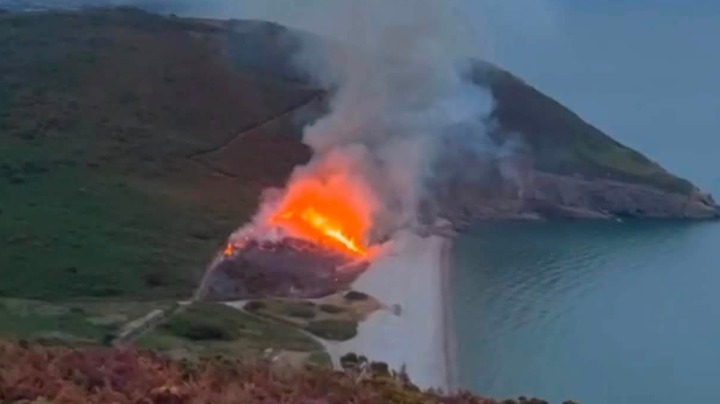 Protect Pembrokeshire from Wildfire: Give the National Park the Power to ActThe framework should cover beaches, coastal slopes, inland commons and mountain land, including the Preseli region, and should allow restrictions to be activated when defined wildfire-risk conditions are met. The aim is to prevent avoidable wildfire ignitions while allowing recreational campfires to continue during ordinary summers when conditions do not warrant restrictions. I am deeply concerned about the growing risk of wildfire to Pembrokeshire's extraordinary coastline and open countryside. The cliffs, coastal slopes, heathlands, grasslands and beaches of Pembrokeshire are among the most beautiful and distinctive landscapes in Wales. Once a wildfire takes hold in these dry landscapes, the damage can be extensive, and in some places it can take many years for vegetation and habitats to recover. Recent wildfires have shown that this is not a theoretical risk. We have seen serious fires in the Preseli region and elsewhere in Pembrokeshire, while the wider region has experienced increasingly severe wildfire incidents. In August 2026, the UK Government went as far as issuing an emergency alert across England and Wales warning of the very high risk of wildfire and specifically asking people not to use disposable barbecues and fire pits. I believe we should do more to prevent avoidable fires before they start. I am not calling for an automatic annual ban on campfires. I recognise that many people enjoy a properly managed recreational campfire, particularly at campsites, and that this is part of the experience of visiting the coast and countryside. What I am asking for is more practical and proportionate: Pembrokeshire Coast National Park Authority should do the legal and consultation work now so that it has the power to introduce a temporary prohibition on campfires and barbecues when conditions become exceptionally dry and the wildfire risk becomes dangerously high. That could include beaches, coastal slopes, inland commons and mountain land, particularly in the Preseli region. Clear criteria could determine when restrictions are activated, allowing them to remain unused during ordinary summers and to be brought into force when genuinely necessary. I don't want to see the beautiful Pembrokeshire coastline scarred by wildfire because of an entirely preventable recreational ignition. I don't want to see wildlife habitat, heathland, grassland and coastal vegetation destroyed, or firefighters placed in danger tackling fires that could have been avoided. We have the opportunity to prepare before the next extreme wildfire occurs. We should use it. I am asking people who care about Pembrokeshire's coastline and countryside to support this proposal and show the National Park Authority that there is public support for a sensible, precautionary approach to wildfire prevention.387 of 400 SignaturesCreated by jonathan Hudson
-
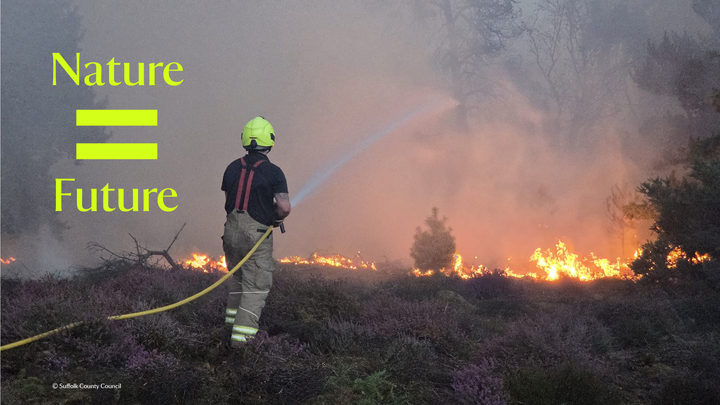 Protect nature for the future: make wildfire prevention a national priorityIn early August, a wildfire destroyed the ancient Dunwich Heath in Suffolk. This precious landscape, home to rare wildlife including nightjars, Dartford warblers and adders, and visited by 100,000 people each year, was devastated in a matter of hours. This is not an isolated incident. As climate change progresses, so does the risk of extreme weather. Wildfires are becoming more frequent and more severe across the UK, threatening communities, nature, and our future. In the hours that followed the fire at Dunwich, we saw the best of people. Farmers and neighbours supported fire crews on the frontline, local communities provided shelter and food for evacuees, charity groups rallied. And the same is true for fires that have raged across the UK this summer - from the Isle of Wight to the Mourne Mountains. People have done their bit. Now they need a Government response to match. Now, we are calling on the Government to make three commitments: 1. Make climate resilience a national mission led by a Cabinet-level minister with responsibility for preparedness across Government and long-term investment. 2. Invest in nature as essential infrastructure, including peatlands, wetlands, rivers, woodlands and heathlands that help communities adapt to climate change, reduce environmental risks and support wildlife. 3. Support Fire and Rescue Services with the funding, specialist skills, equipment and public awareness campaigns they need to prevent, prepare for and respond to wildfires and other climate hazards.148,456 of 200,000 Signatures
-
 End the golf course hosepipe-ban exemptionChanging hosepipe-ban exemption rules under the Water Industry Act 1991 (Section 76) via ministerial order/statutory instruments to end the automatic exemption for golf course playing areas (tees and greens) across England and Wales will save a huge amount of water: golf clubs should publish transparent water-use data and use only non‑potable water sources during declared droughts (except where strictly necessary for health and safety). One golf course can use as much water in a day as around 1,800 households. England and Wales has over 2,000 registered golf courses, and roughly 60–65% of them rely on mains water for irrigation – that’s treated drinking water, not recycled or abstracted. A typical 18-hole course irrigating just greens and tees uses about 4,000–5,000 cubic metres a year (4–5 million litres). When you add fairways, that's 15,000–50,000 cubic metres per course annually (15–50 million litres). One widely cited estimate puts water use at around 16 billion litres annually for England alone. That’s enough to meet the daily household needs of well over 100 million people – in a country where millions are struggling to keep gardens and allotments alive with watering cans, crops are failing and parks are scorched. Although the law allows sports turfs to be watered for health and safety reasons on active playing areas only during Temporary Use Bans, most golf clubs actually continue to water greens and tees routinely, as evidenced by satellite photographs published by national media this summer. Well over half of the golf clubs in England and Wales are in areas classified as under official water stress. These are the regions where hosepipe bans hit hardest. They also usually grow the thirstiest grass species on both greens and fairways – fine turf grasses like creeping bentgrass and Poa annua on greens, and perennial ryegrass on fairways. This petition isn’t about attacking golf. It’s about fairness and facing the future realistically. Exemptions from hosepipe bans were last codified sixteen years ago. In a climate crisis, everyone should share the burden – especially when all the scientific evidence suggests we’ll face ever more over-heated summers and weather uncertainty.144 of 200 SignaturesCreated by Lydia Syson
-
 Tell Us What’s in Our Drinking WaterThe published results should include the actual concentrations of PFAS, Trifluoroacetic Acid (TFA), nitrates, pesticides, lead and other significant contaminants. The Government should introduce stronger statutory PFAS standards based on the latest scientific evidence, require routine monitoring and public reporting of TFA, and require bottled water producers to publish the same contaminant information so consumers can make informed choices. Everyone has the right to know what is in the water they and their families drink every day. Every day, millions of people across the UK turn on the tap and trust that their drinking water is safe. Yet most of us are never told what contaminants have actually been found in the water we drink. We are simply told that it meets current regulations. If I buy a bottle of water, a carton of milk or a can of soft drink, I can see what it contains. Why shouldn't I have the same information about the water coming into my home? PFAS are a large group of man-made chemicals often called "forever chemicals" because they do not break down naturally and can remain in the environment for decades. They have been used since the 1940s in firefighting foams, non-stick cookware, waterproof clothing, food packaging and many industrial processes. Some PFAS pesticides can also break down into Trifluoroacetic Acid (TFA), another highly persistent fluorinated chemical now being found in rivers and drinking water. Scientific studies have linked exposure to some PFAS with higher cholesterol, reduced immune response, thyroid disease, liver damage, reduced fertility, lower birth weight and some cancers. Scientists are also investigating possible links with children's brain development, including attention, learning and behaviour. TFA has recently been classified by European scientific experts as toxic to reproduction because evidence indicates it may harm fertility and the unborn child. Because PFAS build up in the environment and in our bodies over time, people living near airports, military bases, firefighting training areas and other contaminated sites often have higher levels than the general population. People have a right to know whether PFAS, TFA, nitrates, pesticides, lead and other contaminants have been detected in their drinking water, how much has been found and whether levels are changing over time. This is especially important for families with babies and young children, pregnant women and anyone with health concerns. Other countries are already introducing stronger PFAS standards and greater transparency. The UK should become a world leader in giving people a simple right to know what is in their drinking water. Clean water is essential to life. Transparency should be too.2 of 100 SignaturesCreated by Paul Le Claire
-
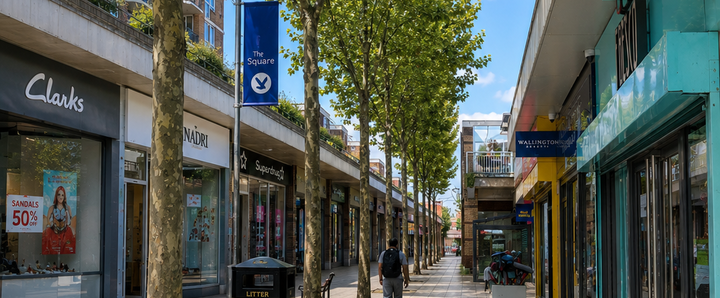 Improve Wallington SquareWe call on the council and the landlord to work together to make this possible so that we can transform our town centre to the benefit of our community. We need Wallington to be a destination, not a place to pass through. We need improvements to the high street and Wallington Square to make our area more welcoming, encourage local business and improve footfall. We have an amazing community in Wallington and if we come together we can improve and protect our high street.113 of 200 SignaturesCreated by Eliot Carroll
-
No To Data Centres in EalingSouthall already suffers from high temperatures due to the loss of gardens and lack of larger green spaces when compared to the rest of the borough. This lack of mature greenery also slows the overnight cooling as the heavily concreted environment holds onto heat and releases it more slowly. The addition of the new data centres will multiply this problem, resulting in greater risk to the health and well-being of Southall residents and those who work in this community. I have lived in Southall, West London for over 30 years and watched front gardens and green spaces disappear under paved drives and concrete back gardens. Mature trees lining our roads have been removed to make way for new builds. As the summers get warmer, the heat trapped in the concrete and brickwork continue to keep temperatures high well into the night. And yet despite this, Ealing Council has agreed to the construction of three new data centres, known for their heat pollution and high demand for water. Many Southall residents live in high rise flats, with little means of cooling their homes during heatwaves. Adding the data centres to an already known heat trap is further risking the health and safety of Southall’s residents. Please tell Ealing Council to withdraw their permission for the new data centres.1,492 of 2,000 SignaturesCreated by Kate Henry
-
Stop AI datacentres using up needless amounts of clean drinking waterAI data centres are using evaporative cooling to maintain their equipment, drawing on our limited clean water supply, running it through their systems and losing large quantities to evaporation. Larger data centres can use up to 5 million gallons of clean water per day – enough for a town of up to 50,000 people. This directly threatens the survival of people living near data centres and our climate. While large swathes of the general public are under a hosepipe ban, AI datacentres are allowed to use and waste millions of gallons of clean drinking water a day, simply because they don't feel like investing in less wasteful systems. In a country that experiences annual droughts (in part due to water company incompetence but lets not even start on that) this is not acceptable. They have chosen this method because it is cheapest and easiest for them, least impactful for the company's bottom line. But alternative methods exist that can reduce water consumption by up to 70%, it would just require effort and investment on the part of the company. If AI companies want to use British land for their technology, they will need to invest in protecting the environment here. AI is coming, we will only end up with more data centres. This water wastage will only increase while our supply stays the same. Who loses out? The British public.21 of 100 SignaturesCreated by Ella Puttnam
-
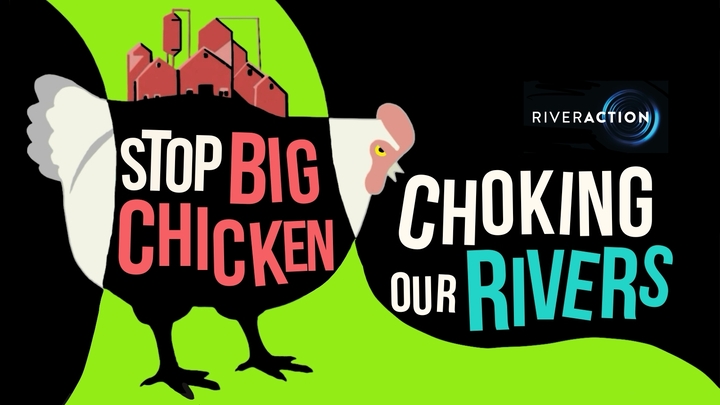 Stop Big Chicken Choking our RiversOur rivers can't take any more Big Chicken. Now is the time to act, not plan to make the problem worse. Across the UK, rivers are already paying the price for industrial chicken farming. Every year, over 1 BILLION chickens are reared in the UK producing 3.5 million tonnes of chicken manure. In many areas there is already more waste than the land can safely absorb. When fields become overloaded, rain washes pollution into rivers, fuelling toxic algal blooms, killing wildlife and devastating precious habitats. At the same time, much of the feed used to raise Britain's industrial chickens relies on imported soya linked to the destruction of some of the world's most important rainforests. Yet instead of fixing these problems, the Government is backing more industrial chicken production. But where will all the extra chicken waste go? There is no credible plan. There isn't enough capacity to safely process the manure produced already let alone all the extra waste, and there isn't enough suitable land to spread it without increasing the risk of river pollution. We don't need a plan to produce more cheap chicken, we need a plan that supports farmers to produce good food without polluting our rivers. Growing the poultry industry without a sustainable plan for managing its waste is reckless. We need a better approach. It's time to stop #BigChicken choking our rivers.101,950 of 200,000 SignaturesCreated by River Action
-
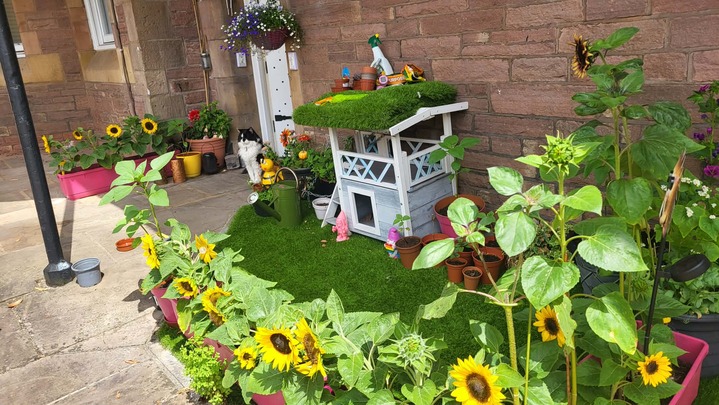 Please Help Save My Tiny Accessible Garden - A Lifeline For A Disabled NHS WorkerI am asking for your support to help save my tiny 165cm x 70cm garden outside my front door. My housing association has given me just 12 days to remove it after a single complaint. To many people it may look like a few pots and some artificial grass. To me, it is my lifeline. I live with multiple long-term disabilities, including Classical Ehlers-Danlos syndrome, Spina Bifida, M.E., Fibromyalgia, Endometriosis, ADHD, anxiety and depression. I work just 15 hours a week for the NHS because that is all my health allows. The remaining 149 hours each week I spend mostly at home. My bed is in my living room, only a few steps from my front door. For the last ten years, the view from that door has been an abandoned, mould-covered Peugeot that has been left to rot. The owner no longer even lives on this side of the building and parks their current car elsewhere, leaving this one untouched. After years of looking at a decaying vehicle, I created a tiny wildlife garden. It gives me a reason to get out of bed on difficult days. Sometimes all I can manage is walking the few steps to my doorway to see what has bloomed or to watch the bees, butterflies and dragonflies that now visit every day. It has also improved my safety. Before I laid the artificial grass, loose gravel was regularly scattered outside my door by off-lead dogs. Because Ehlers-Danlos syndrome causes joint instability and I wear NHS-prescribed hinged knee braces, uneven gravel significantly increases my risk of falls. The plant pots have also stopped dogs fouling directly outside my entrance. This tiny space has become part of my daily therapy. It encourages me to get fresh air, supports my mental health and gives me a sense of purpose during long periods confined to my home. It has also meant a great deal to my mum, who is currently undergoing treatment for breast and lung cancer. Visiting my little garden after her hospital appointments has given us both moments of happiness during an incredibly difficult time. Neighbours, NHS colleagues and visitors regularly tell me how much they enjoy seeing the flowers and wildlife. One complaint should not outweigh the positive impact this small garden has on so many people. The housing association havn't added any plants to the grounds or turned the soil in the bedding areas for 14 years. I am not asking for special treatment. I am asking for reasonable compassion and understanding for a disabled tenant whose tiny accessible garden improves both physical safety and mental wellbeing. Please help me ask the housing association to allow this small garden to remain. Sometimes something that seems insignificant to one person can mean everything to someone else. Thank you for your time & help. Ria1,322 of 2,000 SignaturesCreated by Ria Naden
-
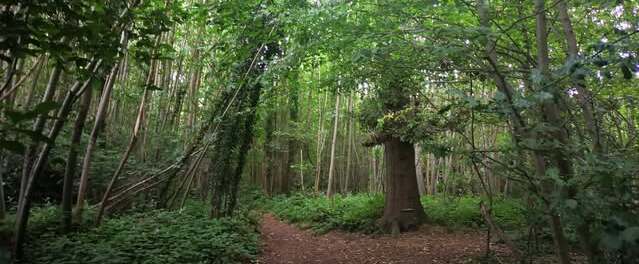 Save Oaken WoodOaken Wood, an ancient woodland in Kent, is under threat. Gallagher's and Kent County Council want to turn it into a quarry. Yet this is the home of protected species, such as dormice and various fungis. Trees aged over 100 years old would need to be vanquished to acquire ragstone for so-called building and road making purposes. Please help support this cause and show your disapproval. You can also join the Facebook group here.342 of 400 SignaturesCreated by Account Deleted

-
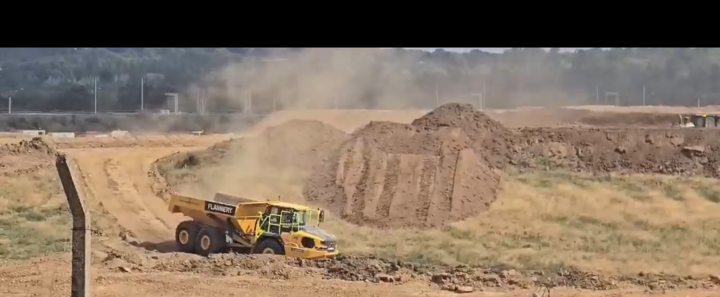 Stop the Dust and Noise Pollution from the SEGRO DevelopmentWe ask SEGRO to demonstrate that it can be a responsible neighbour by taking immediate action to reduce the impact of this development on our communities. Residents of Park Street, Frogmore and neighbouring communities are experiencing unacceptable levels of dust and noise arising from the massive earthworks being undertaken as part of SEGRO’s freight warehouse development. During prolonged periods of dry weather, more than 100 items of heavy construction machinery are operating across this enormous site. The resulting orange-yellow dust regularly drifts across nearby homes, covering cars, windows, patios, garden furniture and plants. Residents are spending considerable time and money cleaning their properties, and with windows and doors open during hot weather, dust is entering people’s homes. We recognise that development has been approved and construction will continue. However, we believe that nearby residents should not have to suffer avoidable environmental impact.3 of 100 SignaturesCreated by Paul Blakeley
-
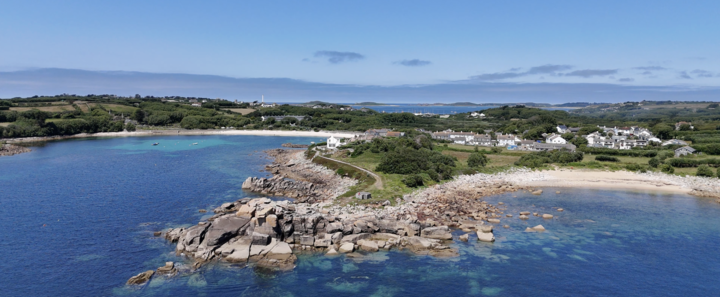 Give Scilly the Highest Standard of Sewage TreatmentSign to support us in our call for: • Secondary sewage treatment and UV disinfection on all inhabited islands; • Effective regulation and accurate monitoring; • Preservation of our highly protected marine environment; • Well-maintained water infrastructure and equipment. In 2026 there are no excuses for sewage pollution. The Isles of Scilly rest 28 miles off the coast of Cornwall in a gorgeous tapestry of blue-green water. This spectacular marine environment is teeming with life and is home to Grey Seals, Crawfish and Pink Sea Fans, all of which are protected in an archipelago-wide Special Area of Conservation along with reefs and intertidal sandbanks. Other residents and regular or rare visitors are ‘priority species’ and include: • Sea Fan Anemones • Sunset Cup Corals • Porbeagle Sharks • Blue Sharks • Basking Sharks • Humpback Whales • Fin Whales • Minke Whales • Cuvier’s Beaked Whales • Orca • Risso’s Dolphins • Common Dolphins • Bottlenose Dolphins • Harbour Porpoise And too many more to mention! These species and their habitats - along with magnificent seabirds, wildlife, and flora and fauna on land - are why Scilly is one of the most protected environments in the UK. Despite this, South West Water are proposing to construct a fine-screening plant and long sea outfall to ‘improve’ St Mary’s’ already failing sewage system. If successful, this 470m pipe would routinely discharge screened but untreated sewage into highly protected, designated habitats within a fragile ecosystem. St Mary’s has a population equivalent of over 2,000, making it unlawful to routinely discharge untreated sewage here. SWW have stated the necessity for secondary treatment to protect our Special Area of Conservation in their own publications, and the Environment Agency acknowledge it too. Despite this, South West Water are progressing their plans at pace, and the Environment Agency said they will consider a ‘robust’ argument for screening only. In 2026 there are no excuses for sewage pollution. We know better, and have the technology to be innovative and sustainable whilst we do better. Other UK islands like South Uist and Tobermory have secondary treatment for similar population equivalents, and it would never be acceptable on the UK mainland. People are aware of the sewage crisis and are no longer prepared to let sewage pollution harm our environment and our families. The Isles of Scilly is one of the UK's most protected marine environments. A place with this level of environmental importance should become a showcase for the highest standards of wastewater treatment—not an exception where lower standards are accepted. Sign, share, and shout it out loud!2,341 of 3,000 SignaturesCreated by Environment Action Scilly

Hello! We use cookies to improve your experience by providing insights into how the site is being used. Find out more.