-
 Save the bees = saving the environmentBan All Five Pesticides Linked To Bee Deaths! France Becomes The First Country To that put this into action. In May 2018 the EU banned three of the significant pesticides implicated in the collapse of bee populations. Clothianidin, imidacloprid and thiamethoxam are now prohibited for use on crops. We need to go a step further and set a high bar in the effort to save the bees. Given the importance of pollinators to nature and the survival of the biosphere, this could not happen too soon! Studies have reported that the neonicotinoid pesticides attack the central nervous system of insects, leading to loss of memory and homing skills, in addition to reduced fertility. Bees that cannot find their way back to the hive quickly die. However the pesticides have also been shown to affect butterflies, birds and other pollinating insects. There is a reason why France is ahead of the field in this regard: The “bee killing” pesticides were tested first on French fields in the 1990’s – and the French farmers witnessed first-hand the catastrophic effects that occurred in 1994; describing “a carpet of dead bees”. 400,000 bee colonies died within days – yet the story was buried under a layer of corruption and distorted science. Since that time, activists and manufacturers have battled to control the situation. Full stories Overwhelming Evidence Linking Neonicotinoid Insecticides To Massive Die-off Of Bees And Songbirds The new move is certain to be celebrated by ecologists and sets an example of protection of nature that the rest of the world needs to follow. ..... We must also follow this! Please help me, put this into action.204 of 300 SignaturesCreated by Mia Depper
 -
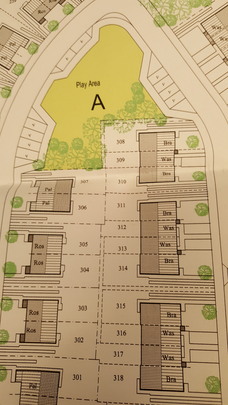 Persimmon UK, give us our trees and allow us to breathe! !Allowing people to breathe oxygen freely, finish off your line of trees (approx 16 and furthermore, plant trees in the neighbourhood NOW! We have a right to look after our environment-please give us OUR TREES NOW, after nearly 13 years of denial! Blue prints (Planning Dept.) show trees. Why have you not provided a barrier and protection, for a wheelchair unit- bungalow!146 of 200 SignaturesCreated by Surinder Saroya
 -
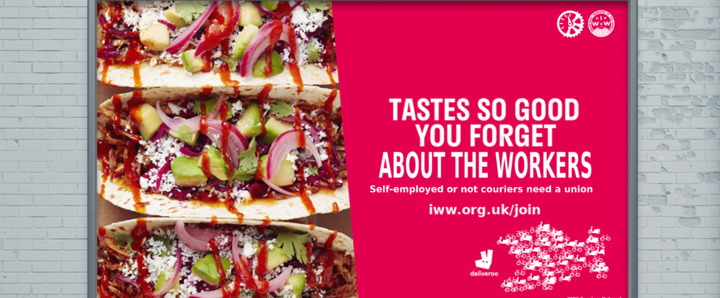 Stop Firing and Harassing CouriersJust a few days before Christmas 2018 Deliveroo chose to terminate the contracts of over 100 of their workers with no notice or right to appeal, on accusations of fraud. No evidence of these allegations was provided to terminated workers. As 2019 has progressed, Deliveroo has continued to use un-evidenced fraud and theft allegations to both terminate and intimidate couriers. As self-employed contractors, we do not have the same recourse to law or statutory rights that other workers do. While we are exploring legal solutions to this unfair treatment of workers, we recognise that the law is fundamentally not on our side, and as such we must find means to put pressure directly on Deliveroo to treat their workers fairly. We believe that, as Deliveroo face stiff competition with the likes of Uber Eats and Just Eat for willing and competent couriers, they will benefit from taking the concerns of their workers seriously. If Deliveroo chose to ignore these concerns then they are likely to face further action by couriers. ---- Żądamy aby Deliveroo: a) Zaprzestało poniżania i zwalniania dostawców bez przedstawienia adekwatnych na to dowodów. b) Wprowadziło w życie proces odwoławczy wobec wszystkich decyzji zwolnień oraz procesów dyscyplinarnych, oraz dało prawo do odwłania od decyzji zwolnienia wszystkim dostawcom zwolnionym przez ostani rok. c) Wdrążyło system chroniący swoich pracowników przed obarczeniem winą za oszustwa klientów. Jednym z rozwiązań zaproponowanych przez środowisko dostawców jest wysyłanie klientom unikalnego kodu PIN, który musiałby być przedstawiony kurierowi w momencie dostawy. d)Opublikowało przeprosiny za złe traktowanie oddanych swojej pracy i ciężko pracujących dostawców, którzy zostali zwolonieni oraz żle traktowani. Dlaczego jest to tak ważne? Kilka dni przed Świętami Bożego Narodzenia w 2018 roku, Deliveroo zdecydowało się zwolnić ponad 100 swoich pracowników bez wcześniejszego ostrzeżenia ani też prawa do odwołania. Dokonało tego pod zarzutem oszustwa. Żaden z dowodów na takie oskarżenie nie został przedstawiony pokrzywdzonym. Wraz z 2019 rokiem, Deliveroo kontynuuje bezpodstawne okskarżenia nadal zwalniając dostawców. Jako usługodawcy na zasadzie samozatrudnienia nie mamy takich samych przywilejów, czy praw statutowych. W czasie gdy poszukujemy prawego rozwiązania tej sprawy, stwierdzamy że aktualna sytuacja prawna na nie wiele nam pozwala. Stąd też zwracamy się bezpośrednio do Deliveroo aby to traktowało swoich pracowników uczciwie. Wierzymy, że Deliveroo chcąc stawiać czoła konkurencji takiej jak Uber Eats czy Just Eat dobrze traktujących swoich pracowników, weźmie sobie do serca powyższe postulaty wobec swoich dostawców. W sytuacji gdy Deliveroo zignoruje zażalenia swoich pracowników, Ci oddadzą się dalszym czynnościom w tej sprawie. ---- Nós demandamos que a Deliveroo: a) Pare de terminar contratos e ameaçar os drivers sem evidências de que fizeram algo errado. b) Implementar um processo para recursos em todos os casos de terminação de contratos e processos disciplinares, e dar o direito a recurso a todos os drivers que tiveram seus contratos terminados no ano passado. c) Implementar um sistema de proteção aos drivers para que não sejam culpados por fraudes cometidas pelos clientes. Uma solução seria enviar para o cliente um pin único que seria repassado para o driver na entrega. d) Publicar um pedido de desculpas por seu mau tratamento para com os drivers honestos e trabalhadores que tiveram seus contratos terminados ou receberam mensagens ameaçando terminar o contrato. Porque é isto importante? Alguns dias antes do natal, no ano passado, a Deliveroo terminou o contrato de mais de 100 drivers sem dar aviso prévio ou direito a recurso, com base em acusações de fraude. Nenhuma evidência para essas alegações foi fornecida. Em 2019, a Deliveroo continua a fazer o mesmo, terminando contratos ou ameçando terminar com base em alegações sem evidências. Como somos self-employed, não temos os mesmos direitos legais que outros trabalhadores têm. Nós estamos procurando soluções na lei contra o tratamento injusto feito pela Deliveroo, mas nós reconhecemos que a lei não está do nosso lado, então devemos achar maneiras de pressionar a Deliveroo diretamente. Nós acreditamos que, como a Deliveroo enfrenta uma competição feroz com a UberEats e a JustEat, ela irá se beneficiar ao levar a sério os problemas e reclamações de seus drivers. Se a Deliveroo ignorar as nossas reclamações, então ela provavelmente enfrentará futuras ações de seus drivers. -- Arabic: https://pastebin.com/V2u88LZy -- Spanish: https://pastebin.com/JHzdbXgP -- Romanian: https://pastebin.com/imBHLqFQ237 of 300 SignaturesCreated by IWW CouriersNetwork
 -
 Declare a Climate Emergency in NewportAll governments (UK, Wales and local) have a duty to limit the negative impacts of climate breakdown, and local governments that recognise this should not wait for their national governments to change their policies. It is important for the residents of Newport that our council commits to carbon neutrality as quickly as possible. Humans have already caused irreversible climate change, the impacts of which are being felt around the world. Global temperatures have already increased by 1 degree Celsius from pre-industrial levels. Atmospheric CO2 levels are above 400 parts per million (ppm). This far exceeds the 350 ppm deemed to be a safe level for humanity; In order to reduce the chance of runaway global warming and limit the effects of climate breakdown, it is imperative that we as a species reduce our CO2eq (carbon equivalent) emissions from their current 6.5 tonnes per person per year to less than 2 tonnes as soon as possible; Individuals cannot be expected to make this reduction on their own. Society needs to change its laws, taxation, infrastructure, etc., to make low carbon living easier and the new norm; Cities are uniquely placed to lead the world in reducing carbon emissions, as they are in many ways easier to decarbonise than rural areas – for example because of their capacity for heat networks and mass transit; The consequences of global temperature rising above 1.5°C are so severe that preventing this from happening must be humanity’s number one priority. Here in Newport we need to be working to protect our city from the effects of flooding that are made more severe by rising temperatures. Bold climate action can deliver economic benefits in terms of new jobs, economic savings and market opportunities (as well as improved well-being for people worldwide and in Newport). We the undersigned want to see Newport Council declare a climate emergency, and question why the council haven't declared one already giving the severity of our risk.137 of 200 SignaturesCreated by Amelia Womack
 -
 Reinstate the train line between Kings Lynn and NorwichThe roads in Norfolk are getting ever more crowded leading to long delays for commuters, frequent traffic jams, increasing air pollution and road traffic accidents. A regular train service will help reduce motorised road traffic, and therefore reduce greenhouse gas emissions and air pollution; it will enable more people to use bicycles at either end of their train commute which in turn will improve health and wellbeing, reduce stress levels and result in greater productivity by enabling working en route and reduced travel time. A trainline will improve connectivity between Norwich and towns in Norfolk such as Dereham, Swaffham, Downham Market and Kings Lynn, making it accessible to many more people, not just to those with cars - giving a much needed boost to the region's economy.1,342 of 2,000 SignaturesCreated by Pallavi Devulapalli
 -
 Independent Complaints & Monitoring Body for Schools & Local AuthoritiesLegislation & DfE guidance state how schools & local authorities must comply with the law. If statutory guidance or duties are not followed, any enforcement is left to individual families using ineffective complaint procedures; or the LGO service, which won’t act in the face of ultra vires local policies that exceed the scope of LA powers. Those who break the law need to face financial consequences with compensation for victims. It should not be left to parents to use Judicial Review to bring law breakers to account. Complaints often relate to a lack of support & provision (for SEND, trauma, mental/physical illness or disability); delays in securing assessments & diagnoses; & a refusal to accept the existence of some school-related issues (e.g., bullying, anxiety, peer abuse, or sensory overload). Many of these complaints are effectively disability discrimination. Some comments made by parents: “To stand by and say nothing when there is an escalating problem would be negligent of me in my parental duties. Yet I found myself being accused of all sorts by the professionals with whom I simply wanted to find resolution & move forward for the sake of my children.” "The system is a shambles and allows neglect of disabled children’s rights to an education. Until the system penalises those who ignore legislation it will never change. Delays save money. Even the complaints system at the LA needs complaining about as they are always delayed and are never solved." "The LA seem to have their own rules about providing education for SEN and are not answerable to anyone" "The response to my complaint (about the Head) was written by the head herself!" BACKGROUND INFORMATION According to The Department for Education: Statutory guidance sets out what schools & local authorities must do to comply with the law. They should follow this guidance unless they have a good reason not to do so. Some guidance must be followed without exception. In addition, statutory policies contain regulations & guidance that underpin a governing body’s decision-making process & these must be adhered too as they are enshrined in law. THE LACK OF ACCOUNTABILITY The current lack of effective accountability in the system leads to significant psychological and/or physical harm for children and young people, severe difficulties for families, & damage to educational outcomes. There are specific areas of law which give rise to the majority of complaints: When children & young people (CYP) need individual SEND provision, schools, academies, & local authorities do not always comply with the SEND Code of Practice & other SEND-related policies, statutory guidance & laws. This denies CYP access to suitable educational provision. https://www.gov.uk/children-with-special-educational-needs When children & young people experience physical or mental health difficulties, schools & local authorities do not always comply with the guidance around supporting pupils with medical conditions at school. This denies CYP access to suitable educational provision. https://www.gov.uk/government/publications/supporting-pupils-at-school-with-medical-conditions--3 When children & young people are bullied schools & local authorities often do little to help or protect them from harm. By law, all maintained schools must have a behaviour policy in place that includes measures to prevent all forms of bullying among pupils. Schools must also follow anti-discrimination law, meaning staff must act to prevent discrimination, harassment & victimisation within the school. Not doing so denies CYP a suitable education within a safe environment. https://www.gov.uk/bullying-at-school In recent years there has been a rise in cases of sexual assault in schools. Relevant guidance has been created however, many schools are unaware of this & are failing to protect victims, denying them an education within a safe environment. https://consult.education.gov.uk/safeguarding-in-schools-team/keeping-children-safe-in-education/supporting_documents/Sexual%20Harassment%20and%20Sexual%20Violence%20%20Advice.pdf When any of these issues occur, children & young people struggle to maintain attendance at school. This can lead to school-attendance-related penalties & prosecutions for parents/carers, implemented because schools can use their own judgement to authorise or un-authorise absence under laws originally designed to combat truancy (not absence as a result of unmet needs, threats to personal safety, severe academic pressure, or physical/mental illness). THE LACK OF INDEPENDENCE & TRANSPARENCY To make a complaint, parents need to follow the policy/complaints procedure of the relevant school or academy. Initially this means bringing a complaint to the Headteacher & then, if necessary, the Board of Governors or Trustees. This effectively means that a parent or carer has to ask the people they are complaining about to investigate their complaint, which is not fair or transparent. If no resolution is found with a school there is the option to contact: - The Local Authority - Then, the Department for Education - Then, the Local Government Ombudsman (who can only investigate a limited range of issues or complaints). Or, If no resolution is found with an Academy, the next steps are to approach: - The Education Funding Agency - & then the Secretary of State for Education https://www.gov.uk/complain-about-school Parents report that these options are usually ineffective, time-consuming and stressful. THE LACK OF SUPPORT Any parent or carer currently has to manage this complaints process without any independent support or guidance. If complaints of non-compliance are not dealt with effectively, parents have no further recourse & are therefore powerless to help their children. They may also worry that they have made a complaint against the very organisation with whom they entrust their child on a daily basis.515 of 600 SignaturesCreated by Beth Bodycote
 -
 Stop Highland Council from cutting key educational support for kids with additional needsI have 4 children with autism, cutting pupil support assistants in schools affects not just the children that need it but the kids who do not have additional needs also. Teachers will face extra strain because they either do not have the experience to deal with children with additional needs, or they feel their time cannot be spent with other pupils due to the additional needs of those that need it. It is important that after school clubs such as SNAP are in existence, many kids with additional support needs do not have friends outside school and are not invited to birthday parties or included in communities because of these support needs. After school clubs are an essential lifeline for those children that really need to have some sort of social life outside their families. In many cases school and after school clubs are the only respite families have for both the children and the family.1,045 of 2,000 SignaturesCreated by David Tulloch
 -
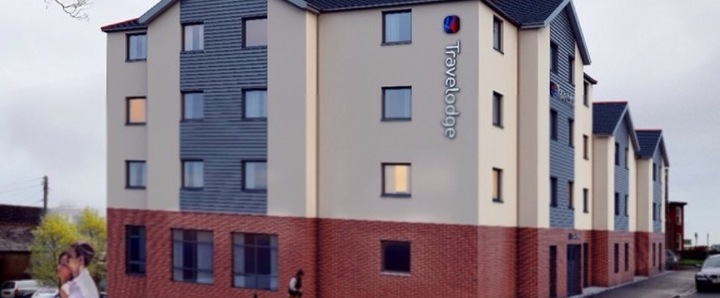 SAY NO TO A TRAVELODGE IN BUDE!Travelodge wants to build a 70 bedroom Hotel in Bude, Cornwall. However we already have enough accommodation for visitors, Premier Inn, Indpendent Hotels, B&B's, Caravan Parks and Holiday Homes! How many more do we need? It will increase traffic, create an eyesore, and take business away from the current accommodation places in Bude. Yes it will create jobs, but loads more jobs will be lost when independent hotels who employ more staff are closed down! If you love Bude, you would sign. Sign, before it's too late...477 of 500 SignaturesCreated by People Of Bude
 -
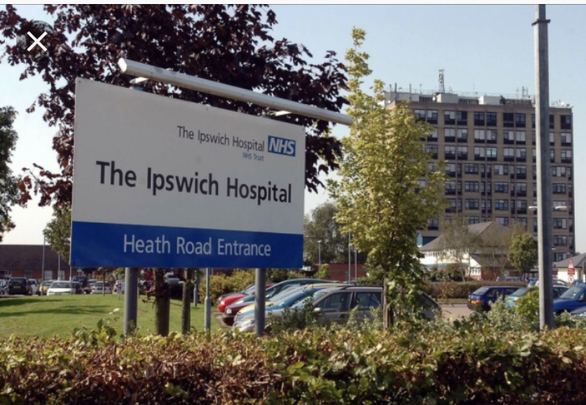 Stop Ipswich hospital reducing staff car parkingNot only do staff already have to pay to park at work they are now expected to park a 20 minute walk away from the hospital. This will mean members of staff walking often alone in the dark and cold/wet weather to their cars before and after a 12 hour shift.2,579 of 3,000 SignaturesCreated by Hannah Bridges
 -
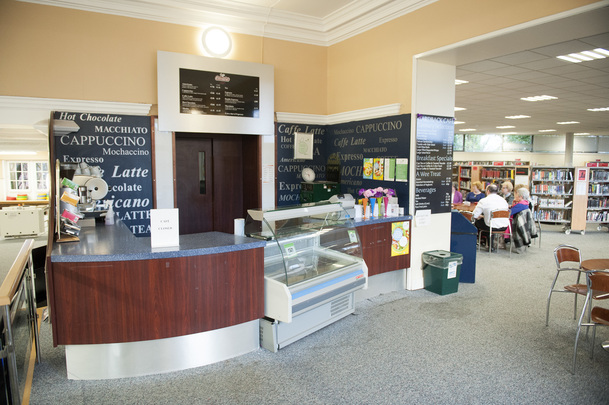 Save Motherwell Library CafeThe cafe in Motherwell library is well used and much loved by many in the local community, including the elderly and other vulnerable groups.257 of 300 SignaturesCreated by AnnMarie Carlin
 -
 STOP THE PROPOSED CUTS TO GREATER MANCHESTER FIRE AND RESCUE SERVICEWe believe that the proposed cuts will result in a reduced level of Fire and Rescue Service response which risks both public and firefighter safety. A hundred support staff jobs will be axed, 194 firefighter jobs lost and six fire stations closed across Greater Manchester under the plans. The number of fire engines would be reduced by nine, from 56 to 47 and the number of firefighters riding on all appliances across the region would reduce from five to four. Recent local and national incidents have shown the need for a fully resourced and immediately available Fire and Rescue Service in Greater Manchester, public and firefighter safety must come first!13,889 of 15,000 SignaturesCreated by Fire Brigades Union Greater Manchester
-
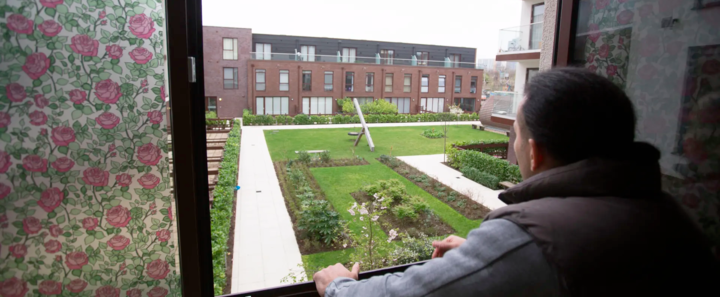.png) Stop housing developers segregating poorer childrenChildren in London too poor to play outside with their friends? According to one housing developer - that’s the way it should be. A multi-million pound housing development in London is segregating children based on how much money their parents have. With separate, smaller play areas for children living in affordable housing, these children are blocked from using the main play area the richer children enjoy. London is already segregated enough without developers making it even worse. A children's playground on an estate is a really important space, especially for families in flats. My two children would always be playing with other children in the courtyard of the estate where I live. They formed life-long friendships there. All children should be free to play with their friends - not shut out because they live in affordable housing.8 of 100 SignaturesCreated by Cathy Warren
Stop housing developers segregating poorer childrenChildren in London too poor to play outside with their friends? According to one housing developer - that’s the way it should be. A multi-million pound housing development in London is segregating children based on how much money their parents have. With separate, smaller play areas for children living in affordable housing, these children are blocked from using the main play area the richer children enjoy. London is already segregated enough without developers making it even worse. A children's playground on an estate is a really important space, especially for families in flats. My two children would always be playing with other children in the courtyard of the estate where I live. They formed life-long friendships there. All children should be free to play with their friends - not shut out because they live in affordable housing.8 of 100 SignaturesCreated by Cathy Warren
Hello! We use cookies to improve your experience by providing insights into how the site is being used. Find out more.