-
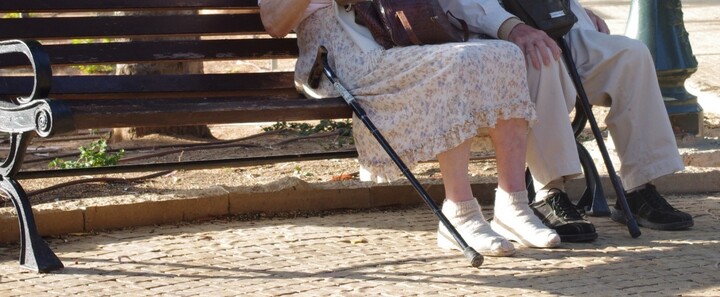 Put the seats back at Tarbert bus stopDistances in Harris, unlike Barra, are huge. It is very important, therefore, that people can wait for a bus in some comfort. At this very moment the Western Isles are being buffeted by high winds. Having to travel any distance is uncomfortable, but Stornoway is a long way away from Tarbert. From the West Highland Free Press "Council slammed for removing seats from Tarbert shelter. Elderly residents in Harris have complained over a situation in which they are having to wait for long period for a bus connection to Stornoway - and without proper waiting facilities."249 of 300 SignaturesCreated by Peter Colledge
 -
 Stop Virgin Media targeting vulnerable peopleMy daughter who has learning difficulties and lives in a Mencap supported house, with my support, cancelled a package she had, despite the fact it was made clear at the time she could not act individually in this sort of situation she was phoned direct and phone/bullied into a new package she did not want causing her extreme distress.27 of 100 SignaturesCreated by Dave Nichols
 -
 Carers Allowance Entitlement For People Claiming BenefitsWhere there is a caring role, very often the family experience severe financial hardship and this is exacerbated if the carer cannot claim carers allowance. Many carers have to give up work, training or education to look after the person they care for and are unable to claim any money in recognition of their caring role if the person they care for is on ESA and does not qualify for Personal Independence Payment (PIP). An example of this is a 25 year old carer who had to drop out of university 4 years ago when his father died suddenly and his mother had a breakdown. She is unable to look after herself without his help yet he is unable to claim carers allowance as she is on ESA and has been refused PIP and he is unable to work because of his caring responsibilities. Consequently, they suffer extreme poverty and are in debt which has resulted in potential eviction from their home. Another example is a 17 year old who had to move from his father's house to another county to care for his mother who suffers extreme anxiety which means she is unable to leave the house on her own, answer the phone or the front door so relies heavily on her son. As he is only 17 and unable to work or engage in training or eduaction due to his caring role the family are unable to claim child benefit for him or carers allowance as the mother is on ESA and has been refused PIP. There are many more such examples and I feel strongly this needs to change so that those who suffer some of the wprst financial hardship are not made to suffer further.169 of 200 SignaturesCreated by Melanie Rees
 -
 Endless Repetition of GCSE's is Unfair to the DisabledCurrently, in the UK everyone has to pass their maths and English language GCSE, regardless of any disabilities that may prevent them from doing so. Since 2013, all 16 to 18-year-old students who do not already have a grade C in English or maths have to continue studying the subjects. Ofsted chief inspector Sir Michael Wilshaw has said: “Inspection evidence shows that, for some students, having to retake their GCSE can be demotivating and that attendance at these lessons is lower.” My mother works in the field of special education and says it is upsetting and unfair to those with learning difficulties who just can't pass. It is obvious that some people are more able than others, and judging everyone by the same standards is unfair and wrong. I know of a 19-year-old resitting his GCSE maths and English for the fourth time this summer, and planning to continue trying for another two years. He is perfectly eloquent, has a job, and plans to join the army. The only thing holding him back is his dyslexia and dyscalculia (number and letter blindness) that means he can't read the test papers and is stopping him continuing with his life. We plan to ask the government to allow people with a diagnosed learning difficulty to stop repeating their GCSE Mathematics and English after they have completed full-time education (at 18) if they and a specialist learning support member both agree they do not wish to continue. The government should then be more flexible with other qualifications and job prospects.368 of 400 SignaturesCreated by Emily Adams
 -
 NHDC Council- No to greedy payrisePublic services are being cut back to the bone due to the political choice of austerity, playgrounds and sports facilities are being closed, the NHS is under attack, community groups, the disabled and vulnerable face all sorts of challenges from closures and budget cuts – this decision is an utter disgrace.266 of 300 SignaturesCreated by Mairtin Burke
 -
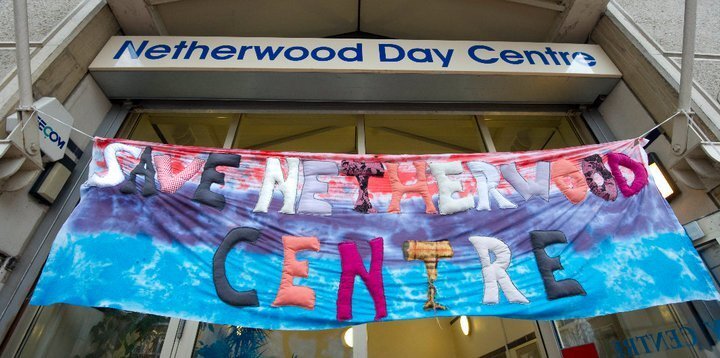 Save Netherwood Day CentreCamden Council is planning to close Netherwood which is a specialist dementia day centre - the only one of its kind - in Camden. This will be the third time Camden has tried to close it since 2011. Each time we campaigned and won. We need to win again. Situated in NW6 between West Hampstead and Kilburn, Netherwood is regularly visited by people the world over, so impressive is its design and the care received by the people who attend it. If Camden Council closes this centre and sells off the land, as is the general feeling, then it will be lost forever. The council will never be able to afford such a site again. If the closure goes ahead, those attending their beloved Netherwood will be "decanted" to another nearby centre which is not a specialist day centre and is not purpose-built. The council says it will have money to make alterations to the building to make it "dementia friendly". We argue: why spend money on partially reconfiguring another centre when you have one right there that is purpose built? We appreciate local governments are having to make huge budget cuts, but we believe losing such a jewel of a resource will be a travesty and will adversely impact generations to come. Please help us save this incredible community resource a third time! Dementia is recognised as a growing concern in today's society. Not only is it important that there is excellent care for the person with dementia, it is also crucial that family carers are given time to themselves to recharge from what can often be a hugely challenging and exhausting situation. Places like Netherwood enable families to STAY together. They also keep people from being hospitalised and we know how important that is in the current climate. If we have brilliant services in the community the ultimate saving to society, both financially and in terms of general well-being, is enormous. Cutting such lifelines will ultimately cost more in the long run with some families perhaps deciding that residential care is the only solution. The cost of this to the council would be enormous. If we are to have a truly dementia-friendly society then places like Netherwood should never be threatened with closure but should be protected in perpetuity.1,373 of 2,000 SignaturesCreated by Jane Clinton
 -
 MENTAL HEALTH PROVISION IN DERBYSHIREMental Health services are not only being cut but actually being closed down . As a long term sufferer of mental health conditions both as a client and as a volunteer the situation is untenable . The give just a few examples Due to funding cuts from Central Government Derby Steps Rethink Mental illness funding cuts DORA chesterfield to close March 2017 The Croft . Ripley Rethink (decision from CCG Jan 21st Red Cross Dementia Care/ MH Alfreton/Belper/ Ilkeston/ Long Eaton (been volunteer for seven years) Cease operations March 2017 MHAG mental Health Action Group (which covers Amber Valley) Sept 2017 Moneywise CAB in the community Amber Valley through Derby CAB for MH scrapped Amber Trust P3 / Ripley floating support cut from 2 years to 9 months etc Probably more to follow Where are people to go ? To interact in a safe environment etc ., See Derbyshire Healthwatch Report on Crisis Care just published. "There is a massive increase in admissions to A& E by mental health sufferers as I'm sure you have heard/seen on TV and Radio .. Surely by cutting these services it makes the situation worse ?"The Mental Health Action Group is led by people living with a mental health condition who rely on services in the community to help them stay well. At a time when the demand for mental health services has never been greater, vulnerable people are facing cuts in Derbyshire on an unprecedented scale. All manner of support services, money advice services, advocacy services, housing support services are being scaled down. It is dangerous to underestimate the cumulative effect of this on so many individuals and families. The gap between need and provision is widening all the time and people will disappear through that gap. How can we allow this to happen when the impact of mental illness has never been so well recognised nor the need to improve mental health care so well acknowledged?" supporting statement from the MENTAL HEALTH ACTION GROUP DERBY RESTORE THESE SERVICES NOW804 of 1,000 SignaturesCreated by Tony Fisher
 -
 Get rid of Atos AssesmentsI for one just had my P.I.P reduced and mobility taken away. I know of GENUINE people also, that have had this happen. When I called to make a mandatory appeal, TWICE I was told, the decision was made BEFORE any of my medical evidence, Occupational therapy report had even been received . The government wants to save money - yet within the space of a month , I had to go to TWO different assessments. People are taking their own lives because of these decisions . Why should they be allowed to play with peoples lives ??328 of 400 SignaturesCreated by Cath De Roos
 -
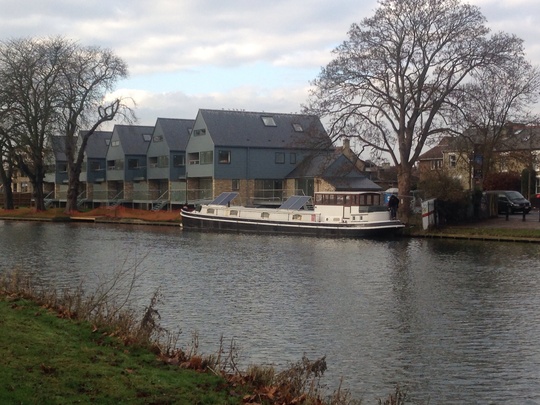 Help mx Lad & Family get permission to Moor in Cambridge!***Jan 2020 Edit: Since this petition last was circulated, my ex husband abandoned the kids & I on our houseboat, I was diagnosed as Autistic and came out as non-binary. Despite being a single parent and disabled, Cambridge City Council are STILL refusing to give me a mooring license, whilst giving them to others in less need eg. Single white males who don’t live in cambridge. Please Sign & Share if you haven’t already done so*** Miss Lad is a full time secondary school teacher who has served the community of Cambridgeshire as a keyworker over 13 years, teaching at schools including Chesterton, St Mary's Upper, CRC, Castle School and is currently the Food & Nutrition teacher at Parkside & Coleridge in the city centre. Miss Lad lives with her husband who works full time as a maintenance man, and 3 children, who all attend Central Cambridge schools, onboard their Dutch Barge Trio II, listed on both the UK & NL historic ships registers. Trio II also has a historic link to Cambridge since her wheelhouse was built from the eaves of the, now demolished, historic pub The Penny Ferry/pike n Eel. Moored legally, whilst on the council mooring waiting list, with extremely kind permission of HC Moss developers, on their site at Water Street, Chesterton for the past 3 years, the family had thought that this would give the council plenty of time to consider their case, yet now that the new houses are built and they must leave their current mooring, the council has told them that they will evict the family if they moor on council land, which are the only other moorings available and that they should instead, sell their beloved home and apply for a council house. The family is ethnically diverse, consisting of several minorities, and as such is protected by law, particularly when considering Miss Lad's Roma status which gives her the right to live as a traveller. To suggest moving into a council house is highly insulting and discriminatory and goes against the family's right to a traveller way of life which is entrenched in law. If forced by the council out of Cambridge by eviction, the family would lose their jobs and school places (since the schools need to be within cycling distance for a child) and would ultimately lead to repossession of their home as they would be unable to keep up repayments on it and they would be made homeless. In this way the council intends to deliberately make this family homeless and is discriminating against the children's right to an education. In addition, forcing an experienced teacher out of a Central city school at a time when the profession is in crisis and the school will therefore find it very difficult to recruit, thus seriously affecting the education of hundreds of young people, as well as Miss Lad's Year 11 form group, who are in the middle of their GCSEs, is disastrous. Whether the council admits it or not, living on a boat IS affordable housing and we are in a housing crisis and instead of being persecuted and evicted by the council, the family should be applauded for finding a creative solution that does not make them a burden on existing council house stock which they would not take up anyway and the council should accommodate them. The family is also a shining example of off-grid living, with solar energy and a river water filtration system. In this way they are no burden on the national grid or water companies which fits in perfectly with the council's own plans for a sustainable city. There are plenty of mooring spaces available, yet the council recently chose to give 5 of them to single white males with existing moorings and jobs outside of Cambridge, instead of this diverse and hard working family of 5 in desperate need of a mooring, who all work/ attend schools in the city centre, which seems ludicrous. A family of 5 on 1 boat compared with 5 single men on 5 separate boats is also a much more efficient use of moorings and large families obviously contribute much more to communities than single households. The council are also very aware of the worrying trend amongst many of those with existing council moorings to rent them out for a profit, yet the council refuse to take action against them, preferring instead to evict working class families like Miss Lad's, further gentrifying the city centre with moorings used for leisure not their sole residence, as they also intend for the working class living on the Railings along Riverside. By signing you are asking the Chief Executive Antoinette Jackson and the Strategy & Resources Committee who are currently reviewing the mooring policy, that Miss Lad & her family be given permission to moor in the city centre with immediate effect. Please also share as widely as possible. Thank you so much for your kind support.1,256 of 2,000 SignaturesCreated by Eleanor Tattam
 -
 No child and family should be excluded from the opportunity to surviveWe as family of Wali Dar are presenting this petition in an attempt to support our son who is diagnosis of Autism, Attention Deficit Hyperactivity Disorder and Learning ability. Wali is suffering from frequent flashbacks to the violence, terror, kidnapping and shooting which happened to him and his family especially his father back in his home country Pakistan. Wali is currently living in United Kingdom and receiving continues help and support of his family who he has full trust. Also, he is receiving high quality supports from NHS mental health services, Barnardo’s disability and inclusion support service, Gateshead Council and his school to deal with stress, anxiety and unforgettable traumatic events that has happened to him. Specialists clearly stated that Wali is a vulnerable young man who finds social interactions very difficult and unable to cope well with changes. Wali is unable to eradicate the shocking experiences of violence and life threatening danger back in Pakistan. Wali is currently receiving EMDR (Eye Movement Desensitization and Reprocessing) treatments but he is yet full of fear to re-experience those traumas. Wali’s family are very worry and concern what will happen to Wali if he will not have opportunity to stay in the UK. His supporters and medical team agree that, if he finds out that he has to go back to Pakistan; this change will raise the severity of his autism. This will happen due to the negative opinion he already has from such environment, what he already experienced and lack of support and professionalism in Pakistan. Wali as a young man has a long way ahead in his life. Witnessing such horrific incidents in childhood is very hard to deal with which requires safe environment, special support and family emotional care and support. Wali should be given the opportunity that other disable children have, to obtain confidence and move towards a better future. If he stays away from Pakistan, where he originally experiences the life threatening dangers, and if he keeps receiving the current professional supports he already has in UK, he will be able to cope with his disabilities, fears and anxiety and build his future life. As his parents and family members, it is very hard and heart breaking to see Wali in this situation every day. We do believe Wali’s life is as important as every other individual lives, which are important to every parent, and he should not be returned to Pakistan. The Children like Wali cannot be blamed for witnessing such incidents; instead, they should be supported and kept safe. We will be grateful if you sign in to our petition and support our appeal to Secretary of State requesting, “Please consider appropriate and fair human rights for Wali and his family and grant this family the right to remain in the UK to be safe”. Thanks for your time and considerations.359 of 400 SignaturesCreated by Jawad Ashraf Dar
 -
 Protect 535 NHS beds in DerbyshireLost beds in Derbyshire could mean that people are sent home to recover from illnesses rather than being kept under observation. Let’s make sure that our NHS doctors can make decisions they think are best for patients. Our NHS is already being starved of funds. The percentage of Government spending on healthcare in 2015-16 was 6.6%. It used to be close to 10%. We are now spending about the same as Slovenia and Iceland and behind Greece and Belgium. While there is a need to join-up care in Derbyshire this is being done in the context of £22 billions cuts in the NHS and may well result in loss of nearly a third of hospital beds in Derbyshire. How can we afford to lose more beds? This continued degradation of the NHS will foster the call for further break-up of the NHS and selling off to the private sector. Created on behalf of the Derbyshire NHS SOS Campaign5,089 of 6,000 SignaturesCreated by Peter Robinson
-
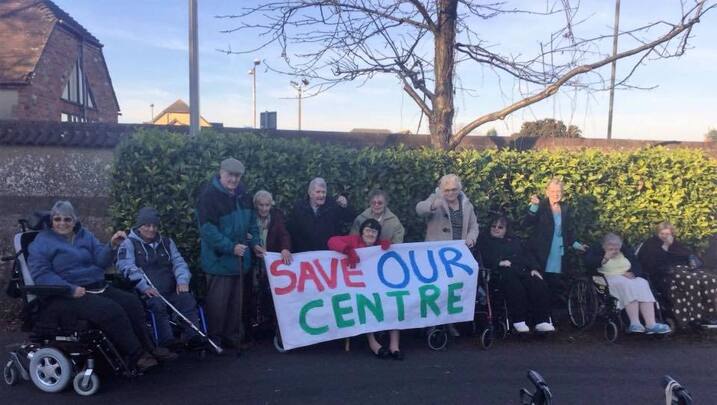 Save Bicester's Health and Wellbeing CentreAn open letter from an 87-year-old lady who uses the centre: Dear people of Bicester, I've lived in Bicester for 50 years. My husband passed away 15 yrs ago. I have no family left and my mobility is not what it used to be. I attend the Bicester Health and wellbeing centre located near the garth park two days a week. This place is my only lifeline. I get to see friends and I get looked after so well that I really don't know where I would be without the place. Oxfordshire County Council are proposing to close this centre and others throughout Oxfordshire! What will I do? I will be stuck looking at four walls every day with no human contact. Who will prepare me a cooked meal, help me with my medications and just check my general health. I'm so upset that this is happening. I won't see my friends again. I will be all alone all day every day. Me and my husband have worked hard all our lives, paid our taxes and this is how vulnerable people are being treated. You are all younger and we need you to fight for us as no one will otherwise. Please think of your elderly relatives and think what would they do if they didn't have you? I don't like being alone and it scares me to think this is now my future, being alone and vulnerable. Please help us in this fight to save the Bicester Wellbeing Health and Wellbeing centre. You or your relatives might need them one day!1,465 of 2,000 SignaturesCreated by Sarah Haydon
Hello! We use cookies to improve your experience by providing insights into how the site is being used. Find out more.