-
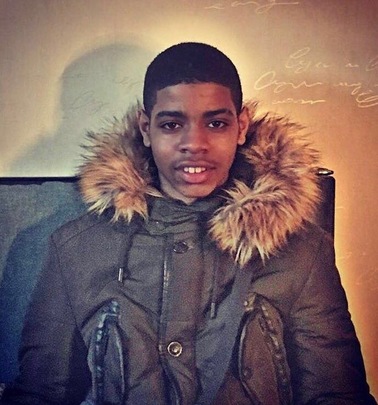 Protect our community in Thornton Heathhttp://www.dailymail.co.uk/news/article-4774564/Boy-15-second-teen-stabbed-death-London-one-day.html Croydon Council secured a £2.8 million investment for Thornton Heath's regeneration scheme which should have extended to Green Lane also. Too many young lives have been taken away due to violent, senseless crimes. More recently in the local area, Jermaine Goupall (age 15) was killed and his untimely death has shocked the neighbourhood. The justice system has no foundation due to lack of evidence to support his murder enquiry. We ask that: 1)There is a greater visible police presence in the local areas 2) permanent CCTV camera`s along Green lane, the parade & surrounding side streets1,454 of 2,000 SignaturesCreated by STANLEY GOUPALL
 -
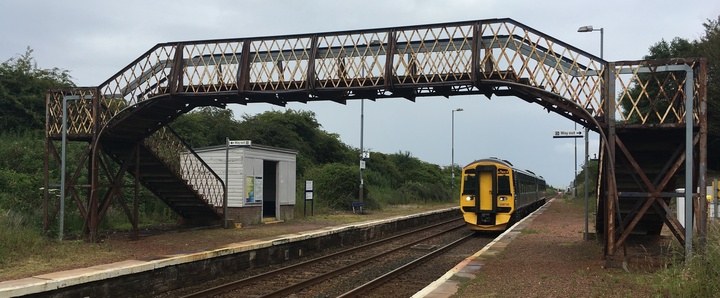 Save Breich StationNetwork Rail have applied to close Breich station on the ‘Shotts Line’ from Glasgow to Edinburgh. Their case for closure is that the cost of work on the station and replacement of the footbridge which are required due to electrification of the route, is not justified by the small number of passengers using the station. It’s not surprising that few passengers use Breich – only one train in each direction stops here. Network Rail have not considered the potential for increased usage if more trains stopped, if parking facilities were provided and if proposed housing developments nearby go ahead. Nor do they appear to have considered building a path from the east-bound platform to the A706, so negating the need for a footbridge. Closure of Breich station was not part of the electrification plan for which the budget would have included funds for the required work. Railways should be to provide a service, not for profit. The proposed closure is an opportunistic attempt at cost saving and has not considered all options, so permission should not be granted.292 of 300 SignaturesCreated by Peter Caton
 -
 Change of Safe Medicate Exam in Midwifery BSc (Hons)Previously a drugs calculation exam had to be passed in the second year of the midwifery course. In 2014 this changed to August of the third year, at a time when students are about to complete their degree. The exam is the only assessment that has a 100% pass rate and due to the timing of this exam any minor errors/human error will result in failing and due to the timing will result in students not being able to retake the exam in time to graduate or qualify with the rest of their cohort. The pressure on the student of exam conditions and the high pass rate causes a natural risk for human error. Failure of the exam is not due to lack of knowledge and is not true to practice as drug administration has procedures in place to check doses and drugs before administration as it is known that human error can occur. Most midwifery students have already been offered employment prior to the exam after successfully completing rigorous interview processes which includes successful completion of a drug administration test at the trust where employment has been offered. This employment is in jeopardy pending a fail result in the exam. Competent future midwives are impacted hugely by this late exam which could be rectified if moved or changed to an earlier date. If you agree with the unfairness of this exam being so late in the academic year please sign this petition and your signature will be passed to the university.303 of 400 SignaturesCreated by Cathy Hudson
 -
 Say NO to driver only trains. Keep the guards.Merseyrail plan to axe 220 guard roles due to a new fleet of ‘driver only’ trains, which will be introduced in 2020. It's a bid to save cash, but train guards do all sorts of jobs, from helping when we’ve missed a connection, to being someone we can rely on if ever there’s an emergency. Such as my situation. So last night, I was getting the train home from a fab night, had a bit to drunk and was very vulnerable. Waited at Liverpool central for the train to Ellesmere Port and I got the 9:30 train. Let the guard at the station know I needed that train to make sure I got on it. Finally got on the train where I sat next to the window and put my bag and shoes next to me whilst I went onto my phone. About half way through the journey the train guard came down and sat opposite, asked if I was ok and mentioned where I was getting off to then he asked me to come sit further up the train to ensure I got off safely. Few stops went past and he gestured to another young woman to come down and sit near him so she did.. as she was trying to get a taxi to which she couldn't. He then told us a man had been following me down the train and looking through the reflection and eyeing me up and standing right behind my chair. Unsure of his intentions. Then when I got moved he then began to do the same to the other lady. If it wasn't for the guard being very vigilant and observing what was going on I wouldn't know what could have happened to myself or the other lady. Especially due to the past few days there has been a number of sexual assaults. My boyfriend was waiting for me just over the bridge who then took the other lady home so she was safe. This is why we need the train guards to protect those who maybe vulnerable on trains and to diffuse any situation that may happen. This is why We need to say NO to driver only trains, I am very grateful to that guard and the way Merseyrail dealt with the situation. Why is saving money and cuts more important than people's safety?24,867 of 25,000 SignaturesCreated by Ellie Ward
 -
 Failure to ensure accurately declared provenance of Freemantle 2015“It is the responsibility of everyone involved to ensure that the published record is an unbiased, accurate representation of research.” [X1] The failure of the Freemantle 2015 study's provenance, published in the BMJ in September 2015, to be accurately declared has been demonstrated by a significant body of evidence detailed below. As a result the study in its current form is misleading to readers. This failure to accurately declare the study's provenance has been exploited by both Jeremy Hunt and the Department of Health, who have repeatedly cited this study as 'independent' when using this study to justify their controversial 7 day NHS reforms. The British Medical Journal (BMJ) has not to date, responded to a detailed complaint, which outlined the detailed evidence listed below which accurately details the study’s provenance. The BMJ is as an internationally respected institution and has a pedigree for quality of academic research worldwide. BMJ publications which originate from, or exert a profound influence on, government health policy should accept the same level of scrutiny, no matter the results of the study. A failure to accurately declare a study’s provenance is not adequate, whether this relates to the role of the pharmaceutical industry or any other organisation. X1. PLoS Medicine Editors. An unbiased scientific record should be everyone’s agenda. PLoS Med2009;6:e1000038. The petition is supported by Dr Benjamin Dean, Professor Trish Greenhalgh, Professor Alastair Hall, Dr Phil Hammond, Dr Rachel Clarke, Dr Johann Malawana, Dr Lauren Gavaghan, Dr Dominic Pimenta, Mr Simon Fleming, , Professor David Colquhoun, Dr Zoe Norris, Dr David Wrigley, Dr Dagan Lonsdale, Dr Taryn Youngstein, Dr Jeeves Wijesuriya, Dr Louise Irvine, Dr Kambiz Boomla, Dr Jackie Applebee, Dr Anna Livingstone, Miss Stella Vig, Dr David Nicholl, Dr Jonathan Sturgeon, Dr Ben White, Professor Chris Oliver, Dr Philippa Whitford MP Appendix of background and evidence - The BMJ published this Freemantle study in 2015(1) - It stated “This article arose from a request by Bruce Keogh to update our earlier analyses with more recent data” and did not mention any role of NHS England or NHS England’s CEO Simon Stevens in the commissioning of the study - The Freemantle study has been widely, publicly cited on multiple occasions as an ‘independent’ study by the Department of Health and Jeremy Hunt(7,8) - Bruce Keogh’s testimony from the Health Select Committee in 2016 states: “One of the challenges that Simon asked me to do was to go back and look at more recent figures to see whether the mortality still prevails”(2) - The BMJ published an erratum in March 2016 which failed to mention the role of Simon Stevens in the origin of the study9 and a Bruce Keogh letter also failed to make clear the full origin of the Freemantle study(10) - Letters published subsequently in the BMJ have provided further sources of evidence confirming the precise context and origins of Freemantle 2015 (3,11) - An email sent on the 3rd February 2015 by a Deloitte employee to officials at NHS England including Bruce Keogh reveals the involvement of Deloitte and Simon Stevens(3). The main questions arising from this meeting involving Stevens, Keogh and Deloitte included ‘What is the clinical case for seven day services, especially re mortality?’ and the resulting action was documented as ‘Bruce agreed to have the mortality analysis from 2008 updated’. - The BMJ Editor Fiona Godlee stated in August 2017 “The BMJ to which the authors have responded. They have said that this was not the case. The letters can be viewed on our website.” - The ICMJE guidelines on conflicts of interest are clear and state "Are there other relationships or activities that readers could perceive to have influenced, or that give the appearance of potentially influencing, what you wrote in the submitted work?" - The BMJ’s own guidance on provenance states ‘who had the idea for the article’ - The Oxford Dictionary defines commission as “An instruction, command, or role given to a person or group.” 1. Freemantle N, Ray D, McNulty D, et al. Increased mortality associated with weekend hospital admission: a case for expanded seven day services? BMJ (Clinical research ed.). 2015;351. 2. Hall A. Rapid response by Professor Alastair Hall BMJ (Clinical research ed.). 2015;http://www.bmj.com/content/351/bmj.h4596/rr-41. 3. Dean BJF. Further evidence relating to the study's background emerges. BMJ (Clinical research ed.). 2016:http://www.bmj.com/content/352/bmj.i1762/rr-1760. 4. Rimmer A. Watchdog warns pay review body over use of unpublished seven day working data. BMJ Careers. 2017;http://careers.bmj.com/careers/advice/Watchdog_warns_pay_review_body_over_use_of_unpublished_seven_day_working_data. 5. Hunt J. Hunt response to Hawking. Guardian. 2017;https://www.theguardian.com/commentisfree/2017/aug/27/stephen-hawking-nhs-wrong-policy-jeremy-hunt. 6. Hunt J. Hunt Tweet re Freemantle 'most comprehensive'. Twitter. 2017;https://twitter.com/Jeremy_Hunt/status/898666809456566274. 7. Hansard. Jeremy Hunt questions. http://www.publications.parliament.uk/pa/cm201516/cmhansrd/cm151013/debtext/151013-0001.htm#15101344000004. 2015. 8. DH. Department of Health summary of weekend effect evidence. https://www.gov.uk/government/publications/research-into-the-weekend-effect-on-hospital-mortality/research-into-the-weekend-effect-on-patient-outcomes-and-mortality. 2016. 9. Increased mortality associated with weekend hospital admission: a case for expanded seven day services? BMJ (Clinical research ed.). 2016;352(i1762). 10. Keogh B. Bruce Keogh rapid response 71. BMJ (Clinical research ed.). 2016;http://www.bmj.com/content/351/bmj.h4596/rr-71. 11. Dean B. The full political context was not adequately declared. BMJ (Clinical research ed.). 2016;http://www.bmj.com/content/352/bmj.i1762/rr.3,764 of 4,000 SignaturesCreated by Benjamin Dean
 -
 Nobel Peace Prize* WITHDRAW THE AWARD from Aung San Suu KyiYou cannot and should not be socially, spiritually and professionally elevated by an award that represents all things in conjunction with 'peace'..when your actions are as far removed from the word and it's meaning as is it possible to be.6,456 of 7,000 SignaturesCreated by Tracey Ann Green
 -
 No to the new thurrock council chargesWe pay enough880 of 1,000 SignaturesCreated by Sindy Ferguson
 -
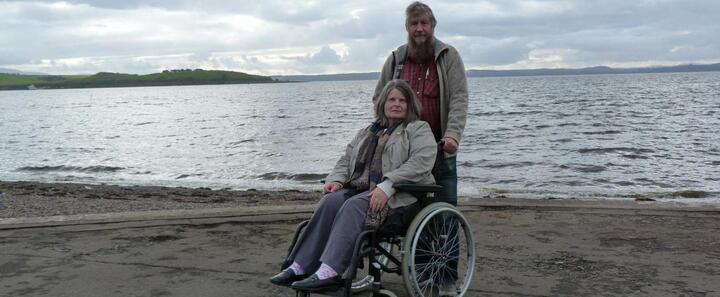 Stop the inhumane deportation of Dale A McIntierSandra McIntier is severly disabled and requires round the clock physical and mental care. If her husband was deported it would have devastating affects on her. Dale McIntier would suffer extreme mental health issues if he had to leave his wife without the love and stability that she needs. It would hurt our government purse to deport Dale. Tax payers would have to pay for his flight home and also round the clock care for Sandra. It makes no sense to deport a beloved husband who is a wonderful part of the community.13,915 of 15,000 SignaturesCreated by Samantha Hendry
 -
 Uneducated decisions.This is important for multiple reasons, I own around 62 species of cockroaches that as a lot of you know, range in size, shape, colour and character. Bron afon want me to get rid of them all but I want to suggest that I get rid of 9 species that could pose issues. I keep, photograph, study and educate others on these amazing animals, it's my hobby and hopefully a future business, I don't drink, smoke or take drugs, I barely socialise because of my mental issues......so they think getting rid of it all is a good idea. I originally made one mistake, a few P.australasea escaped and got into a neighboring house, Bron afon have done nothing to help, we need a lot of repairs and work done on our house in general because of their neglect, we have compromised and complied all the way through but they haven't even at least kept us up to date and are even threatening to throw us out, make your own minds up on this but please sign to show I'm not just some weird shut in, idiot that they assume I am.130 of 200 SignaturesCreated by Live Vine
 -
 Ultrasound or MRI breast screening for pre menopausal womenMammograms often do not pick up breast cancer for woman who are pre menopausal or have dense breast tissue. In fact according to the NCI (National Cancer Institute), at the time of screening, mammograms miss up to 20% of cancers which are already present in the patient. This could lead to deadly consequences for many women. Help make breast cancer screening more effective and save lives.1,209 of 2,000 SignaturesCreated by Shereena Delaney
 -
 Replace Weybridge Walk in CentreThe Weybridge Walk in Centre was at the heart of Weybridge and needs to be replaced. The CCG are intending that Weybridge residents in need of emergency care will have to travel to St Peters or Woking. Both alternatives are overstretched at the moment. This is assuming that people can get to either location as this is very hard for those who require to use public transport. BRING BACK THE CENTRE IT IS NEEDED, WE NEED IT.4,293 of 5,000 SignaturesCreated by George Farrell
 -
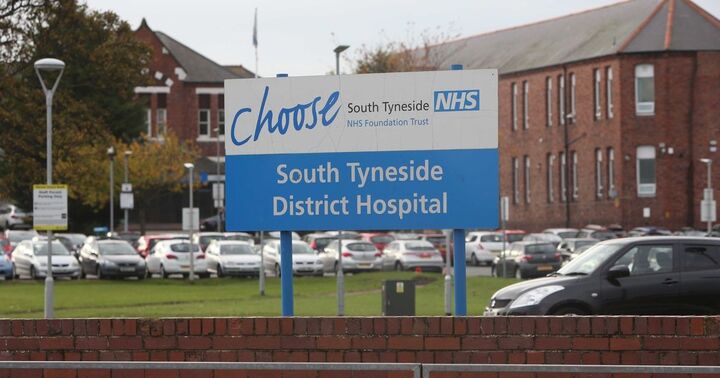 Save South Tyneside District HospitalBecause the population of South Tyneside are struggling to get medical attention with shift of facilities from south shields to sunderland. The town of south shields becomes unsafe and unaccessible to live in. The elderly and chronic patients will have to shift from their beautiful town of south shields and move to sunderland to have an easy access to facilities, the town of south shields will become an unsafe place to live in specially in an emergency, the shut down of STFT will create more of unemployment, the nursing homes in south shields will have to slowly close down due to reduction of residents because who would prefer to live in a town with no access to health facilities. This is what happens to south tyneside if the departments of STFT are close down, eventually shutting down the only acute care facility in this town forever.459 of 500 SignaturesCreated by Sujith Thankachan George
Hello! We use cookies to improve your experience by providing insights into how the site is being used. Find out more.