-
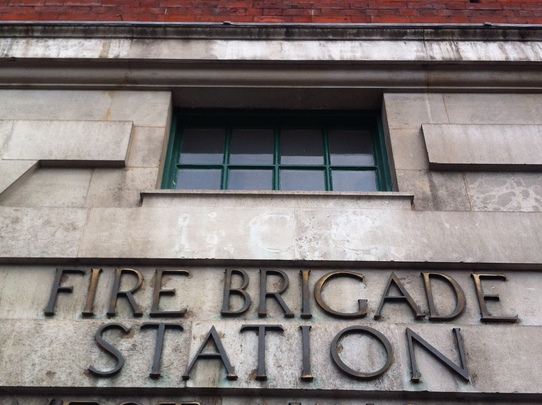 Save our firestationsBoris Johnson wanted to cut £45 million over two years from the fire service. To save £28.8 million in 2014, on 9 January 2014 he decimated the London Fire Brigade, closing Belsize, Bow, Clerkenwell, Downham, Kingsland, Knightsbridge, Silvertown, Southwark, Westminster and Woolwich Fire Stations. As part of this austerity drive, he also cut 552 firefighter positions, 14 fire engines and 2 FRUs. Westminster for example has lost its 109 year old fire station - and now uses Lambeth’s instead, over the river. Is it fair that Lambeth taxpayers fund a service used by Westminster? And that world heritage sites, like Westminster Abbey, Buckingham Palace, the Houses of Parliament and Westminster Cathedral as well as tourists and taxpayers are left without emergency protection, with only two bridges into Westminster from Lambeth? Five of the ten closed by the Mayor are Grade 2 listed buildings. And a 6th is just behind Harrods. Others, like Kingsland and Silvertown, are located in areas where property values are rising dramatically (due to to projects like Crossrail and the Mayor's Royal Albert Docks development). This is not about saving money, as the Mayor has found public money to fund vanity projects such as the 'not so public' Garden Bridge (£60 million in public money), the Emirates Air Line and the Barclays Bike Scheme. Closing and selling these fire stations is like selling the family silver to gain a one-off windfall. Southwark Fire Station alone was valued at £10 million in 2010. Once they are sold into private ownership, taxpayers will never be able to get them back. We won’t be able to afford them. And we can’t afford to lose them either. Boris Johnson stated that fire incidence is down (which is disputable). Firefighters do more than fight fires. Recent events like the gas explosion in Marylebone remind us of that. They educate us (and save lives as a result). They assess risks in our homes (for free).They are the ones who will cut you out of your car when you have a road traffic accident. They are our first response when terrorists attack as was the case in 7/7 in 2005. They rush in to the underground or train stations when smoke is pouring out. They have an arson investigation unit. They do voluntary work within the community. They train locally and have local knowledge, like learning where the disabled live or knowing their way around housing estates; all this local knowledge has been dispersed through the closures. Response times have increased and insurance premiums with them due to the reduced fire coverage. All to save the price of a few cups of coffee. An annual increase of £5 on council tax would have prevented the closures. Our communities will be poorer and more vulnerable if we lose these fire stations forever. Please do not let that happen. Please sign and share the petition. And let the Mayor know that what he is doing is dangerous...11,890 of 15,000 SignaturesCreated by Artemis Kassi
 -
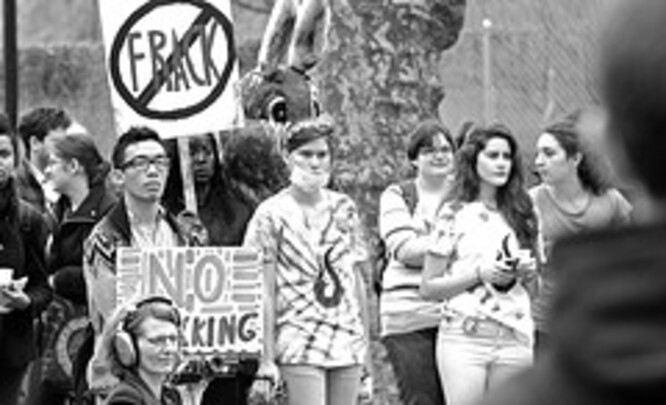 Give communities power to block fracking projectsEric Pickles recently announced his intention to introduce new planning guidance allowing communities to block windfarms (http://www.guardian.co.uk/environment/damian-carrington-blog/2013/jun/06/wind-farms-shale-gas-fracking-energy). While any move to increase local democracy should be welcomed, it appears the government has no intention of granting similar powers to communities threatened with fracking projects. Fracking – the process of extracting gas from rock such as shale – is highly disruptive to nearby communities, poses a very significant threat to groundwater and human and animal health, is extremely energy-intensive and has huge implications for climate change. Furthermore, even optimistic estimates suggest the UK has only enough shale gas to keep the country going for a few years. Whatever your views on fracking or windfarms, there can be no conceivable justification for allowing communities to block windfarms – which generate clean, infinitely renewable energy far into the future – but not fracking projects. If anything, communities should have greater powers to block fossil fuel projects than renewables, given that we’re edging ever closer to the point at which climate change becomes irreversible and entirely out of our control. Alas, this is another clear example of the present government’s relentless pursuit of gas, and its ambivalence towards renewable energy; the announcement has come just days after the government voted against introducing stringent new targets to decarbonise our electricity supply by 2030. The recent revelation that a third of government ministers have strong links with the fossil fuel industry and the finance sector that bankrolls it (http://www.wdm.org.uk/climate-change/one-third-uk-government-ministers-linked-uk-companies-fuelling-climate-change) may begin to explain their refusal to place any barrier in the way of their dash-for-gas. This is not a petition to stop communities from blocking windfarms; it is a petition calling on the government to recognise the gaping inconsistencies in any planning guidance that allows communities to block windarms – whose impacts are, after all, reversible – but not fracking projects, which, conversely, will leave an appalling legacy for our children and grandchildren of contaminated aquifers and a climate spiraling out of control. By signing the petition you are sending the government a clear message that vested interests cannot be allowed to influence planning policy, especially when so much is at stake. Communities must be given the power to block fracking projects.1,313 of 2,000 SignaturesCreated by Gwen Harrison
 -
 ‘No Eviction’ Pledge for Bedroom Tax Arrears in NottinghamThis is a petition, FOR the people, BY the people, with no political agenda or aims! The reduction in Housing Benefit under the ‘Under-Occupancy charge’ or Bedroom Tax, affects 5,500 people in Nottingham and many of these people are the most vulnerable members of society whom we should be protecting – those with physical & mental health problems, their carers; single and divorced parents, survivors of domestic violence, to name just a few groups. The Office of National Statistics report shows that Nottingham has the lowest disposable income per household than anywhere else in the UK – the average annual income per individual household after tax including benefits is £16,034, whilst in Nottingham it is only £10,834. This shows that residents of Nottingham are even LESS able to absorb this reduction in their benefits, and thus will have a massive detrimental impact on their ability to pay all of their bills AND be able to feed themselves and their families. Putting aside the moral and ethical issues about this cruel policy, the Bedroom Tax is impractical and ill thought-out as it will neither free up social housing – for the 5,500 Nottingham people hit, only 35 1-2 bedroom properties became available to downsize to last year – nor will it save money as privately rented accommodation (as no social housing available!) has higher rents for smaller properties! According to a report by Shelter, the cost of evicting a Local Authority tenant (with all its associated costs) is just under £6,700. By comparison, a tenants average annual arrears caused by the Bedroom Tax arrears is £670. So the Council could allow a tenant to run up 10 YEARS of arrears before it would equal the same amount to evict them. Broxtowe Borough Council has already made a ‘No Eviction’ Pledge, and other Notthinghamshire Councils are putting forward similar motions, so we urge that Nottingham City Council does not get left behind and makes this pledge also.177 of 200 SignaturesCreated by Rebecca Kent
 -
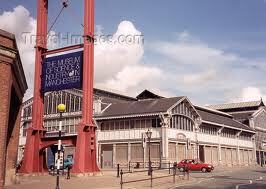 Save the Museum of Science and Industry in ManchesterThe forthcoming government cuts to the Science Museum Group's (SMG) annual funding will have a massive impact on the daily running of four of the UK's most visited Museums. Led by the Science Museum in London, the SMG also includes the National Railway Museum in York and the National Media Museum in Bradford. Ian Blatchford, Director of the Science Museum Group has stated that a further 10% cut in funding in the next round of government spending proposals meant "almost certainly" one museum would shut. BBC News - Science Museum Group says cuts put museums at risk: http://www.bbc.co.uk/news/uk-england-22781573 Revealing interview with Ian Blatchford on Radio 4's The World at One: http://audioboo.fm/boos/1433319-science-museum-director-ian-blatchford-on-the-world-at-one-bbc-radio-4 The Museum of Science and Industry (MOSI) is a unique, world-class visitor destination and delivers a range of inspiring events, exhibitions and galleries. In the month of February 2013 alone, after a truly visionary upgrade to its exhibitions, it attracted over 100,000 visitors, some of whom were schoolchildren from schools in the poorest wards in the country. MOSI gives visitors a rare opportunity to experience many world firsts, including a replica of the world's first computer, working cotton machinery, a tour of the Victorian sewers, a power hall containing steam engines and an interactive Science exhibition for hands-on learning. The closure of MOSI would be a huge loss to the heritage of a city which was at the heart of the Industrial Revolution and would have consequences for the cultural, economic and tourism offer of the City and the Region.220 of 300 SignaturesCreated by Steve Waters
 -
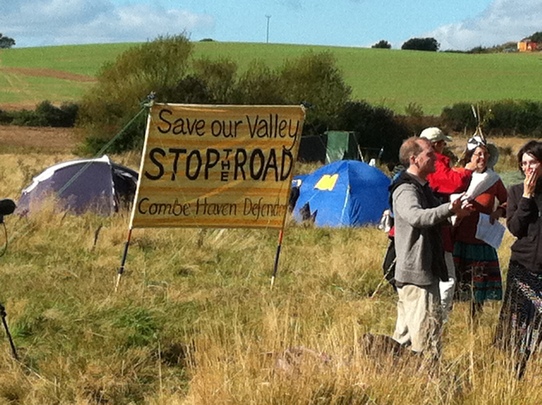 Stop the Bexhill to Hastings Link RoadEast Sussex County Council want to build a link road from Bexhill to Hastings to regenerate the local area. On both counts, they are misguided. A landmark study from the University of Toronto (The Fundamental Law of Road Congestion: Evidence from US cities, 2010), showed that building more roads (or widening existing ones) leads to more traffic. The more roads you build, the more cars you have. And with cars comes more noise, more congestion, and more CO2. Indeed the Department of Transport has gone on record to say that the new road will be a significant producer of carbon emissions. But that’s not all. The new road will border Combe Haven nature reserve - disrupting wildlife and adding noise and pollution to an Area of Outstanding Natural Beauty. This is bad for animals, and humans who want to enjoy the outdoors. And it will destroy the original site of the battle of hastings. And it’s been assessed as number 39 in the 40 priority road schemes in the country We don’t need this road. We call on East Sussex County Council to stop this project and invest in quieter, cleaner, more equitable public transport. Not only will this reduce congestion much more effectively, it will improve access for everyone, just just those with cars.135 of 200 SignaturesCreated by Robin Young
 -
 Save the National Media Museum in BradfordThe forthcoming government cuts to the Science Museum Group's (SMG) annual funding will have a massive impact on the daily running of four of the UK's most visited Museums. Led by the Science Museum in London, the SMG also includes the National Railway Museum in York, the Museum of Science and Industry in Manchester and the National Media Museum in Bradford. Ian Blatchford, Director of the Science Museum Group has stated that a further 10% cut in funding in the next round of government spending proposals meant "almost certainly" one museum would shut. Out of the four Museums the National Media Museum in Bradford has the least visitors annually and is the most at risk to closure. BBC News - Science Museum Group says cuts put museums at risk: http://www.bbc.co.uk/news/uk-england-22781573 Revealing interview with Ian Blatchford on Radio 4's The World at One: http://audioboo.fm/boos/1433319-science-museum-director-ian-blatchford-on-the-world-at-one-bbc-radio-4 The National Media Museum is a unique, world-class visitor destination and constantly delivers a range of inspiring events, exhibitions and galleries in one of the poorest Cities in the UK. The Museum gives visitors a rare opportunity to experience many world firsts and is home to over 3 million objects that track the history of photography, film, animation, television and videogames. The film and festival programme is an exciting offer that welcomes many award-winning filmmakers and artists to the UK. The Museum is the heart of the cultural community in Bradford and its closure would have truly tragic consequences for the cultural, economic and tourism offer of the City and the Region. The National Media Museum may have fewer visitors when compared to its family members in Manchester, York and London but at more than 500,000 visits in 2012 the Bradford attraction is still a popular visitor destination. There is no other public building in the UK that offers this combination of free galleries, temporary exhibitions, cinemas, events and workshops for all types of audiences - schools, families, students, community groups, photographers, film and television lovers, historians and enthusiasts - we can't lose this British gem of an institution. 2013 marks the 30th anniversary of the National Media Museum. Millions of visitors have benefited from the heritage, knowledge and inspiration found within its walls. Don't let this institution close and allow these opportunities slip away from future generations. The aim of this petition is not to ask to save the National Media Museum and close another Museum within the SMG. All of the SMG institutions are vital to their Cities and area of expertise. The aim of this campaign is to highlight the individual support for the National Media Museum and Bradford and urge the government to not allow any of the Museums in the SMG to close their doors. The Bradford Telegraph & Argus newspaper also has their own petition to help save the National Media Museum. We have agreed to pool both petitions together so don't worry about which one to sign. We're both pulling in the same direction. And of course, as well as signing these petitions the best way to show your support is to pay the Museum a visit in the next few weeks. Visitor figures are its life blood. http://www.nationalmediamuseum.org.uk/36,993 of 40,000 SignaturesCreated by Tom Woolley
 -
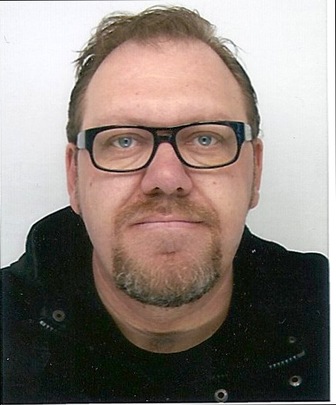 Challenging Michael Gove to a public debateI wish to debate with Michael Gove because he is all too ready to rubbish teaching and teachers, yet seldom does he stand toe to toe and listen to the genuine concerns that classroom practitioners have. Please support me in my drive to try and get Michael Gove into the arena of public debate. I am only one teacher, working as hard as I can. I only want to be listened to by the Secretary of State for Education. Is that too much to ask?5,578 of 6,000 SignaturesCreated by Gary Kaye
 -
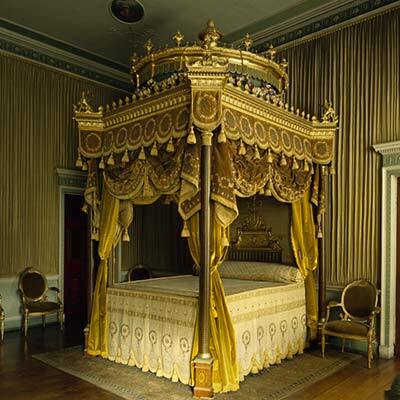 Make the Queen Pay the Bedroom TaxIn times of austerity, the Queen should not be exempt from the cuts that affect people with far less money than she has. We're constantly being told by the government that we are "all in this together", however it seems that in every reform it's always the poorest who are hit the hardest. This year the queen was given a £5 million "pay rise" after a new system of paying the monarchy came into force.Apparently she owns all of OUR country's sea-shore! Meaning that she gets "royalties" for EVERY type of energy -oil,gas,wind,wave, - that crosses HER shoreline.Her annual tax-free government grant has been set at £36.1 million for 2013/14 and will rise accordingly every year. http://www.mirror.co.uk/news/uk-news/queen-handed-pay-rise-5-1806123 http://www.dailymail.co.uk/news/article-1323228/Queens-38m-year-offshore-windfarm-windfall--owns-seabed.html The queen is estimated to be worth about £17 Billion - much of it made through wars around the world and the arms trade: in other words, she Profits from Human suffering - as all her ancestors have since 1066 A.D. http://www.youtube.com/watch?v=Jm6P5sDXs3k Yet at the same time people across this country are struggling to cope as the bedroom tax makes it harder and harder to make ends meet each month. The queen should pay the bedroom tax on her hundreds and hundreds of ornate and unused bedrooms - as a sign that we really are all in this together. Since I first instigated this Petition, we have had to pay 'William and Kate's decoration Expenses at Kensington Palace and also the increased Security Costs for the ever extending royal family Also, queenie has just been granted £76,000,000 for repairs at 'buck hice' (you and I will have to make do with Ikea and Homebase). I had to pay £120 per hour in order to gain MY pilot's Licence. I wonder how much Wills and Harry and Charlie and Stavros (Philips nickname in aristocratic circles) had to pay to get theirs'346 of 400 SignaturesCreated by Richard Hardy
 -
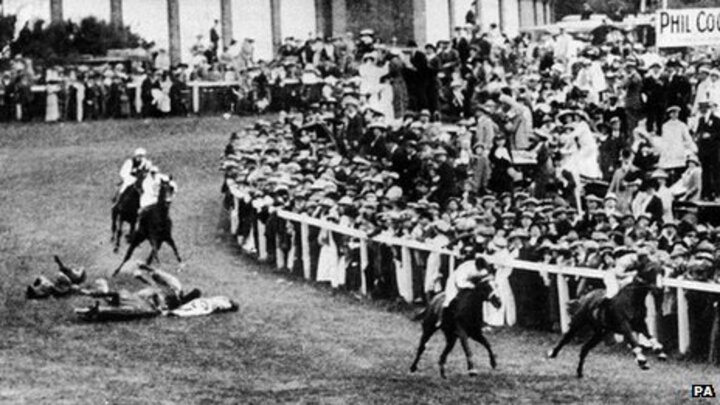 Rename Tattenham Corner Emily Davison CornerIn 1913 Emily Davison ran in front of the King's horse and was killed, in what was probably the most historically memorable event of the movement for Women's Suffrage. Emily Davison should be remembered, as should all women who campaigned for women's suffrage in the early 20th Century. The place where she made her stand should carry her name so that her sacrifice will always be remembered4,042 of 5,000 SignaturesCreated by Peter Hatch
-
 Trafford Council: Stop destroying healthy trees!E-petition: Save 1,500 healthy trees in Trafford Trafford Council plans to destroy 1500 healthy, mature trees at a cost of £1500 each. Here is the proof: http://snipurl.com/277kq1q (perhaps predictably, this page no longer exists, but we do have the original document if anyone wishes to see it.) And after local campaigners referred to a page on the Council’s website called The Benefits of Trees, the Council swiftly removed it from their website. We, the undersigned, believe that this is a terrible waste of £2.25 million of public money, destroying trees at a time when the nation’s nature and wildlife is suffering due to our lack of care as a society, and because of short-sighted policies such as this. Trees add value to our homes and neighbourhoods, provide habitat for birds and insects, and it is proven that they increase our health and wellbeing. They also provide valuable protection from pollution - protection that cannot be achieved by tiny saplings. Therefore, we demand that Trafford Council: (1) Urgently reviews its tree policy and pledges to keep healthy trees in place, unless they are demonstrably dangerous. (2) Reinstates the page on their website which outlines The Benefits of Trees. Relevant links: http://www.guardian.co.uk/environment/2013/may/21/uk-species-struggling-wildlife http://www.bbc.co.uk/nature/22609000 http://www.bbc.co.uk/news/science-environment-22671186 http://www.huffingtonpost.com/2013/01/21/trees-linked-with-human-h_n_2505267.html http://www.keeptraffordgreenandclean.co.uk/trafford-council-the-benefits-of-trees/ LATEST NEWS [8th June 2013]: The Council have been asked about this by a reporter from the Stretford & Urmston Advertiser and are denying that they want to chop down 1,500 trees. Here is the link to the document which gives that figure and which also states that it costs £1,500 per destroyed tree: http://snipurl.com/277kq1q Let's see how long THAT document remains in place! We have downloaded a copy just in case... (it's entitled "Trafford Council Tree Management Policy")438 of 500 SignaturesCreated by Nigel Woodcock
-
 Better endocrinological service and treatment (B.E.S.T.)I am one of the B.E.S.T. petition team. For years, I suffered severe anxiety, poor health and suffered infertility as a result of doctors not diagnosing me with Graves disease. Even after my condition was recognised, I received appalling treatment. I was given unnecessary Radioactive Iodine treatment, which resulted in a range of unpleasant side effects. It took me five years to find an informed GP and Endocrinologist to provide me with the T3 hormone treatment, which now means I can live a normal life in mostly stable health. I consider myself one of the lucky ones. Huge numbers of people are being left to suffer severe, debilitating symptoms because thyroid and related autoimmune and adrenal dysfunctions are not being diagnosed or treated. Not enough of our GPs and endocrinologists are versed in these issues. For example, Eric Pritchard MSc has just recently written a paper that estimates 300,000 UK sufferers are on the wrong medication: http://tpauk.com/news/8639-medical-negligence-within-endocrinology-are-you-a-victim-- Tens of thousands of sufferers are being prescribed anti-depressants and other unnecessary drugs. Many are left unable to work and are forced to exist on state benefits. Medical practitioners are not being correctly trained to deal with these disorders which are affecting a huge number of people and costing the state millions as a result of misdiagnosis and incorrect treatments. There are hundreds of websites and support groups throughout the world dedicated to these conditions, with sufferers pouring out their stories of how long it has taken to be diagnosed, or receive the correct diagnosis, or receive the correct treatment: http://tpauk.com/ and http://www.thyroiduk.org.uk/tuk/index.html are UK based. A worldwide organisation is http://www.thyroidchange.org/evidence.html Despite the thousands of daily posts and cries for help on these sites, endocrinology seems to neither listen, nor act. The specific reasons for the petition and particulars of the review we require are here http://tinyurl.com/knh5dpp Ultimately, we are calling for the education and training of medical practitioners to be urgently improved so that diagnosis and treatment of these conditions is effective. A timely and radical review would be welcomed by an increasingly knowledgeable and empowered public, as well as by those doctors currently struggling to provide what they know to be the most appropriate treatment for their patients. WE NEED OUR HEALTH BACK.5,550 of 6,000 SignaturesCreated by Diane Bamford
 -
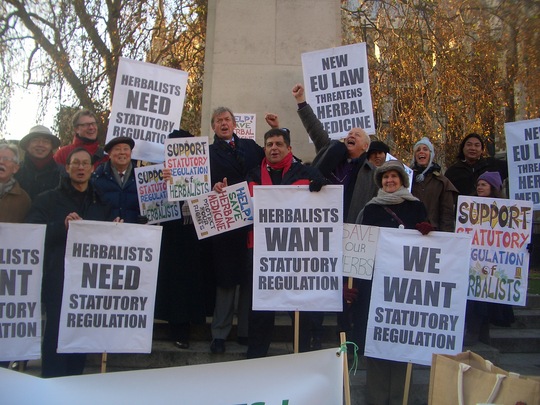 Save the practice of herbal medicine in the UKWithout statutory regulation (SR) of herbalists patient choice and safety are at risk. As a result of recent changes to European Medicines law, herbalists must be authorized health professionals (by being statutorily regulated) to continue supplying a range of herbal medicines that have been in use for decades. Now, because of the delay in granting SR, many patients are now without the herbs that they have come to rely on. This is driving some people to purchase herbal medicines from unsafe internet herbal sites without advice from a qualified practitioner. SR will enable the public to consult properly trained practitioners rather than back-street traders. Without SR well-regulated degree level courses are under threat as the future of herbal medicine is uncertain. The loss of a wide range of herbal medicines means many practitioners are struggling to maintain their livelihoods or have been forced to stop practising. In addition, many herbal suppliers are being driven out of business or are making staff redundant. Why the delay? There is no adequate explanation. A promise is a promise! Grant herbalists SR now!8,158 of 9,000 SignaturesCreated by Michael McIntyre
Hello! We use cookies to improve your experience by providing insights into how the site is being used. Find out more.