-
 Time for transparency in South Tyneside Council decision-making.Decisions made in a borough with a huge debt burden, can be immensely contentious. Decision-making with little to no scrutiny is not helping the situation. This lack of transparency about how/why decisions are made is damaging public confidence in our local institutions and not the way to build a healthy, democratic system. CAST was formed in 2019 by local people who felt that our 'ordinary' voices were seldom heard, even less often acted on, by those taking the decisions on our behalf. Since then, we've aimed to redress that balance by engaging the very people who live with the consequences - those whose lives are affected the most yet who seem to be consulted the least - YOU! Now is the time for 'Community-Driven, People-Powered Change' in South Tyneside! Statement updated for clarity (22/06/2026): The aim of this petition is NOT to attack any one political party. On the contrary, an independent and transparent decision-making process will eliminate accusations of cronyism, nepotism and corruption - something which has ravaged our borough for decades. CAST is a local grassroots organisation. We are completely independent and non-party political. We have NO political affiliations and our democratic projects are fully funded by our members.43 of 100 SignaturesCreated by Citizens Assembly South Tyneside
-
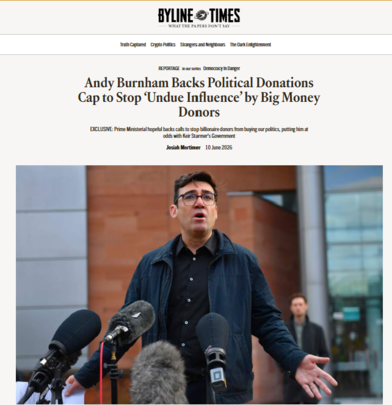 Andy Burnham promised ME a cap on political donations. Let's make him keep it!This isn't a hypothetical ask. I have it in writing — and it's already been reported. Byline Times, "Andy Burnham Backs Political Donations Cap to Stop 'Undue Influence' by Big Money Donors," 10 June 2026 Caption: "Burnham's own words, on the record — and unchallenged by his team since publication." Before the Makerfield by-election, I wrote to Andy Burnham and asked him directly: would he support a cap on political donations? He wrote back and said yes , that there should be a cap to stop any party being unduly influenced by big money and that Westminster needs "wholesale culture change." That's what he told me, personally, when he had nothing to gain from saying it and no power yet to deliver it. He has that power now. Burnham has just won the Makerfield by-election and is back as an MP, a seat created specifically so he could challenge Keir Starmer for the Labour leadership. He may be Prime Minister within months. And look at how far the current government has actually got on this. Facing pressure over Reform UK's mega-donors, Starmer's government has so far only announced a moratorium on crypto donations and proposed a £100,000 annual cap on donations from overseas electors. Both still going through Parliament and a 100x higher than the £1,000 figure campaigners are calling for. Burnham said yes to me when it cost him nothing. The test is whether he still says yes once the donor money starts flowing toward him instead of away. He told me. Now help me hold him to it. This petition grew out of correspondence through my campaign, WakeUpGB.co.uk — find out more about the wider push for cleaner political funding there.20 of 100 SignaturesCreated by shaun bowler
 -
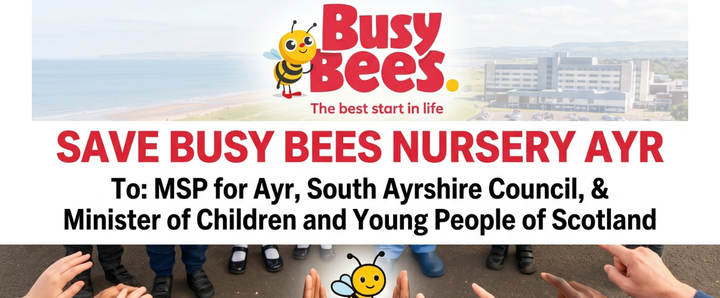.png) AYR: SAVE BUSY BEES NURSERYI am an Orthopaedic Surgeon in University Hospital, Ayr. My son has been attending the Ayr Busy Bees Nursery since he was 8 months old - he's now 5. We love the excellent care he's received at Busy Bees. But then, on the 9th of June, late at night, we received an email from the area manager of Busy Bees announcing that the centre will be shutting down on the 31st of July 2026. The Ayr Busy Bees Nursery has been providing a caring, safe and trusted childcare service for years and the sudden closure announced just with 6 weeks notice is now causing considerable difficulties for parents, many of whom are members of NHS staff in Ayr Hospital. How are we supposed to find alternative childcare in just 6 weeks? This is also leading to redundancy of qualified, well trained, caring and loving nursery staff. Please help us save this important childcare space!1,402 of 2,000 SignaturesCreated by Thisara Weerasuriya
AYR: SAVE BUSY BEES NURSERYI am an Orthopaedic Surgeon in University Hospital, Ayr. My son has been attending the Ayr Busy Bees Nursery since he was 8 months old - he's now 5. We love the excellent care he's received at Busy Bees. But then, on the 9th of June, late at night, we received an email from the area manager of Busy Bees announcing that the centre will be shutting down on the 31st of July 2026. The Ayr Busy Bees Nursery has been providing a caring, safe and trusted childcare service for years and the sudden closure announced just with 6 weeks notice is now causing considerable difficulties for parents, many of whom are members of NHS staff in Ayr Hospital. How are we supposed to find alternative childcare in just 6 weeks? This is also leading to redundancy of qualified, well trained, caring and loving nursery staff. Please help us save this important childcare space!1,402 of 2,000 SignaturesCreated by Thisara Weerasuriya -
Ban adverts for alcohol and gambling.I'm a recovering addict on all levels. Not just gambling and alcohol. It just dawned on me now that I can't watch TV in the summer without a strongbow ad or a beer garden ad. And as for the " drink and gamble responsibly" line ? You can't read it in the small print even with glasses.5 of 100 SignaturesCreated by Rhian Hegarty
-
Get TikTok to sort their AI "moderation" out.As a creator and agency owner working with multiple TikTok creator networks, I witness firsthand the growing impact of TikTok's unfair AI moderation system. Every day, creators—including myself—are forced to battle repeated false restrictions and violations that should never have been issued in the first place. It has become common for creators to receive between four and ten restrictions or violations per day, many of which are later overturned on appeal. This raises serious concerns about the accuracy and reliability of TikTok's moderation system. The problem extends far beyond individual creators. Agencies managing multiple accounts spend countless hours submitting appeals, chasing reviews, and dealing with disruptions caused by automated moderation errors. For creators who rely on TikTok for income, these mistakes can affect their livelihoods, growth, and ability to reach their audiences. If creators within a handful of networks are experiencing this level of false enforcement every day, imagine how many thousands of creators worldwide may be facing the same issue. We support moderation that keeps users safe, but moderation must also be fair, transparent, and accountable. AI should assist human moderators—not replace them entirely. Users deserve meaningful appeals, clear explanations, and decisions that are made accurately. TikTok has a responsibility to reform its moderation system so that creators are protected from repeated false enforcement and can use the platform without fear of unjust restrictions.140 of 200 SignaturesCreated by Only Vibes
-
 Demand a wealth tax on the vastly unequally rich..I feel this issue is the root of most other problems.7 of 100 SignaturesCreated by Alfie Farley
 -
A school is a school not an officeI feel like my freedom to express myself has been restricted and it we will be reluctant to stay after school to revise as the dress code is very restrictive and generally uncomfortable. This makes the usual casual school environment feel like an office environment that makes some feel uninspired to learn. Also, the unaffordability of formal clothing in this economy makes it unsuitable for every party involved, unless the academy is willing to fund this new dress code not everyone will be able to afford it. If it isn't broken don't fix it .60 of 100 SignaturesCreated by Aaron Dinsdale
-
Dental nurses need to be paid moreAs a dental nurse, and especially as an apprentice navigating the demands of training alongside full-time work, it's clear to me that our profession is profoundly undervalued, and our pay should absolutely reflect the immense effort and skill we pour into our roles. We're not just 'helping out'; we're the backbone of dental practices, directly contributing to patient safety and the success of every procedure. From meticulous infection control and preparing complex surgeries to providing vital emotional support for anxious patients, our responsibilities are diverse and critical. Personally, juggling rigorous training with the intense day-to-day demands of practice life, it's incredibly challenging, and seeing the sheer dedication and hard work from qualified dental nurses around me only reinforces the feeling that our current wages simply don't do justice to the level of precision, responsibility, and emotional intelligence required. The stress, the constant learning, the physical demands – it all adds up, and it's frankly disheartening to know that our essential contributions to public health and patient well-being aren't adequately compensated. We deserve more for the indispensable work we do.13 of 100 SignaturesCreated by Lucy Elizabeth Beesley
-
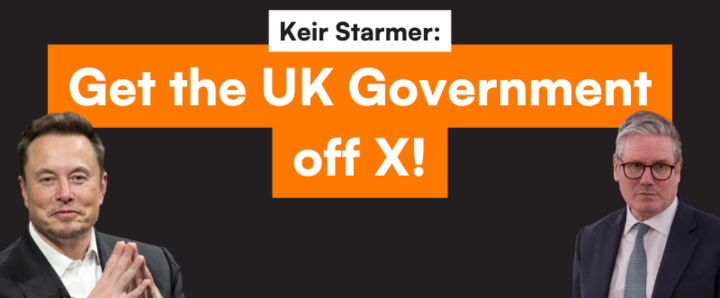 The UK Government should withdraw from X (formally Twitter)Hate and division should not be supported by a British Government by taking part through advertising and posting. We call on the UK Governent to withdraw all support and/or activity on X (formally Twitter). Musk's recent actions trying to whip up hate and violence, and platforming the likes of Tommy Robinson cannot go unchallenged. And yet the UK Government continues to use accounts on X. Enough is enough. It's time our Government quits Musk's hate platform.201 of 300 SignaturesCreated by David Goddard
 -
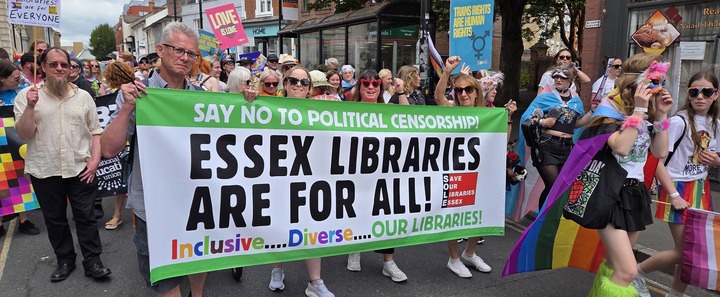 Libraries for all!For decades, our libraries have promoted a large range of themes and events linked to books, education, local issues, culture, and libraries themselves. As well as Pride, and Black History Month, there have been promotions for Remembrance Day, Holocaust Memorial Day, World Mental Health Day, International Women’s Day, the World Cup, and much more. These promotions are vital for making our libraries relevant to everybody within our communities, and ensuring the continuing sustainability of a much loved public service. Essex Libraries staff have the professional skills, experience and knowledge to run and promote suitable events, and the council should not interfere and should not be allowed to stop our libraries from being places for everyone. t’s always been vital to ensure that public libraries are never manipulated by any politicians' personal opinions or dislikes.21,763 of 25,000 SignaturesCreated by Save Our Libraries Essex (SOLE)
-
 All dogs to be kept on lead on public pathways and highwaysThere are many stories like this but this is a good example. A miniature staffordshire bull terrier was walking quietly on lead when he was attacked by two off lead dogs. during the melee, a passer-by was nipped by the staffy as it tried to fight back. Though the injury was not bad the police were called and have taken the staffy. He will likely be held under the dangerous dogs act and even destroyed. Every day, dogs are attacked whilst on lead by dogs running free. The police won't intervene. Thousands of pounds are wasted on vet fees and there is high emotional cost to the owners. Presently, it is not illegal to have a dog off lead in public places. Off lead, they can cause injury and car accidents. Dogs should be on their lead on public pathways and highways and other designated areas. Owners do not have full control of them otherwise.5 of 100 SignaturesCreated by Susie English
 -
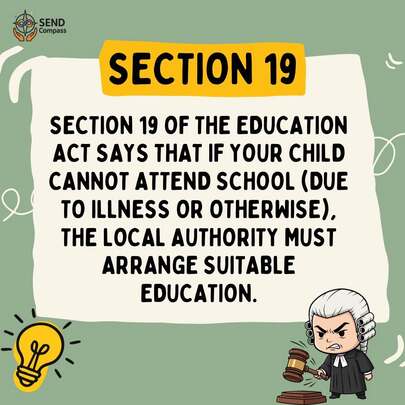 Give Neurodivergent children access to EducationMy name is Peter, and I'm an AuDHD adult with Dyspraxia. During my youth, I was failed by the education system in nearly every conceivable way, and as such developed what is now referred to as "Emotionally Based School Avoidance". Unlike a lot of parents now pursued by authorities with threats of fines and social services involvement, I was left, alone, unable to attend school, in a near constant state of overwhelm and burnout. My family were never informed about Section 19 of the Education Act 1996. This law mandates the provision of education by the Local Authority if a child is unable to attend school. It never came up. Not from the schools I attended, mental health professionals, nor any other source. As such, I was left without direction, and never able to achieve my full potential. By neither funding nor obligating Local Authorities to follow the law, successive governments have thereby broken the law. Section 19 could have been a lifeline for me, and tens of thousands, if not more, neurodivergent children failed by the Education system since 1996. This issue is increasingly important for parents of children receiving or awaiting SEND provisions, as many Neurodivergent children, and children with learning differences burn out and face the consequences of Complex-PTSD as a result of their needs not being met, and facing sensory, social, emotional and information overload in a school environment. I see the stories about children and parents either struggling to acquire, or receiving insufficient SEND provisions, and children and parents being blamed when a child is so emotionally overwhelmed they cannot attend school. Threats of fines, and social services involvement and worse pursue them. By making the government honour Section 19 of the Education Act 1996, I hope to see to it that no neurodivergent or learning different child suffers the same as I did in my youth. I am in the process of starting a petition on the gov.uk website to bring Local Authorities and the Government to account.12 of 100 SignaturesCreated by Peter Curievici
Hello! We use cookies to improve your experience by providing insights into how the site is being used. Find out more.